Market Overview and Industry Expansion
The Unified AI Platforms Market is witnessing rapid expansion as enterprises integrate artificial intelligence capabilities across business operations. The market reached USD 5.29 billion in 2024 and is projected to grow to USD 30.89 billion by 2034 at a CAGR of 19.30%. North America accounted for 47.3% of the global market in 2024, representing USD 2.50 billion.
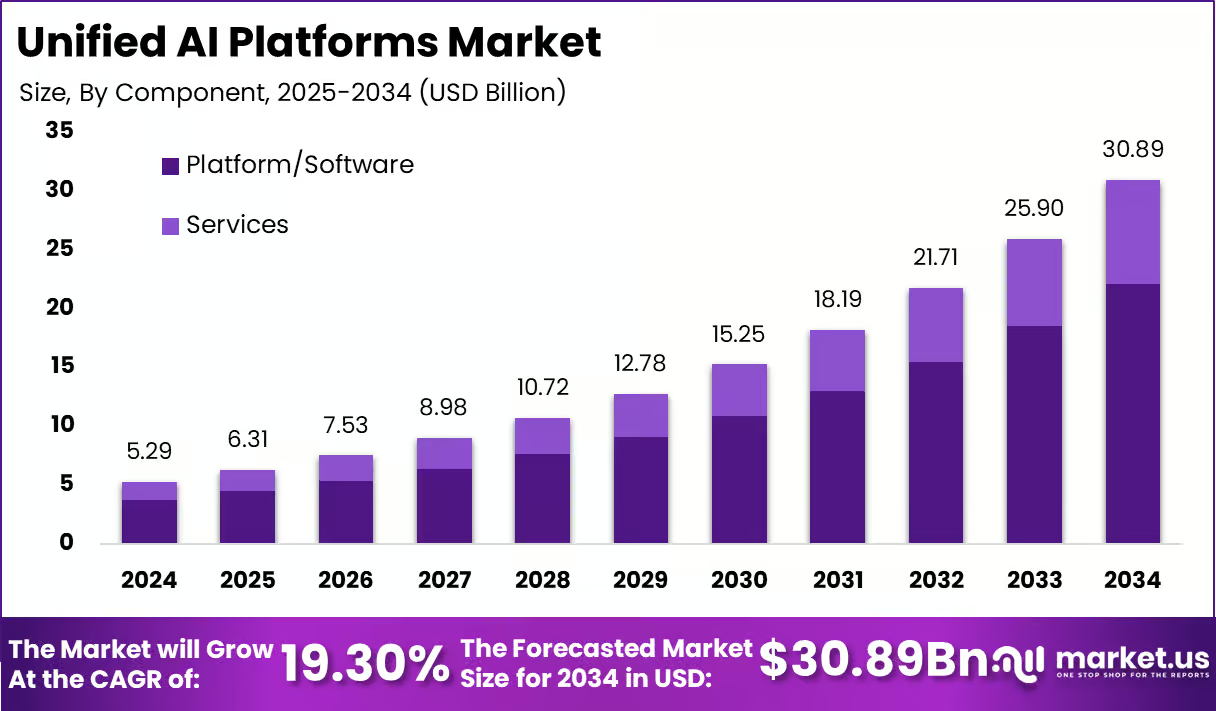
The United States contributed USD 2.28 billion and is expected to reach USD 11.44 billion by 2034 with a CAGR of 17.5%. By component, platform, or software solutions dominated with a 71.4% share. Cloud deployment accounted for 85.2%, while Generative AI and foundation models represented 30.4% of the technology segment. IT and technology companies led the end-user category with 35.3%.
Economic Impact of Unified AI Platform Adoption
The expansion of unified AI platforms is influencing global economic productivity by accelerating digital transformation across industries. Organizations are increasingly adopting integrated AI environments that combine machine learning, data management, and automation capabilities within a single infrastructure. This shift improves operational efficiency, reduces the complexity of managing multiple AI tools, and speeds up innovation cycles. As companies deploy AI platforms to optimize decision-making and automate workflows, productivity gains are becoming more visible across technology-driven sectors.
The market growth is also stimulating investments in cloud infrastructure, high-performance computing, and data engineering services. Governments and enterprises are increasing funding for AI research and digital transformation programs, creating new economic opportunities for technology developers, system integrators, and data science professionals.
Impact on Global Businesses and Industry Transformation
Unified AI platforms are reshaping how businesses develop and deploy artificial intelligence solutions. Companies are moving toward centralized AI environments that simplify model development, data integration, and deployment across enterprise applications. This shift helps organizations reduce operational complexity and improve collaboration between data scientists, engineers, and business teams.
However, the rising demand for advanced computing infrastructure and AI development tools is also influencing cost structures. Businesses must invest in cloud computing resources, advanced chips, and data storage systems to support AI workloads. Sector-specific impacts are also emerging. Financial institutions use unified AI platforms to improve fraud detection and risk analysis, while healthcare organizations apply them to support clinical analytics and predictive diagnostics. Manufacturing firms use AI platforms to optimize supply chain operations and predictive maintenance systems.
Strategic Approaches for Businesses
Companies are adopting multiple strategies to benefit from the expansion of unified AI platforms. Enterprises are prioritizing cloud-based architectures that provide scalable infrastructure and faster deployment of AI applications. Organizations are also investing in integrated AI development tools that support model training, monitoring, and lifecycle management within a unified environment.
Another strategy involves strengthening collaboration between business units and data science teams to ensure that AI solutions align with operational needs. Firms are also investing in workforce training programs to build internal expertise in artificial intelligence, machine learning, and data engineering. Strategic partnerships between technology providers and enterprises are becoming common as companies seek to accelerate AI adoption.
Key Takeaways
- The Unified AI Platforms Market reached USD 5.29 billion in 2024.
- The market is projected to reach USD 30.89 billion by 2034 at a CAGR of 19.30%.
- North America leads the market with a 47.3% share.
- The United States generated USD 2.28 billion in 2024.
- Platform or software solutions dominate the component segment with 71.4%.
- Cloud-based deployment accounts for 85.2% of the market.
- Generative AI and foundation models represent 30.4% of technology adoption.
- IT and technology companies lead the end-user segment with 35.3% share.
Analyst Perspective and Future Industry Outlook
Market analysts observe strong momentum in the unified AI platforms market as organizations continue to integrate artificial intelligence into core business functions. The current market landscape is characterized by increasing enterprise demand for centralized AI environments that simplify model development, deployment, and management. Companies are seeking platforms that can unify data pipelines, machine learning tools, and analytics capabilities within a single ecosystem.
Looking ahead, the market outlook remains highly positive. Advances in generative AI, foundation models, and large-scale data analytics are expected to further accelerate platform adoption. Unified AI environments will likely become essential infrastructure for organizations aiming to build intelligent products and automated business processes. As data volumes continue to expand globally, unified AI platforms are expected to play a critical role in enabling scalable and efficient AI innovation.
Use Cases and Growth Drivers
| Use Case | Growth Factor | Market Impact |
|---|---|---|
| Enterprise AI model development | Increasing demand for integrated AI tools | Accelerates AI deployment cycles |
| Generative AI applications | Rapid adoption of large language models | Improves business decision-making |
| Predictive analytics and forecasting | Growth of enterprise data volumes | AI-powered customer experience |
| Intelligent process automation | Need for operational efficiency | Reduces manual workloads |
| AI powered customer experience | Rising digital service expectations | Enhances personalized engagement |
Regional Market Landscape
North America remains the dominant region in the unified AI platforms market, accounting for 47.3% of the global share in 2024 and generating USD 2.50 billion in revenue. The region benefits from advanced cloud infrastructure, strong artificial intelligence research capabilities, and a high concentration of technology companies actively investing in AI development. These factors continue to support the rapid adoption of unified AI platforms across multiple industries.
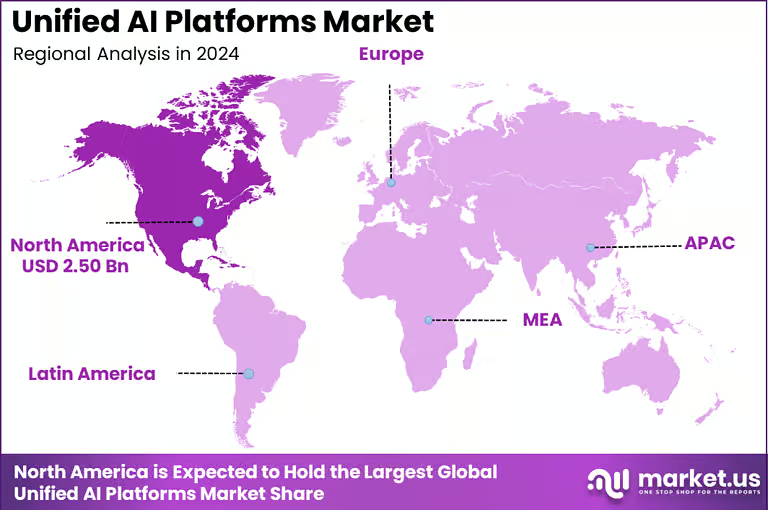
The United States represents the largest market within North America, generating USD 2.28 billion in 2024 and projected to reach USD 11.44 billion by 2034 with a CAGR of 17.5%. Strong enterprise demand for scalable AI solutions, increasing investments in generative AI technologies, and widespread digital transformation initiatives are contributing to market expansion across the country.
Emerging Business Opportunities
The rapid expansion of unified AI platforms is creating new opportunities for software developers, cloud providers, and technology consulting firms. Companies can capitalize on the demand for integrated AI development environments that simplify the creation and deployment of machine learning models. Organizations are also seeking platforms that enable faster integration of generative AI capabilities within enterprise applications.
Consulting firms and system integrators have opportunities to provide AI deployment services, data engineering solutions, and platform integration support. Startups may develop specialized AI modules, analytics tools, and model management systems designed to work within unified platforms. As enterprises increasingly prioritize artificial intelligence-driven transformation, the demand for scalable AI infrastructure and services is expected to grow significantly.
Key Segmentation Overview
The Unified AI Platforms Market is segmented by component, deployment, technology, and end user. By component, platform, or software solutions dominate with a 71.4% share as organizations rely on integrated development environments and analytics tools. By deployment, cloud-based solutions account for 85.2% of the market due to their scalability and ability to handle large AI workloads. Technology, generative AI, and foundation models represent 30.4% of adoption as enterprises integrate advanced AI capabilities into applications. By end user, IT and technology companies lead with 35.3% share, driven by their strong demand for AI development platforms and innovation tools.
Competitive Market Landscape
The unified AI platforms market is characterized by continuous technological innovation and platform development. Market participants are focusing on improving AI model development frameworks, enhancing data integration capabilities, and simplifying deployment processes for enterprise users. Vendors are building platforms that combine machine learning development tools, generative AI capabilities, and advanced analytics within a single ecosystem.
Top Key Players in the Market
- Microsoft
- AWS
- IBM
- Databricks
- DataRobot
- H2O.ai
- C3.ai
- SAS
- Palantir
- NVIDIA
- Cloudera
- OpenAI
- Anaconda
- Graphcore
- Abacus.ai
- Domino Data Lab
- Run:AI
- CognitiveScale
- Others
Competition is also driven by improvements in scalability, performance, and user experience. Many providers are developing cloud native architectures that allow organizations to deploy AI models faster while managing large datasets efficiently. The integration of automation tools, monitoring systems, and model lifecycle management features is also becoming a key differentiator in the competitive landscape.
Recent Industry Developments
• Unified AI platforms are expanding generative AI capabilities to support enterprise-scale applications.
• Cloud-based AI environments are integrating advanced model management and monitoring tools.
• Enterprises are increasingly adopting unified platforms to streamline AI development and deployment workflows.
Conclusion
Unified AI platforms are becoming critical infrastructure for modern enterprises seeking to accelerate artificial intelligence adoption. Strong growth in generative AI technologies, increasing enterprise demand for integrated development environments, and expanding cloud infrastructure are expected to support long term market expansion worldwide.
Discuss your needs with our analyst
Please share your requirements with more details so our analyst can check if they can solve your problem(s)