AI Ring Market Size
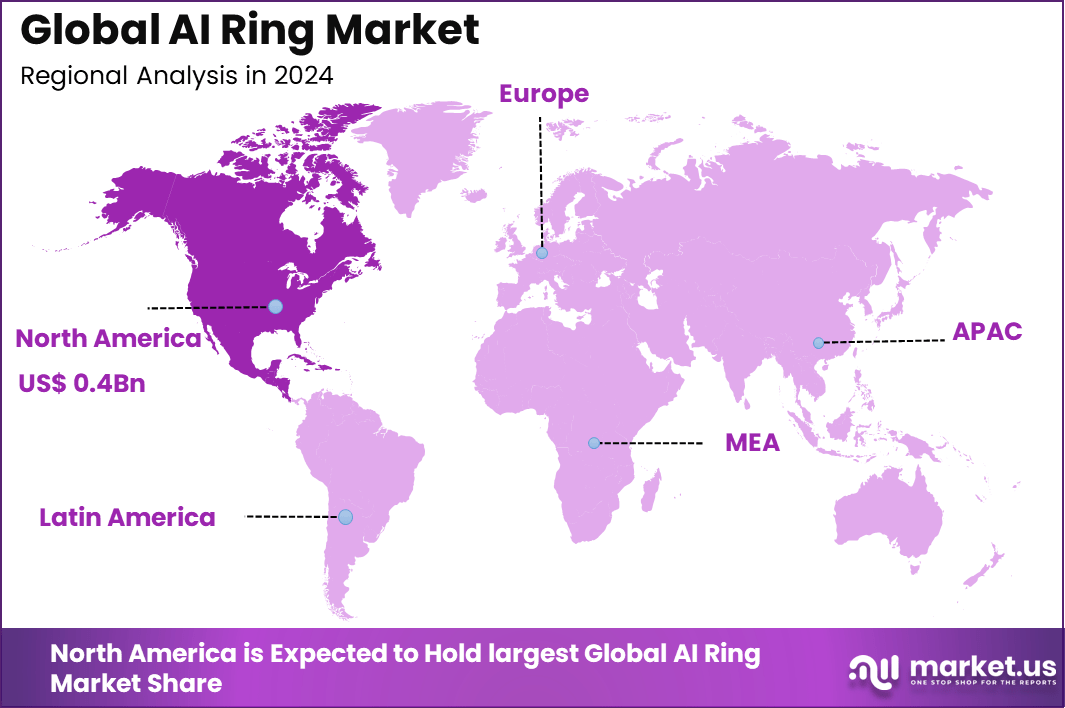
According to Market.us, The global AI ring market generated USD 1.3 billion in 2024 and is expected to grow from USD 1.6 billion in 2025 to approximately USD 11.3 billion by 2034, registering a CAGR of 24.6% over the forecast period. In 2024, North America held a dominant position with more than 34.7% market share, accounting for around USD 0.4 billion in revenue.
The AI ring market represents a growing segment within wearable technology, focused on compact smart rings embedded with artificial intelligence capabilities. These devices are designed to track health metrics, activity patterns, sleep quality, and in some cases enable gesture control and contactless authentication. AI algorithms process sensor data directly on the device or through connected platforms to deliver personalized insights. The market has gained attention due to rising consumer interest in discreet, always on wearables that offer advanced functionality without the bulk of smartwatches or fitness bands.
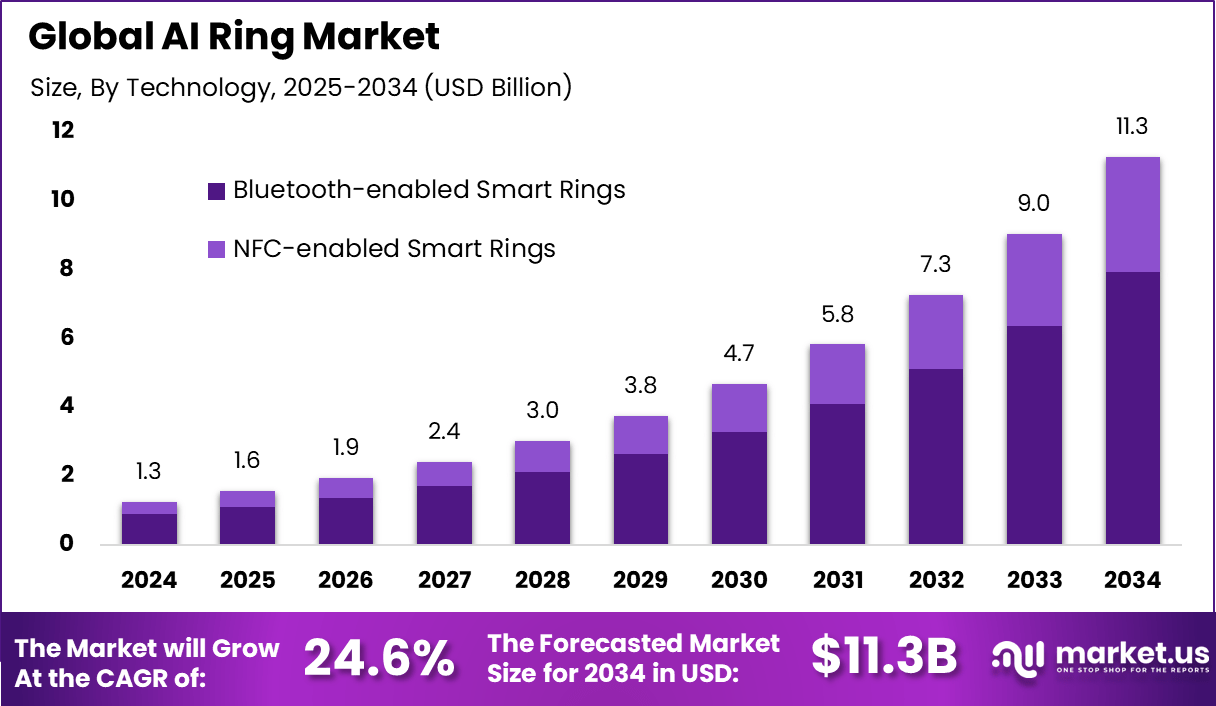
Growth of this market is driven by increasing awareness of preventive healthcare and continuous health monitoring. Consumers are seeking wearables that provide accurate data while remaining comfortable for all day use. Advances in miniaturized sensors, low power chips, and edge AI processing have supported product development. Demand is also encouraged by the integration of AI rings with digital health platforms and mobile applications, enabling deeper insights and long term health tracking. In addition, growing adoption of contactless technologies for payments and access control has supported broader use cases.
Demand for AI rings is rising steadily across health conscious consumers, fitness enthusiasts, and professionals seeking passive monitoring solutions. Interest is particularly strong among users who prefer non intrusive wearables for sleep and recovery tracking. The market is also seeing demand from enterprises exploring secure authentication and workplace access applications. As AI driven personalization improves and healthcare focused wearables gain acceptance, demand for smart rings is expected to strengthen further.
Quick Market Facts
- Bluetooth-enabled smart rings lead by technology with a 70.4% share, driven by seamless smartphone connectivity.
- Notifications dominate applications at 38.7%, reflecting demand for quick alerts without using phones.
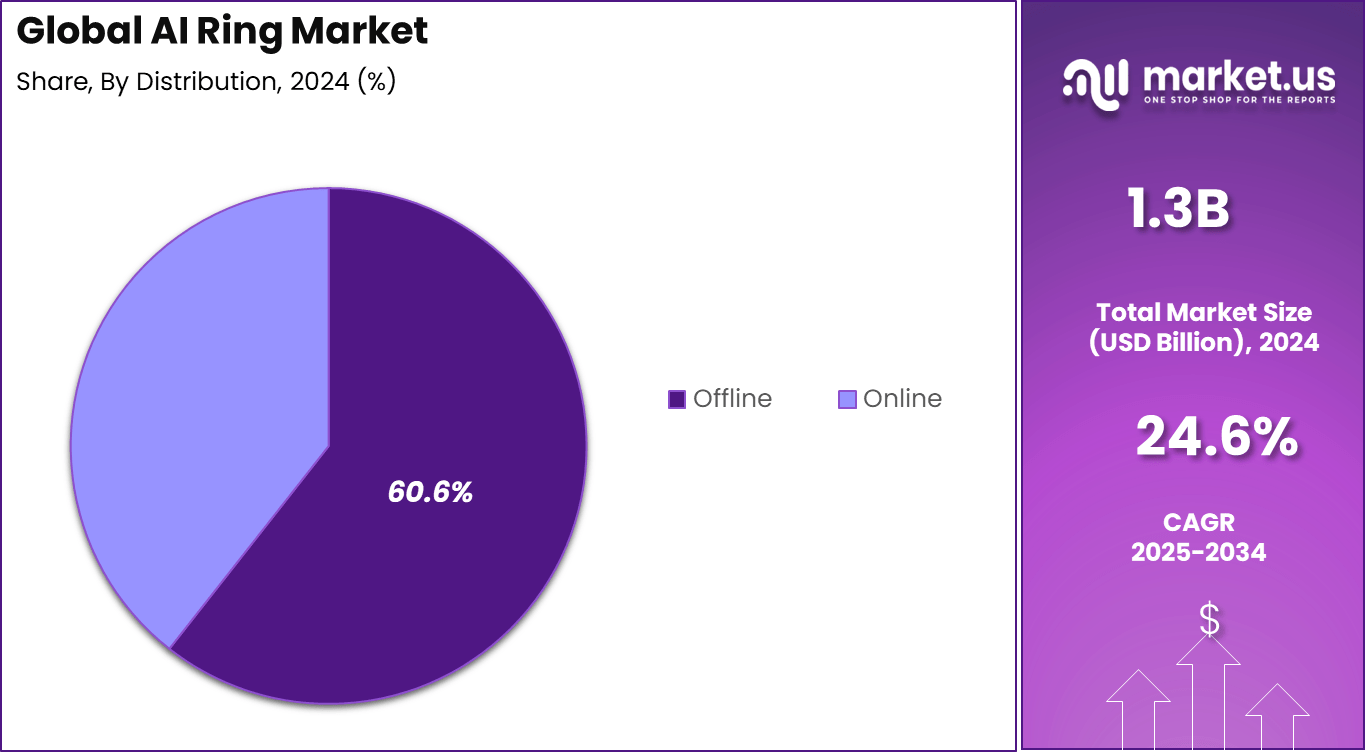
- Offline channels account for 60.6%, as buyers prefer in-store trials and guidance.
- North America holds 34.7%, supported by early adoption of wearable technology.
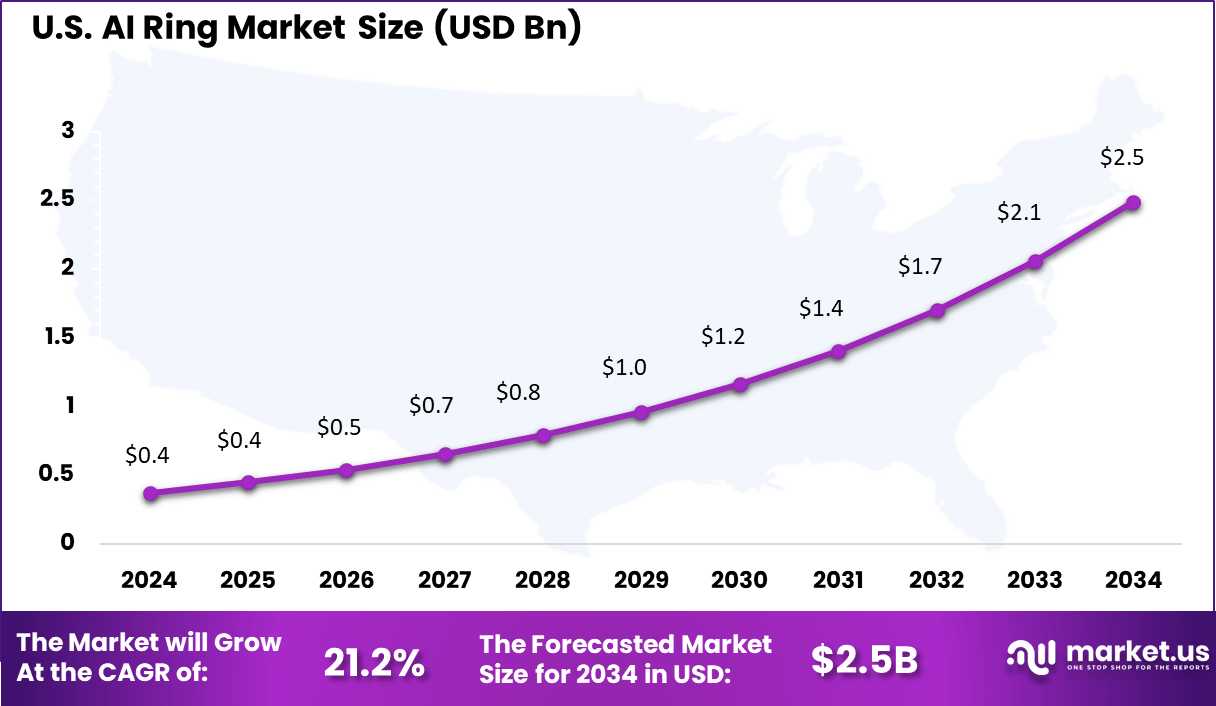
- The United States market reached USD 0.37 billion, growing at a strong 21.2% CAGR.
By Technology
Bluetooth-enabled smart rings lead with 70.4%, showing that wireless connectivity is the core technology driving AI ring adoption. Bluetooth allows seamless connection with smartphones and other smart devices, enabling real-time data exchange for health tracking, alerts, and notifications.The strong demand for Bluetooth-enabled rings is supported by low power consumption and ease of integration with existing mobile ecosystems. Users prefer rings that operate smoothly without complex setup, which makes Bluetooth the most practical and widely accepted technology for AI-powered wearables.
By Application
Notifications account for 38.7%, making it the leading application segment in the AI ring market. Users rely on smart rings to receive call alerts, messages, reminders, and app notifications in a discreet and convenient way. This segment benefits from growing demand for minimal and screen-free interaction. AI rings provide subtle feedback through vibration or light signals, which improves user focus while staying connected during work, fitness, or daily activities.
By Distribution Channel
Offline distribution holds 60.6%, reflecting strong consumer preference for in-store purchasing of wearable devices. Customers often want to physically inspect smart rings, check comfort, size, and design, before making a purchase decision. Retail stores also provide personalized guidance and sizing assistance, which is critical for ring-based devices. These factors continue to support offline sales, especially for first-time buyers and premium wearable products.
By Region
North America captured 34.7%, supported by high adoption of smart wearables and strong consumer interest in AI-driven personal devices. The region benefits from advanced digital infrastructure and early acceptance of emerging wearable technologies. Consumers in North America are highly receptive to health monitoring, smart notifications, and connected lifestyle devices. This behavior continues to strengthen regional demand for AI-enabled smart rings.
By Country
The United States reached USD 0.37 Billion and is growing at a CAGR of 21.2%, highlighting rapid adoption of AI rings across tech-aware consumers. Growth is supported by rising interest in compact wearables that combine convenience with intelligent features. Increasing focus on health insights, smart alerts, and hands-free interaction is driving demand in the US market. As consumers seek alternatives to smartwatches, AI rings are gaining attention for their simplicity and everyday usability.
Emerging Trends
One important trend is the integration of advanced health sensors into AI rings. Many devices now track heart rate, sleep patterns, body temperature and stress indicators. This trend positions AI rings as continuous wellness companions that can collect data with minimal user effort. Another trend is the development of gesture-based interaction. AI rings can recognize finger movements and hand motions, allowing users to control music, presentations or connected devices without touching screens. This form of interaction is gaining interest in workplaces, fitness environments and smart home settings.
Growth Factors
A major growth factor is the rising demand for compact and unobtrusive wearables. Users who prefer minimal devices often choose AI rings for convenience, comfort and discreet operation. Their small size allows everyday use without the bulk of larger wearables. Another growth factor is adoption of digital wellness habits. As more people monitor sleep, stress and daily activity, AI rings provide an always-on method of collecting health data. This supports long-term use and increases interest among health-conscious consumers.
Driver Analysis
A key driver is the expansion of contactless interaction in consumer electronics. AI rings offer simple ways to access voice assistants, manage notifications and control connected systems. As people rely more on hands-free tasks, this capability supports wider adoption. Another driver is the need for continuous authentication in financial services, workplace access and smart devices. AI rings can act as secure identity tools by using biometrics or encrypted signals. This demand for secure and convenient identity verification encourages growth in enterprise and consumer markets.
Restraint Analysis
A major restraint is the limited battery life of small wearable rings. The compact size restricts battery capacity, which can reduce runtime for AI based functions. Users may hesitate to adopt devices that require frequent charging. Another restraint is the challenge of fitting advanced sensors into a very small form factor. Some measurements may not reach the accuracy level of larger wearables, which can affect reliability in medical or athletic applications. This may slow adoption in use cases that require high precision.
Opportunity Analysis
There is strong opportunity in integrating AI rings with smart home ecosystems. Rings that support gesture control, secure access and voice activation can serve as convenient hubs for home automation. This creates new partnerships between wearable makers and smart device providers. Another opportunity lies in professional and enterprise use. AI rings can support secure workplace entry, hands-free communication, task monitoring and safety alerts in industries such as healthcare, logistics and manufacturing. These specialized applications offer room for market expansion beyond consumer wearables.
Key Market Segments
By Technology
- Bluetooth-enabled Smart Rings
- NFC-enabled Smart Rings
By Application
- Notifications
- Security
- Payment
- Health and wellness
- Data transfer
- Others
By Distribution
- Offline
- Online
Top Key Players in the Market
- Oura Health
- Ultrahuman
- McLear Ltd.
- Ringly Inc.
- Circular
- Motiv
- Bellabeat
- Sky Labs
- Tokenize Inc.
- Jakcom Technology Co. Ltd.
- Nimb Inc.
- Wellnesys Inc.
- E SENSES
- Fujitsu Ltd.
- Guangdong Jiu Zhi Technology Co. Ltd.
- Other Major Players
Report Scope
| Report Features | Description |
|---|---|
| Market Value (2024) | USD 1.3 Bn |
| Forecast Revenue (2034) | USD 11.3 Bn |
| CAGR(2025-2034) | 24.6% |
| Base Year for Estimation | 2024 |
| Historic Period | 2020-2023 |
| Forecast Period | 2025-2034 |
Discuss your needs with our analyst
Please share your requirements with more details so our analyst can check if they can solve your problem(s)