Market Snapshot and Growth Outlook
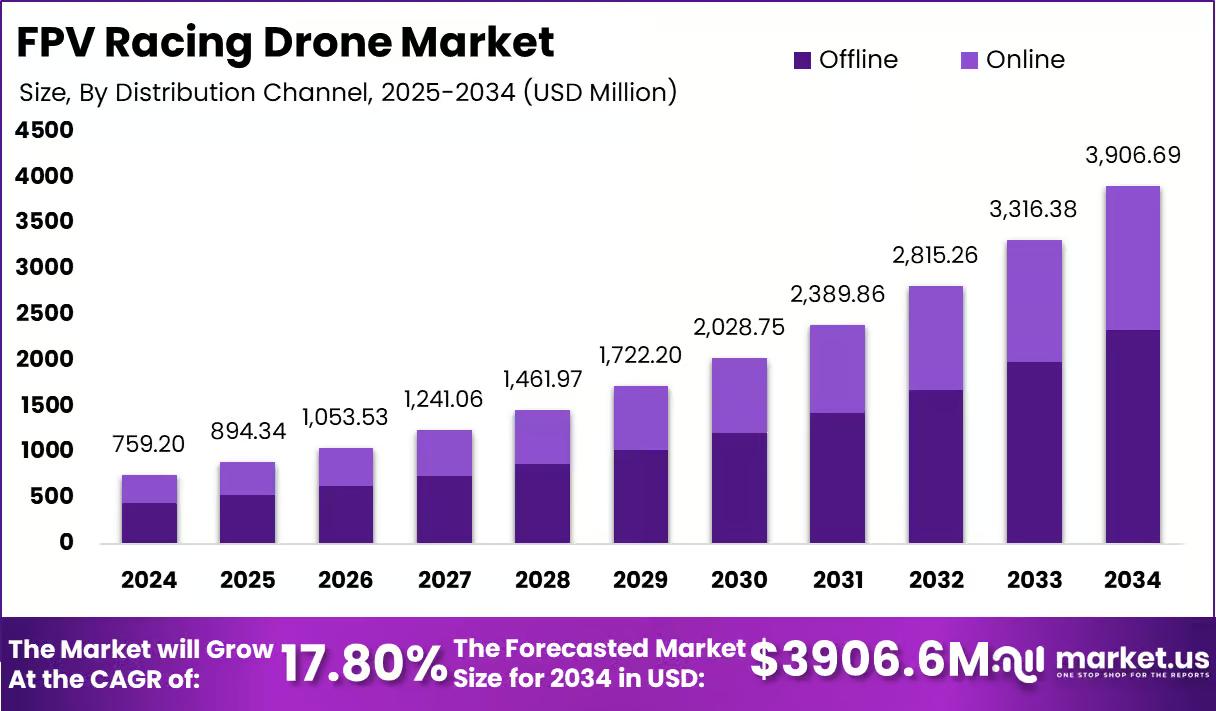
The global FPV Racing Drone Market reached a value of USD 759.2 million in 2024 and is projected to grow at a CAGR of 17.80%, reaching approximately USD 3,906.6 million by 2034. The market expansion reflects growing interest in drone racing, technological improvements in lightweight components, and the increasing adoption of drones in commercial applications.
North America accounted for a dominant 36.4% share in 2024, valued at USD 276.3 million. Within the region, the US contributed USD 248.7 million and is projected to reach USD 1,023.7 million by 2034, growing at a CAGR of 15.2%. Ready to Fly drones hold 49.5% share by type, FPV cameras lead components with 38.7%, offline distribution accounts for 59.8%, and commercial users represent 58.3% of market demand.
Economic Impact of FPV Racing Drone Market Expansion
The growing FPV racing drone industry is creating a noticeable economic ripple across manufacturing, electronics, and digital entertainment sectors. Production of lightweight frames, advanced sensors, batteries, and high-resolution cameras is stimulating demand across semiconductor and robotics supply chains.
Drone racing leagues and esports-style competitions are generating new revenue streams through sponsorships, media broadcasting rights, and merchandise sales. As hobbyist communities expand globally, consumer spending on drone kits, replacement parts, and accessories continues to increase. In addition, local drone clubs, training centers, and events contribute to tourism and regional economic activity.
The expansion also supports job creation in fields such as drone engineering, software development, event management, and digital broadcasting. Drone technology startups are attracting venture capital investments, while electronics manufacturers are benefiting from higher component demand. The ecosystem surrounding FPV drones now extends beyond recreation into areas like training simulation, cinematography, and technology testing environments.
Global Business Impact: Rising Costs and Industry Shifts
Global businesses operating in the drone ecosystem are experiencing changes in cost structures and supply chain dynamics. Rising demand for high-performance chips, lightweight composite materials, and lithium batteries has increased procurement costs. Manufacturers are also adapting supply chains to reduce dependence on single-region component sourcing, particularly for electronic modules and sensors.
Different sectors are experiencing varied impacts from the expansion of FPV drones. Entertainment and sports industries benefit from live drone racing events and immersive viewing experiences. Media and film production sectors increasingly adopt FPV drones for cinematic footage that traditional drones cannot capture. Meanwhile, logistics companies are exploring FPV drone technology to test rapid inspection and monitoring capabilities in warehouses and infrastructure facilities.
Strategic Approaches for Businesses
Businesses are adopting several strategies to benefit from the FPV drone market growth. Companies are investing in research and development to produce lighter frames, faster motors, and longer battery life systems. Partnerships with esports organizations and digital streaming platforms are helping increase brand visibility. Manufacturers are also expanding training programs for drone pilots and hobbyists to build stronger user communities.
Another strategy involves developing modular drone components that allow customization and easier upgrades. Retailers are combining online sales with in-store demonstration experiences to attract enthusiasts and professional users. Businesses are also focusing on improving software systems for real-time flight control, stabilization, and data analysis.
Key Takeaways
- The FPV Racing Drone Market reached USD 759.2 million in 2024 and is projected to reach USD 3,906.6 million by 2034.
- The market is expanding at a CAGR of 17.80% due to rising drone racing events and technology improvements.
- North America dominates with a 36.4% market share, with the US leading regional demand.
- Ready to Fly drones hold the largest share among product types.
- FPV cameras remain the most important component category due to their role in real-time racing control.
- Commercial users account for more than half of the global demand.
Analyst Perspective and Future Outlook
Market analysts observe strong momentum in the FPV racing drone industry as consumer enthusiasm and technological innovation continue to grow. The present market environment is characterized by increasing participation in drone racing competitions, rapid hardware improvements, and broader applications of FPV technology in commercial sectors. Improved battery efficiency and real-time video transmission capabilities are making FPV drones more reliable and accessible.
Looking ahead, the market outlook remains highly positive. Continuous integration of artificial intelligence, advanced sensors, and digital simulation training tools is expected to enhance drone performance and safety. The growth of esports and immersive broadcasting formats will likely attract new audiences to drone racing events. As regulations around recreational and commercial drone use evolve, the industry is expected to expand further into professional filming, inspection services, and advanced robotics applications.
Use Cases and Growth Factors
| Use Case | Growth Factor | Market Impact |
|---|---|---|
| Drone racing competitions | Rising global esports popularity | Drives equipment sales and sponsorship revenue |
| Cinematic filming | Demand for immersive aerial footage | Expands use of FPV drones in media production |
| Industrial inspection | Ability to navigate tight environments | Improves infrastructure monitoring efficiency |
| Pilot training simulations | Realistic drone control environments | Encourages skill development and technology adoption |
| Hobbyist communities | Growing DIY and tech enthusiast culture | Sustains consumer demand for drone components |
Regional Market Landscape
North America holds a leading 36.4% share of the FPV racing drone market in 2024, supported by strong consumer adoption, well-established drone racing leagues, and advanced electronics manufacturing capabilities. The region benefits from a strong community of drone enthusiasts and a high level of investment in robotics and aerial technologies.
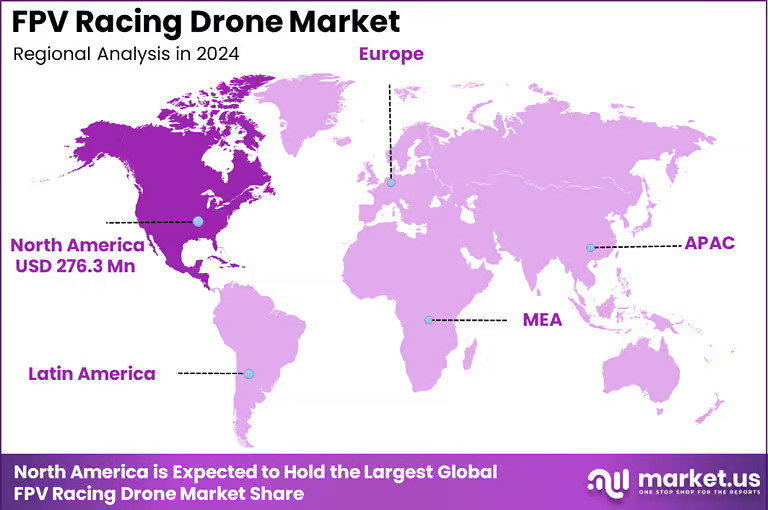
The United States represents the largest market within the region, generating USD 248.7 million in 2024 and projected to reach USD 1,023.7 million by 2034. Growth is supported by increasing participation in drone racing competitions, expanding esports viewership, and growing interest in FPV drone applications across media production and commercial industries.
Emerging Business Opportunities
Further, the rapid expansion of the FPV racing drone market is opening multiple business opportunities across technology, entertainment, and services sectors. Manufacturers can capitalize on demand for advanced drone kits, modular components, and high-performance batteries designed for competitive racing. Software developers have opportunities to build improved flight control systems, simulation training platforms, and analytics tools that enhance pilot performance.
Event organizers and media companies can benefit from the increasing popularity of drone racing tournaments by producing live broadcasts and digital content. Retailers and training institutions may also expand drone pilot certification programs, workshops, and racing events. Additionally, new opportunities exist in drone insurance services, repair networks, and aftermarket accessories.
Key Segmentation Overview
The FPV racing drone market is segmented by type, components, distribution channel, and end user. By type, Ready to Fly drones hold the largest share with 49.5%, as they provide ease of use for beginners and competitive pilots. By component, FPV cameras dominate with a 38.7% share due to their essential role in real time video transmission and navigation.
Moreover, in terms of distribution channels, offline retail leads with 59.8% share as enthusiasts prefer physical inspection and expert guidance before purchase. By end user, commercial users represent 58.3% of market demand, driven by applications in media production, training, and technology testing environments.
Competitive Market Landscape
The competitive landscape of the FPV racing drone market is characterized by continuous innovation and product differentiation. Market participants are focusing on developing lightweight drone frames, improved flight stabilization systems, and high-resolution FPV cameras that enhance racing performance. Companies are also investing in advanced battery technologies to increase flight duration and reduce recharge times.
Top Key Players in the Market
- BETAFPV
- Radiomaster
- MEPS
- EMAX
- iFlight
- GEPRC
- Fat Shark
- RunCam
- SpeedyBee
- CaddxFPV
- FIVE33
- Team BlackSheep (TBS)
- HGLRC
- Foxeer
- Axisflying
- RCinpower
- Others
Competition is further driven by rapid product launches, partnerships with drone racing leagues, and community engagement initiatives. Many companies are building ecosystems that include drone kits, accessories, software platforms, and pilot training resources. This integrated approach allows businesses to strengthen brand loyalty while supporting the growth of global drone racing communities.
Recent Industry Developments
• Drone racing events have expanded into large-scale international competitions with live streaming audiences.
• New FPV drone models with enhanced camera stabilization and low-latency video transmission have been introduced.
• Drone training simulators and virtual racing platforms are gaining popularity among professional pilots and hobbyists.
Conclusion
The FPV racing drone market is evolving rapidly as technological innovation, esports popularity, and commercial applications continue to expand. With strong growth projections, increasing consumer interest, and expanding global participation, the industry is positioned for significant long term development across entertainment, technology, and industrial sectors.
Discuss your needs with our analyst
Please share your requirements with more details so our analyst can check if they can solve your problem(s)