Sharp edges on steel, lumber, or machinery will cut webbing or grind chain if nothing sits between them.
Corner guards take that pressure and spread it out, protecting both the cargo and the securement truck parts holding it down. Drivers and fleet managers who want straightforward answers often click for info before they decide which truck parts belong on the truck that day.
Why the Material Choice Matters
A strap or chain under tension focuses force on a thin line. Without a guard the webbing frays, the cargo scars, or both. The right material keeps the securement intact and the freight undamaged.
A 2025 Heavy Duty Trucking guide on open-deck trailers points out that corner protectors can shield webbing from sharp cargo edges while also distributing downward pressure so the securement system does not crush vulnerable materials such as shingles.
That same idea applies to most rough loads: the guard is the buffer that lets the system do its job.
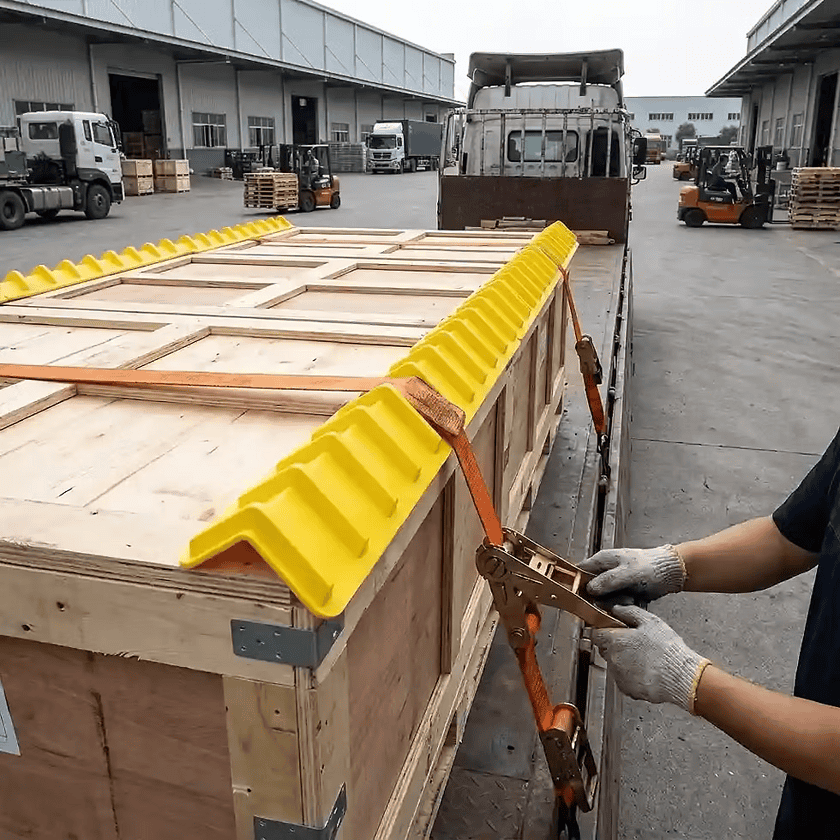
Plastic Guards for Everyday Loads
High-density polyethylene guards are light, stackable, and shrug off rain and road salt, which puts them among the lower-maintenance truck parts on any flatbed. Raised edges or slots keep the strap from sliding. They work well with ratchet or winch straps on lumber packages, drywall, insulated panels, and palletized crates. The plastic flexes enough to sit tight against slightly uneven surfaces and costs less when you go through a lot of them. For clean edges and webbing, plastic is usually the practical pick. Many operators keep a stack on the truck alongside other spare truck parts and click for info when they need the length that matches their common loads.
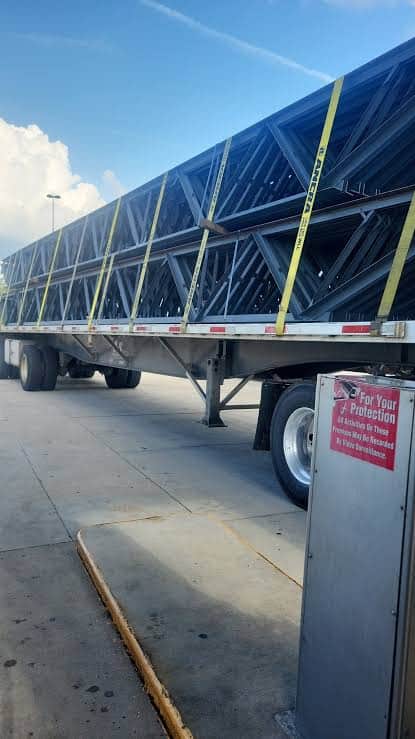
Metal Guards When Edges Get Rough
Steel or rubber-lined metal guards handle the loads that punish softer material. A groove or slot holds chain in place while the steel itself takes the high point loads from binders. Rubber facing adds grip and reduces marking on finished surfaces. These heavy-duty truck parts belong on structural steel, coils, machinery with sharp brackets, and any freight that travels mostly under chain. The hardness matches the edge. The chain stays protected and the cargo stays intact.
Metal weighs more and costs more up front, but like most well-built truck parts, it lasts through repeated hard use. It can be overkill for lighter packaged goods.
Click for Info: How to Match Corner Guards to Cargo and Tie-Downs
Ask two questions: how sharp or dense is the edge, and is the primary securement webbing or chain? Soft or crushable edges with straps lean toward plastic. Hard, sharp edges with chain lean toward metal. Mixed fleets usually carry both so the right one is available. Length matters too. Short pieces cover single corners. Longer boards spread force across a full package of lumber or sheet goods. The guard should be wider than the contact area of the strap or chain.
Weather and reuse also play a part. Plastic handles wet conditions without rust. Good galvanized or rubber-coated metal survives cycle after cycle. Both are reusable when they stay undamaged.
On the Job
The best guard is the one you can grab and seat correctly without slowing the load-out. Plastic is easier to handle in volume. Metal needs a bit more care but delivers when the freight demands it. Operators who move both kinds of cargo already know which profiles call for which material. When sizing or compatibility questions come up, they click for info on the utility website, get the information, and keep moving.
Corner guards are part of the securement system, not an optional extra. Matching plastic or metal to the edge keeps the load predictable from the yard to the destination.