Table of Contents
Market Overview
The Big Data Finance market is expanding steadily as financial institutions increasingly rely on data-driven insights to improve decision-making, risk control, and customer engagement. The market was valued at USD 62.4 billion in 2024 and is projected to reach USD 287.37 billion by 2034, growing at a CAGR of 16.5%.
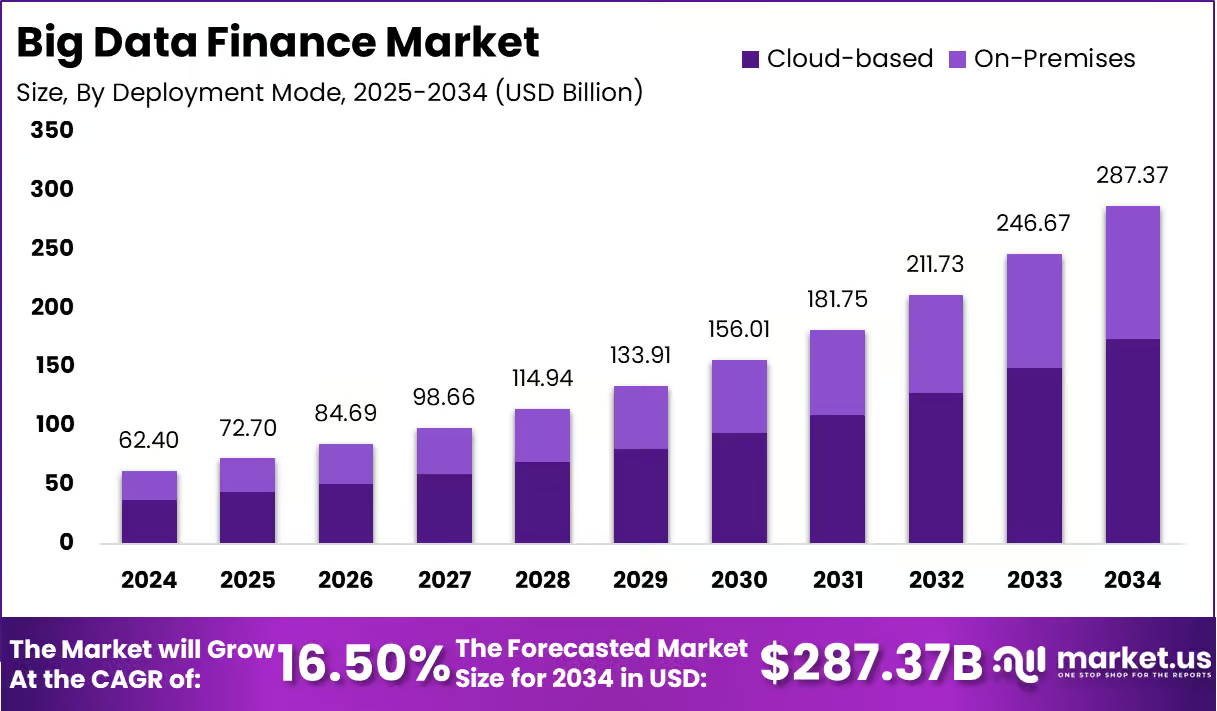
This growth is supported by the rising adoption of AI-powered analytics, cloud platforms, and real-time data processing across banking and financial services. Organizations are focusing on enhancing operational efficiency and regulatory compliance through advanced analytics solutions. Big data is becoming a critical foundation for modern financial ecosystems and digital banking strategies.
Key Takeaways
- Market size in 2024: USD 62.4 billion
- Forecast value by 2034: USD 287.37 billion
- CAGR 2025 to 2034: 16.5%
- North America’s share in 2024: 40.2%
- North America value in 2024: USD 25.08 billion
- U.S. market value in 2024: USD 22.47 billion
- U.S. forecast by 2034: USD 89.34 billion
- Software segment share: 64.3%
- Cloud deployment share: 60.5%
- Risk and compliance application share: 31.2%
- Structured data share: 50.8%
- Retail banking share: 41.3%
Role of AI
Artificial intelligence is transforming big data finance by enabling faster data processing, predictive analytics, and automated decision-making. AI helps financial institutions detect fraud patterns, assess credit risk, and forecast market trends with higher accuracy. Machine learning models analyze vast volumes of structured and unstructured data to generate insights that support lending, trading, and customer engagement strategies.
AI also enhances personalization by identifying customer behavior patterns and recommending tailored financial products. As financial systems become more complex, AI-integrated analytics platforms are expected to improve efficiency, reduce risk exposure, and strengthen competitive positioning in the financial services industry.
Analyst’s Viewpoint
The Big Data Finance market is entering a mature growth phase where analytics is no longer optional but essential for competitive survival. The strong share of software indicates that institutions are investing heavily in advanced analytics platforms and decision support tools. Cloud adoption continues to accelerate as firms seek scalability and faster deployment.
From an analyst perspective, risk and compliance applications will remain a core driver due to increasing regulatory pressure globally. Retail banking dominance highlights the growing importance of customer-centric strategies powered by data. Overall, the market outlook remains positive as financial institutions continue to prioritize digital transformation and intelligent data utilization.
Regional Highlights
North America led the market in 2024 with a 40.2% share, generating around USD 25.08 billion, supported by strong fintech ecosystems and advanced financial infrastructure. The United States dominated the region with USD 22.47 billion and is expected to reach USD 89.34 billion by 2034, driven by high adoption of cloud analytics and AI technologies.
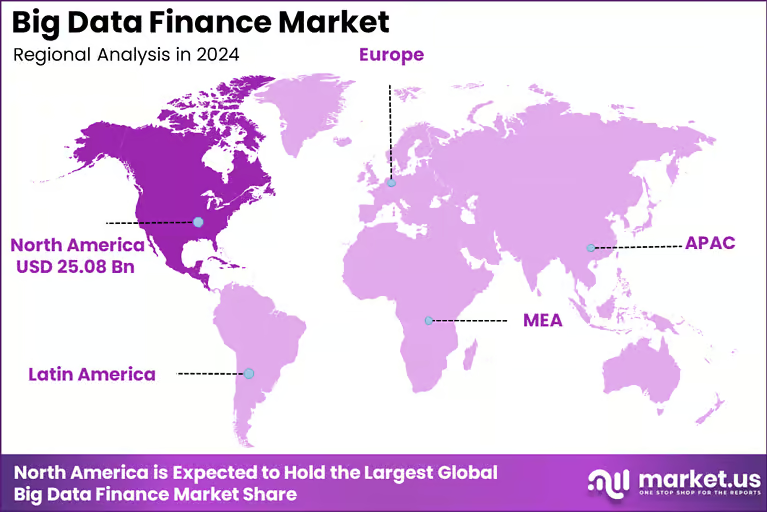
The region benefits from early technology adoption, strong regulatory frameworks, and significant investments in financial innovation. Other regions are gradually expanding their presence as digital banking and fintech adoption increase, but North America continues to lead in terms of scale, innovation, and enterprise-level implementation.
Key Market Segmentation
- By Component: Software leads with 64.3% due to high demand for analytics platforms, data processing tools, and AI-driven financial applications.
- By Deployment Mode: Cloud dominates with 60.5%, as organizations prefer scalable and cost-efficient analytics infrastructure.
- By Application: Risk and compliance management holds 31.2%, driven by increasing regulatory requirements and fraud detection needs
- By Data Type: Structured data leads with 50.8% as transactional and customer data remain critical for financial analysis.
- By End User: Retail banking accounts for 41.3%, supported by growing use of data for personalization and customer analytics
Emerging Trends
- Increasing use of AI-driven predictive analytics in financial decision-making
- Growing integration of big data platforms with cloud and fintech ecosystems
- Rising adoption of real-time analytics for fraud detection and risk monitoring
- Expansion of personalized banking services based on customer data insights
- Strong focus on data governance and regulatory compliance solutions
Top Use Cases
- Fraud detection and prevention through real-time data analysis
- Credit risk assessment and lending decision support
- Customer segmentation and personalized product recommendations
- Algorithmic trading and market trend forecasting
- Regulatory reporting and compliance monitoring
Major Challenges
- Data privacy and security concerns in handling sensitive financial data
- Integration complexity with legacy banking systems
- High cost of implementation and skilled workforce requirements
- Data quality and consistency issues across multiple sources
- Regulatory constraints affecting data usage and sharing
Attractive Opportunities
- Expansion of AI-powered analytics solutions in emerging markets
- Growth in digital banking and fintech-driven data platforms
- Increased demand for real-time analytics and decision automation
- Development of industry-specific analytics tools for financial services
- Rising adoption among mid-sized financial institutions
Business Benefits
Big data finance solutions offer significant benefits by enabling faster and more accurate decision-making across financial operations. They help institutions detect fraud early, manage risk effectively, and improve customer engagement through personalized services. Real-time analytics allows organizations to respond quickly to market changes and operational challenges.
Cloud-based platforms reduce infrastructure costs while improving scalability and flexibility. These solutions also support regulatory compliance by ensuring accurate reporting and monitoring. Overall, big data finance enhances operational efficiency, reduces risk exposure, and drives better financial performance, making it a critical investment for modern financial institutions.
Recent Developments
Financial institutions are increasingly adopting AI-powered analytics platforms, enhancing real-time fraud detection systems, and expanding cloud-based data infrastructure. There is also growing investment in regulatory technology solutions to improve compliance and data governance across financial ecosystems.
Key Players Analysis
The market is characterized by strong competition among technology providers offering analytics software, cloud platforms, and AI-driven solutions. Companies are focusing on innovation, scalability, and integration capabilities to meet evolving financial industry requirements and strengthen their market presence.
Top Key Players in the Market
- Microsoft Corporation
- Amazon Web Services (AWS)
- IBM Corporation
- Oracle Corporation
- SAS Institute
- SAP SE
- Salesforce
- Databricks
- Snowflake
- Cloudera
- Alteryx
- Palantir
- Others
Customer Insights
Customers in the Big Data Finance market prioritize solutions that offer high accuracy, strong security, and seamless integration with existing financial systems. Large financial institutions are the primary adopters due to their complex data requirements and regulatory obligations. Buyers prefer cloud-based platforms for flexibility and cost efficiency.
There is also increasing demand for user-friendly interfaces and real-time analytics capabilities. Customer needs vary across segments, with retail banking focusing on personalization, while corporate and investment banking emphasize risk management and compliance. Overall, purchasing decisions are driven by performance, reliability, and the ability to deliver actionable insights.
Future Outlook
The future of the Big Data Finance market is expected to remain strong as financial institutions continue to embrace digital transformation and data-driven strategies. AI and machine learning are anticipated to become more deeply integrated into financial analytics, enabling smarter and faster decision-making. Cloud adoption is likely to increase further, supporting scalability and global operations.
Regulatory requirements will continue to drive demand for compliance solutions. While large institutions will remain key contributors, adoption among smaller firms is expected to grow as technology becomes more accessible. Over time, big data finance is projected to become a core pillar of financial innovation.
Conclusion
The Big Data Finance market is set for sustained growth driven by increasing reliance on data analytics, AI integration, and cloud-based platforms across financial services. Strong adoption in North America, combined with expanding global demand, highlights the market’s long-term potential.
The dominance of software, cloud deployment, and retail banking reflects the importance of scalable analytics and customer-centric strategies. As financial institutions face growing regulatory and competitive pressures, big data solutions provide essential tools for risk management, operational efficiency, and innovation. Overall, the market is well-positioned to play a central role in shaping the future of the financial industry.
Discuss your needs with our analyst
Please share your requirements with more details so our analyst can check if they can solve your problem(s)