Table of Contents
QR Codes Market Size
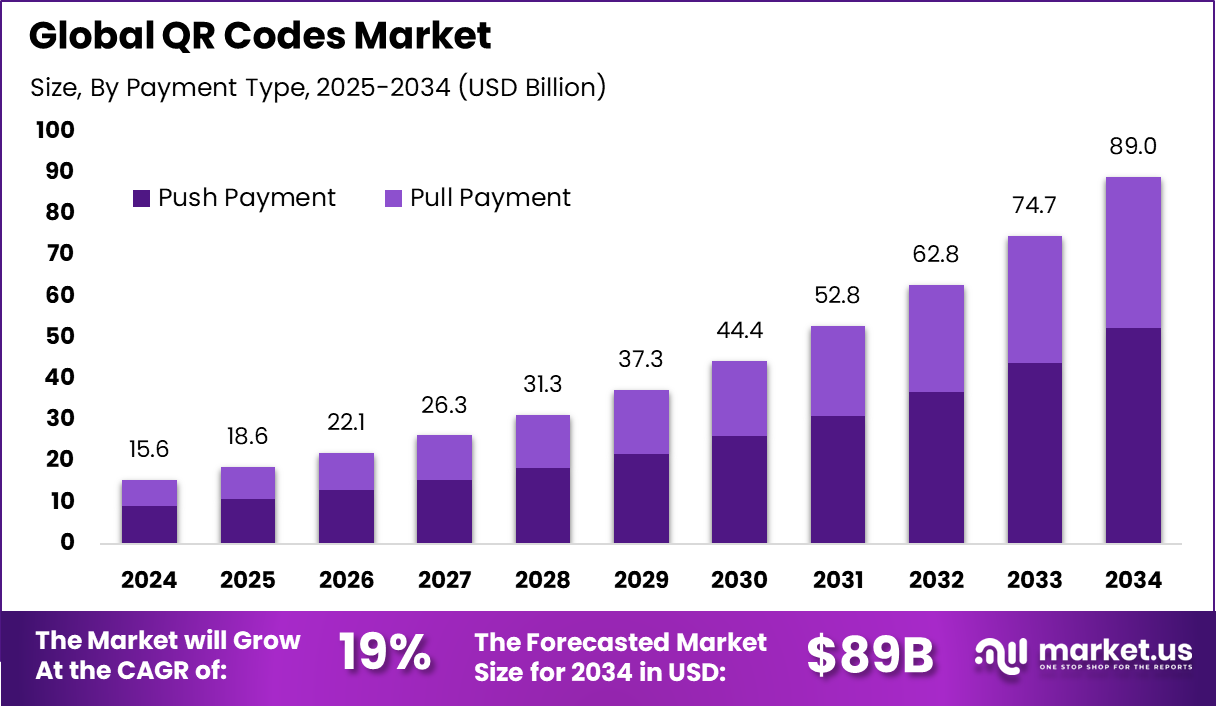
The global QR Codes market generated USD 15.6 billion in 2024 and is expected to expand rapidly over the forecast period. Revenue is projected to increase from USD 18.6 billion in 2025 to nearly USD 89 billion by 2034, reflecting a strong CAGR of 19%. This growth is driven by rising use of QR codes in digital payments, marketing campaigns, and customer engagement activities. Increasing smartphone penetration and contactless solutions are further supporting market expansion.
QR Codes Market Overview
The QR codes market refers to technologies and services that generate, manage, and scan quick response codes used to encode information that can be accessed by smart devices. QR codes enable connections between physical objects and digital content including web links, product information, payments, and authentication. Adoption spans retail, logistics, healthcare, transportation, marketing, and payment systems where rapid data access and interaction are required. Market growth is supported by expanding mobile device usage and the need for frictionless digital engagement at points of contact.
Growth in this market has been shaped by increased demand for touch free and efficient information exchange. Consumers and enterprises use QR codes to access content, complete transactions, trace products, and share information without direct human contact. The simplicity of scanning with a camera and the low cost of implementation have reinforced usage across sectors. As digital transformation initiatives accelerate, QR codes have become integral to customer experience and operational processes.
Top Driving Factors
One major factor driving the QR codes market is the proliferation of smartphones with built in scanning capabilities that make QR code access ubiquitous. Users can scan codes directly with device cameras without requiring additional applications. This ease of access has encouraged organizations to integrate QR codes into consumer touch points and internal workflows. A broad installed base of smart devices has thus expanded potential use cases.
Another driving factor is the demand for contactless interactions that improve convenience and safety. Businesses have adopted QR codes for menus, tickets, payments, and information access to reduce physical contact. The need for hygienic solutions has reinforced the role of QR codes in service delivery. These drivers have strengthened adoption in public facing and high volume environments.
Regional Analysis
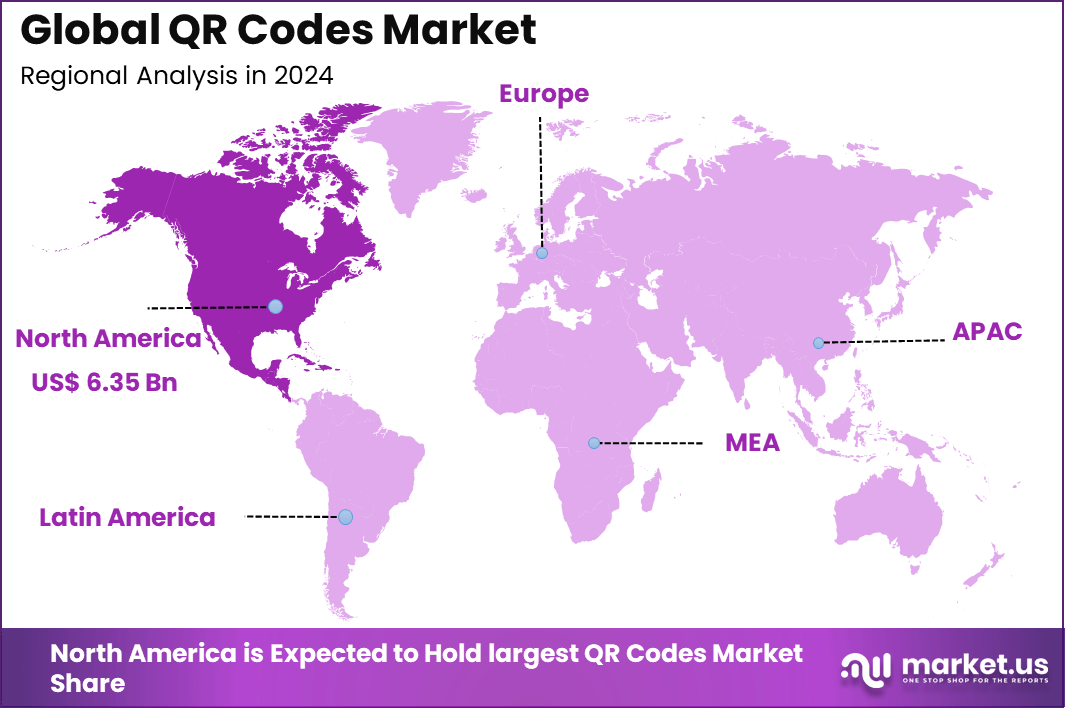
In 2024, North America held a dominant position in the global market, accounting for more than 40.7% of total revenue. The region generated approximately USD 6.35 billion, supported by early adoption of digital payment systems and strong retail integration. Widespread use of QR codes across banking, healthcare, and public services further strengthened regional leadership. As a result, North America continued to influence market adoption and innovation trends.
Investment Opportunities
Investment opportunities in the QR codes market exist in secure and dynamic code generation platforms that support real time content updates. Solutions that allow backend control of codes after issuance can increase flexibility for marketing and operational campaigns. Investors may find potential in platforms that emphasize security features for sensitive use cases such as payments and authentication. Innovation in dynamic QR technology can attract enterprise interest.
Another opportunity lies in analytics and integration services that link QR code interactions with customer relationship management and business intelligence systems. Insights derived from scanning patterns can support personalized marketing and operational improvements. Companies that offer integrated analytics and workflow automation can differentiate their offerings. Investments in these areas can capture value as organizations seek more than static code deployment.
Business Benefits
Adoption of QR code solutions enables businesses to streamline customer journeys and reduce friction in service access. Quick interactions support faster engagement and can increase conversion rates for campaigns and transactions. This efficiency contributes to improved operational performance. Organizations can also repurpose printed assets without reprinting by updating backend content linked to dynamic codes.
QR codes also support enhanced data capture and traceability across processes. Scanning events generate data that can inform decisions related to product interest, location based engagement, and user preferences. This actionable information supports targeted marketing and operational refinement. Enhanced visibility into user behavior strengthens strategic planning and competitive positioning.
Regulatory Environment
The regulatory environment for the QR codes market includes data privacy and consumer protection standards that govern how scanned data is collected and used. Organizations must ensure compliance with regional privacy laws when capturing user information through QR interactions. Secure handling of personal data and transparent consent practices are essential to maintain legal conformity. Compliance with these frameworks builds trust and reduces risk of regulatory enforcement.
Regulations related to financial transactions also influence QR code payment implementations. Payment systems using QR codes must adhere to standards set by financial regulators and payment networks to ensure security and fraud prevention. Providers must comply with anti money laundering and authentication requirements where applicable. Adherence to these regulatory obligations supports safe and lawful operation of QR code based financial services.
Emerging Trend Analysis
The QR codes market is evolving with increasing adoption of dynamic and interactive QR solutions that connect physical objects to digital content in real time. Dynamic QR codes allow businesses to update the destination URL or content after printing, which enhances flexibility and extends use cases across marketing, payments, and information dissemination. This trend supports seamless interaction between offline and online environments. As organizations seek efficient ways to engage customers, dynamic QR implementation continues to grow.
Another emerging trend is the integration of QR codes into contactless payment systems and digital wallets. Consumers can scan codes with mobile devices to complete transactions instantly, reducing the need for physical cards or cash. The COVID-19 period accelerated adoption of contactless channels, and QR-based payments have since remained popular in both retail and service sectors. Wider acceptance of mobile scanning reinforces the role of QR codes as a trusted interface for cashless commerce.
Driver Analysis
One key driver of market growth is the widespread use of smartphones equipped with built-in QR scanning capabilities. Most modern devices include native support in camera applications, which eliminates barriers to access and encourages consumer interaction. This universal availability of scanning tools has made QR codes more visible and easier to use for a broad audience. As mobile usage continues to rise globally, QR scanning becomes a standard action in consumer behavior.
Another driver is the demand for streamlined processes in business operations, such as digital menus, product traceability, and customer feedback collection. QR codes allow businesses to present digital content quickly without requiring apps or complex logins. For example, restaurants, retail outlets, and service providers use codes to share menus, promotions, and loyalty program links. This operational simplicity supports efficiency and enhances customer convenience.
Restraint Analysis
One restraint on market expansion is concern over security vulnerabilities that can be exploited through malicious QR codes. Scanning a compromised code may direct users to phishing sites, download harmful content, or trigger unauthorized actions. Security awareness remains a challenge, and organizations must educate users and implement protective measures to reduce risks. Without clear security assurances, consumer trust may be affected.
Another restraint arises from inconsistent user experience due to poorly designed QR implementations. Codes that lead to outdated content, slow loading pages, or complex navigation can frustrate users. Inadequate planning and design diminish the effectiveness of QR campaigns and may discourage repeat usage. Ensuring optimized landing experiences is therefore critical to maintain engagement.
Opportunity Analysis
There is significant opportunity in expanding QR code applications for asset tracking and supply chain visibility. QR codes can be affixed to products, containers, or equipment to provide real-time access to status, history, and movement information. This capability supports improved transparency, inventory accuracy, and operational monitoring across sectors such as logistics, manufacturing, and healthcare. Enhanced tracking solutions can reduce loss and improve efficiency.
Another opportunity lies in combining QR codes with augmented reality (AR) experiences that unlock immersive content when scanned. AR overlays on products, packaging, or physical spaces can deliver interactive visuals, tutorials, or brand stories. This fusion of physical and digital engagement creates memorable customer experiences that support marketing and education efforts. As AR adoption grows, QR-linked experiences can expand reach.
Challenge Analysis
A major challenge for the market is ensuring interoperability across platforms and devices. Although most modern mobile systems support QR scanning, differences in software behavior or camera functionality can affect usability. Ensuring consistent scanning performance across a wide range of device models and operating systems remains essential for universal adoption. Fragmented user experiences can limit usefulness.
Another challenge is balancing simplicity with deeper functionality in QR applications. Users appreciate quick access and clarity, but advanced use cases such as payments or data tracking may require additional authentication or steps that complicate the process. Designers must ensure that extended functionality does not undermine ease of use. Achieving this balance is essential to sustain adoption among diverse user groups.
Top Key Players in the Market
- PayPal Holdings, Inc.
- UnionPay International Co., Ltd.
- Nearex Pte Ltd.
- QR Code Kit Inc.
- Adobe Inc.
- Others
Key Market Segments
By Type
- Website QR Code
- Menu QR Code
- File-Download QR Code
- Social-Media QR Code
- App-Store QR Code
- Other Types
By Payment Type
- Push Payment
- Pull Payment
By Format
- Static QR Code
- Dynamic QR Code
By End-User Application
- Payments and Transactions
- Marketing and Advertising
- Information Sharing
- Customer Engagement and Loyalty
- Other End-User Applications
Discuss your needs with our analyst
Please share your requirements with more details so our analyst can check if they can solve your problem(s)