Market Overview
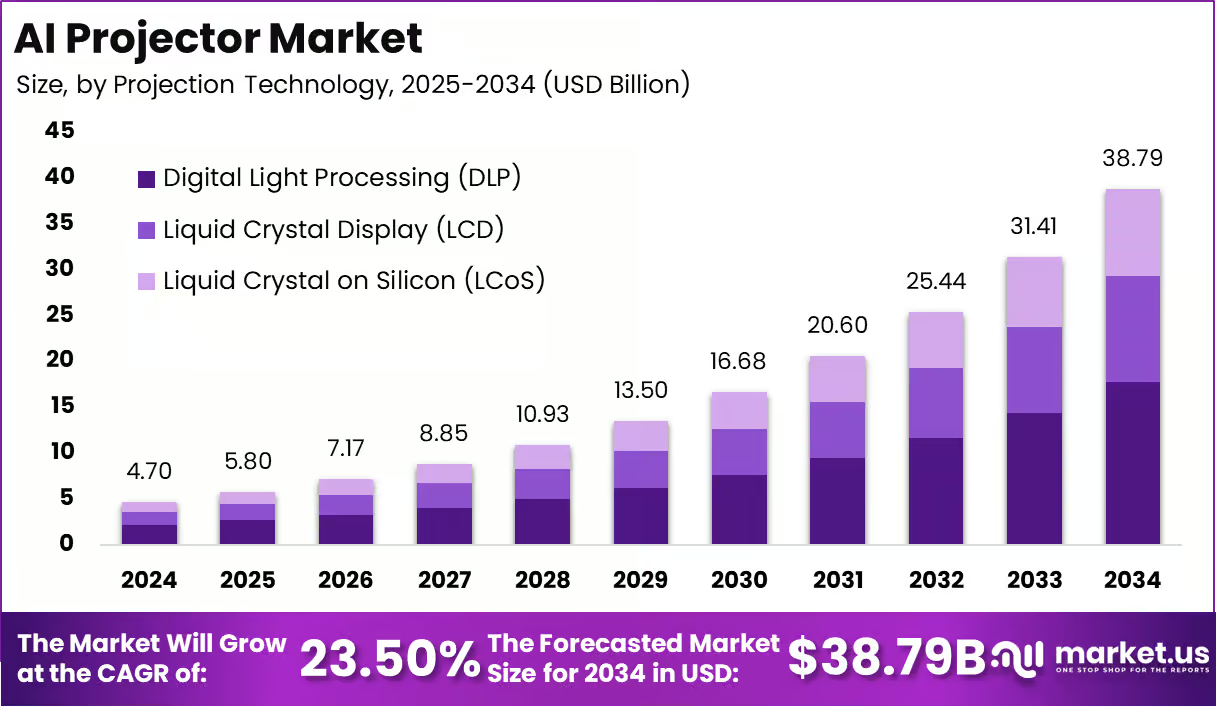
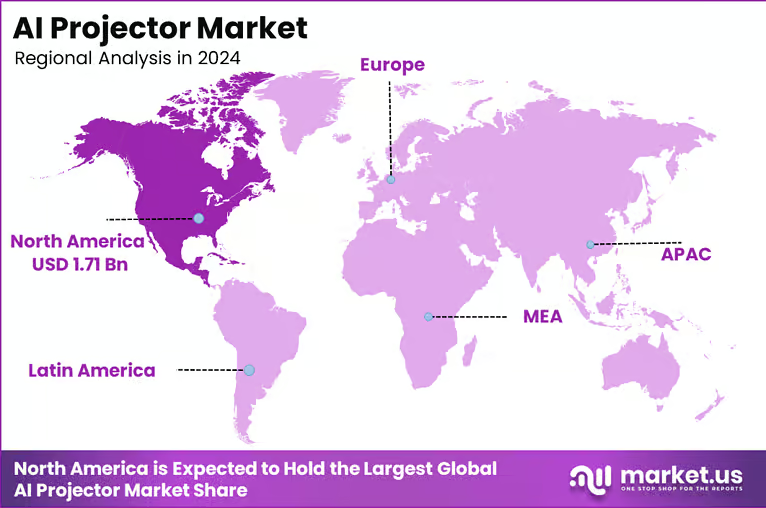
The AI Projector Market was valued at USD 4.70 billion in 2024 and is projected to reach USD 38.79 billion by 2034, expanding at a CAGR of 23.5% over the forecast period. This strong growth reflects rising demand for intelligent projection systems across education, business, and entertainment sectors. North America accounted for 36.4% of the global market, supported by early adoption of advanced display technologies. The United States contributed significantly, with a market size of USD 1.45 billion in 2024 and is expected to reach USD 10.00 billion by 2034, registering a CAGR of 21.3% during the forecast period.
The AI Projector Market is witnessing strong momentum as intelligent display systems gain wider use across education, business, and entertainment. Growth is being supported by the rising need for smart projection solutions that improve visual quality, automation, and interactive engagement. The market is also benefiting from higher adoption of digital classrooms, hybrid work setups, and immersive content experiences.
Digital Light Processing technology remains the leading projection technology because of its image sharpness and energy efficiency. Ultra-short-throw models are gaining traction for their space-saving design, while 3D and pen-based systems continue to strengthen demand in interactive and experience-driven environments across global end-user industries.
Key Takeaways
- 2024 Size: 4.70
- 2034 Size: 38.79
- CAGR: 23.5%
- North America share: 36.4%
- US market size in 2024: USD 1.45 billion
- US projected value by 2034: USD 10.00 billion
- US CAGR: 21.3%
- Leading projection technology: Digital Light Processing at 45.7%
- Leading projection type: Ultra Short Throw at 40.8%
- Leading dimension: 3D at 70.7%
- Leading interaction type: Pen-based systems at 65.4%
- Leading resolution: Full HD (1920×1080) at 48.6%
- Leading application: Interactive Learning at 35.7%
- Leading end user: Educational Institutions at 32.8%
Role of AI
AI is reshaping the projector market by turning conventional projection systems into smarter visual tools. It helps improve autofocus, image correction, brightness adjustment, voice control, object recognition, and content personalization. In classrooms, AI projectors support interactive teaching, real-time annotation, and adaptive learning experiences.
Business settings, they help automate presentations, improve collaboration, and reduce setup time. In entertainment, AI enhances image optimization and immersive viewing quality. These capabilities are increasing the practical value of projectors beyond display functions. As users expect more intelligent and responsive devices, AI is becoming a core technology layer that improves usability, efficiency, and overall experience across multiple end-use environments.
Analyst’s Viewpoint
The AI Projector Market is moving from a niche smart device category into a broader mainstream display segment. Its growth pattern shows that buyers are no longer looking only for projection quality, but also for ease of use, interactivity, and intelligent performance. Education remains the strongest demand center because institutions increasingly need collaborative and digital learning infrastructure.
At the same time, business users are adopting AI projectors to improve efficiency in meetings and training environments. The strong share of 3D, ultra-short-throw, and pen-based systems shows that users value immersive and interactive functions. Over the coming years, vendors that combine strong image output with practical AI features are expected to gain a stronger competitive position.
Regional Highlights
North America held the leading position in the AI Projector Market with a 36.4% share, supported by faster adoption of AI-enabled display systems and stronger spending on smart classrooms and corporate automation. The region benefits from mature digital infrastructure and higher technology awareness among institutions and enterprises.
The United States remains the key regional market, reaching USD 1.45 billion in 2024 and projected to expand to USD 10.00 billion by 2034 at a CAGR of 21.3%. This performance reflects broad demand from schools, offices, and consumer users. North America is expected to remain a major innovation center as buyers continue to adopt intelligent projection tools that improve collaboration, learning, and visual engagement.
Key Market Segmentation
- By Projection Technology: Digital Light Processing led with 45.7% due to better image clarity, brightness, and energy efficiency.
- By Projection Type: Ultra Short Throw held 40.8% because users prefer compact systems with minimal space needs.
- By Dimension: 3D accounted for 70.7%, reflecting strong demand for immersive visual experiences.
- By Interaction Type: Pen-based systems captured 65.4% as interactive classrooms and collaborative use expanded.
- By Resolution: Full HD (1920×1080) represented 48.6% owing to demand for clear and high-quality output.
- By Application: Interactive Learning led with 35.7%, supported by rising digital education adoption.
- By End User: Educational Institutions held 32.8%, making education the primary demand-generating sector.
Emerging Trends
- Growing preference for AI-powered auto focus and keystone correction
- Faster adoption of ultra-short-throw projectors in compact spaces
- Rising demand for immersive 3D projection in education and entertainment
- Higher use of interactive pen-based systems in digital classrooms
- Strong shift toward smart projectors integrated with connected ecosystems
Top Use Cases
- Smart classroom teaching and interactive lessons
- Corporate meetings and AI-assisted presentations
- Training and simulation environments
- Home entertainment and immersive media viewing
- Museum, exhibition, and experience center displays
Major Challenges
- High initial cost of advanced AI-enabled projector systems
- Integration issues with legacy classroom and office infrastructure
- Limited awareness in price-sensitive developing markets
- Maintenance complexity in high-usage institutional environments
- Need for continuous software and feature updates
Attractive Opportunities
- Expansion of digital education infrastructure worldwide
- Rising deployment in hybrid offices and collaboration spaces
- Demand for portable and compact smart projection systems
- Growth potential in immersive entertainment applications
- Product innovation through AI-based personalization and automation
Business Benefits
AI projectors offer clear business value by improving visual communication, reducing manual setup, and increasing user engagement. In classrooms, they support better teaching delivery and interactive participation. In offices, they help teams present, collaborate, and share content more efficiently. Their intelligent features reduce adjustment time and improve operational convenience, which supports productivity.
Space-saving ultra-short-throw designs also help organizations use meeting rooms and classrooms more effectively. For institutions and enterprises, these systems can strengthen digital transformation efforts by combining display quality with smart functionality. This makes AI projectors attractive for buyers seeking both performance and ease of operation in modern professional and learning environments.
Recent Developments
Manufacturers are focusing on AI-enabled image correction, interactive learning functions, and compact projector formats. Market activity is increasingly centered on improving automation, user convenience, and immersive display performance, especially for education and business settings where smart projection systems are becoming more important in daily operations.
Key Players Analysis
The market is becoming more competitive as participants focus on intelligent imaging, user-friendly software, interactive tools, and compact design. Companies that align AI capability with display quality, affordability, and end-user needs are expected to improve their market position, especially in education, corporate collaboration, and premium home entertainment segments.
Top Key Players in the Market
- Seiko Epson Corporation
- BenQ Corporation
- Touchjet Inc.
- Dell Technologies Inc.
- Optoma Technology Inc.
- Panasonic Projector & Display Corporation
- LG Electronics
- Otek World
- Barco
- Aytexcel Pvt Ltd
- Other Major Players
Customer Insights
Buyer behavior in the AI Projector Market shows a clear preference for practical intelligence rather than only hardware specifications. Educational institutions prioritize interactive functions, ease of teaching integration, and reliable visual quality. Corporate buyers focus on convenience, collaboration support, and minimal setup time.
Entertainment-focused users prefer immersive 3D experiences, strong resolution, and smart automation features. Pen-based systems and ultra-short-throw models appeal to customers who value flexibility and space efficiency. Purchasing decisions are increasingly shaped by application needs, room size, usability, and long-term performance. This shows that the market is segmented not only by end user, but also by functional expectations and experience-driven buying preferences.
Future Outlook
The future of the AI Projector Market appears highly promising as intelligent display technology becomes more deeply integrated into learning, work, and entertainment environments. Demand is expected to remain strong as institutions modernize classrooms and businesses improve communication infrastructure. AI features such as automated image adjustment, adaptive display settings, and smarter user interaction are likely to become standard expectations rather than premium additions.
Educational institutions are expected to remain the leading end users, while business and consumer applications continue to widen the demand base. Product development is anticipated to focus on compactness, better interactivity, and improved visual intelligence, helping the market sustain strong long-term expansion across both developed and emerging regions.
Conclusion
The AI Projector Market is entering a high-growth phase supported by rising demand for intelligent, immersive, and interactive display solutions. Strong leadership from North America, especially the United States, highlights the importance of early technology adoption and digital infrastructure investment.
Segment trends show that buyers prefer DLP technology, ultra-short-throw models, 3D projection, pen-based interaction, and Full HD resolution for practical and experience-focused applications. Education remains the strongest growth engine, but business and entertainment demand are also expanding steadily. Overall, the market is well-positioned for continued growth as AI turns projectors into more adaptive, efficient, and valuable tools for modern visual communication.
Discuss your needs with our analyst
Please share your requirements with more details so our analyst can check if they can solve your problem(s)