Introduction
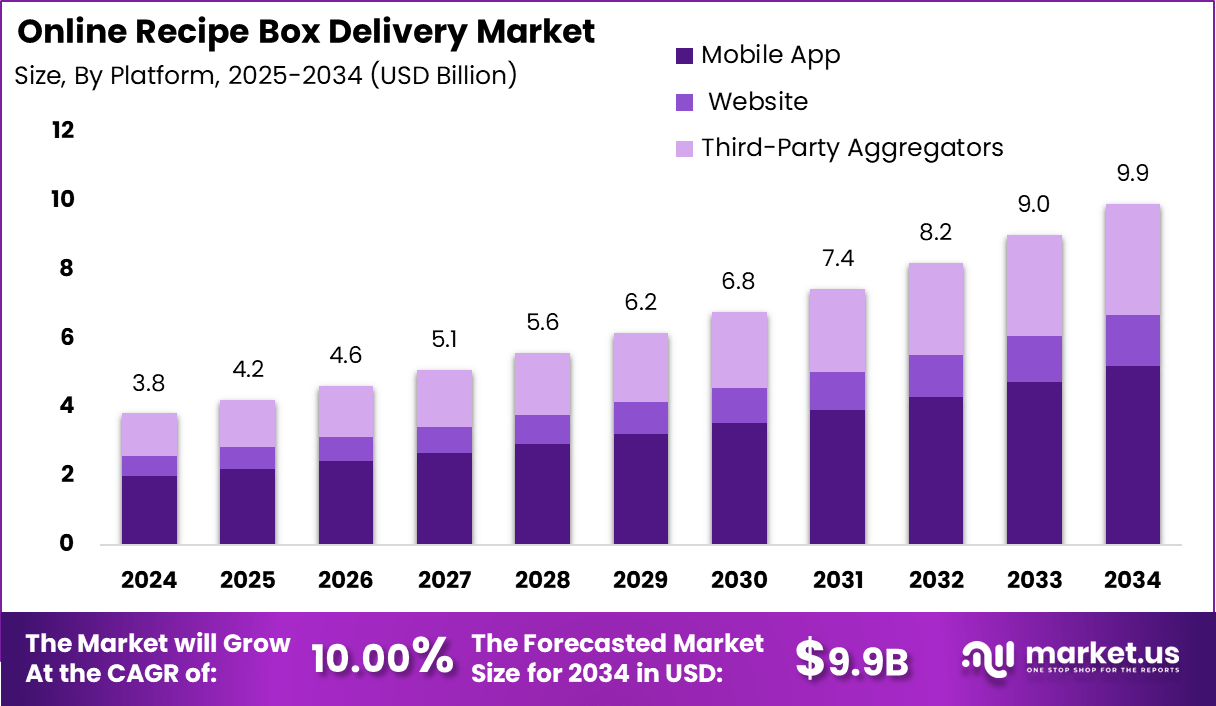
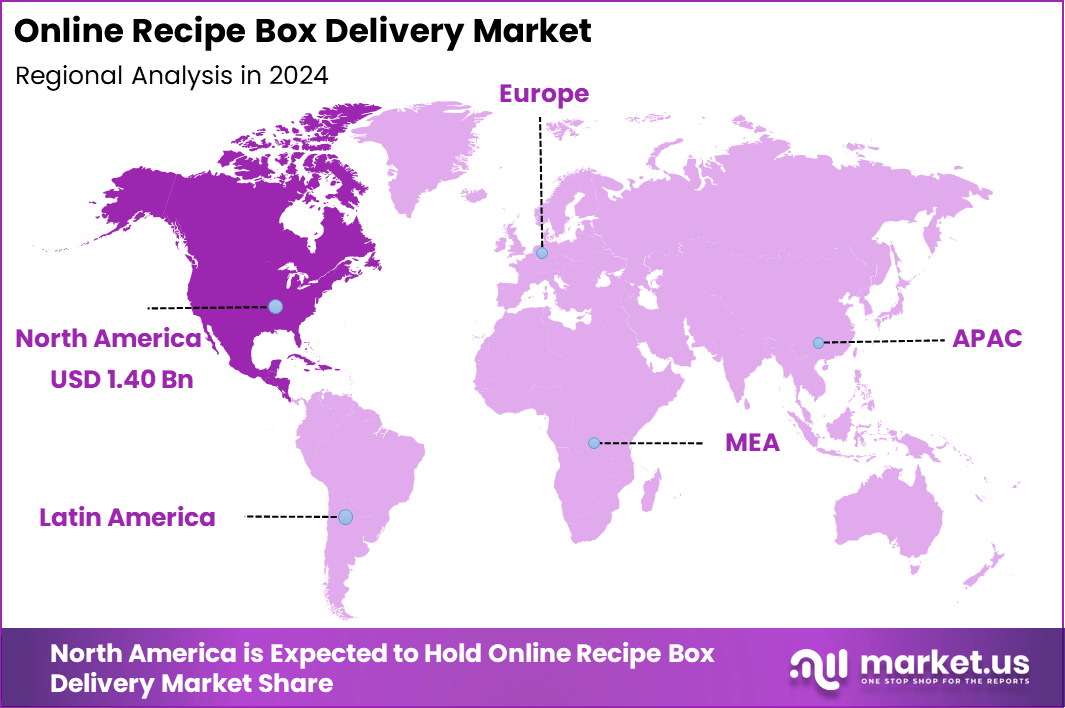
The Global Online Recipe Box Delivery Market generated USD 3.8 billion in 2024 and is predicted to register growth from USD 4.0 billion in 2025 to about USD 9.9 billion by 2034, recording a CAGR of 10% throughout the forecast span. In 2024, North America held a dominan market position, capturing more than a 36.9% share, holding USD 1.40 Billion revenue.
Online recipe box delivery services are changing how people plan and prepare meals at home by offering pre portioned ingredients along with step by step recipes delivered directly to the customer. These services are designed to simplify cooking by removing the need for grocery shopping and meal planning. Consumers can choose from a range of meal options based on their preferences, dietary needs, and cooking skills. As lifestyles become busier and more convenience focused, these platforms are becoming a practical solution for households that want home cooked meals without the effort of traditional preparation.
One of the key driving factors is the increasing demand for convenience in daily routines. Many consumers are looking for ways to save time while still maintaining a healthy and balanced diet. Recipe box delivery services help reduce time spent on planning and shopping, making cooking more accessible. In addition, there is growing interest in trying new cuisines and recipes, which these services support by offering a variety of meal choices. The rise in health awareness is also encouraging consumers to choose portion controlled and nutritionally balanced meals. Changing work patterns and busy schedules are further supporting the adoption of these services.
Demand for online recipe box delivery is rising as more consumers seek flexible and easy meal solutions. There is a strong preference for services that offer customization, allowing users to select meals based on dietary preferences such as vegetarian, low calorie, or high protein options. Consumers are also looking for reliable delivery and fresh ingredients to ensure quality. The demand is particularly strong in urban areas where time constraints are higher and access to digital services is well established. As people continue to balance convenience with healthy eating habits, the adoption of recipe box delivery services is expected to grow steadily.
Top Key Market Takeaway
- Subscription-based service type commands 40.4% market share, delivering predictable meal planning, recipe variety, and cost savings through recurring curated boxes.
- Mobile app platforms capture 52.5%, enabling seamless customization, dietary preference selection, and real-time order tracking with push notifications.
- Pre-portioned ingredients format claims 37.4%, minimizing food waste through exact recipe quantities and simplifying home cooking preparation.
- Daily delivery frequency dominates at 48.8%, powering fresh ingredient rotation, flexible consumption patterns, and reduced inventory management.
- Households/individuals end-users hold 36.7%, leveraging recipe boxes for time-starved professionals, health-conscious families, and cooking enthusiasts.
- North America drives 36.9% global value, with U.S. market at USD 1.21 billion and 7.8% CAGR, fueled by HelloFresh dominance and dual-income household growth.
How AI is Reshaping the Future of this market?
AI is reshaping the future of the online recipe box delivery market by making meal planning more precise, flexible, and user-focused. It helps platforms study buying patterns, food preferences, seasonal demand, and repeat order behavior to suggest recipes that better match household needs. This improves the customer experience because users receive meal options that feel more relevant to their taste, diet, and cooking habits. AI also supports smarter recommendation engines, which can reduce choice overload and make weekly selection faster and easier.
AI is also improving the operational side of this market. It helps companies forecast ingredient demand more accurately, reduce food waste, manage inventory, and improve route planning for timely deliveries. In customer service, AI tools can handle routine questions, offer instant support, and improve engagement through personalized communication. Over time, its role is expected to grow further as recipe box providers focus on convenience, better nutrition guidance, and stronger retention through more tailored and efficient services.
Regional Analysis
In 2024, North America held a dominan Market position, capturing more than a 36.9% share, holding USD 1.40 Billion revenue. This regional lead was mainly supported by strong consumer familiarity with subscription-based food services, high adoption of online grocery platforms, and a well-developed last-mile delivery ecosystem.
Households across the US and Canada have shown a stronger preference for convenient meal planning solutions that reduce shopping time and improve portion control. The region also benefits from higher spending capacity and a mature cold-chain logistics structure, which supports timely and reliable recipe box deliveries across urban and suburban locations. Another key reason North America remained ahead is the region’s advanced digital commerce environment and broad use of mobile apps for food ordering, recurring subscriptions, and personalized purchasing.
Online recipe box providers in this region have been able to respond quickly to changing food preferences such as healthy meals, family-sized plans, plant-based options, and premium ingredients. A strong culture of convenience-led consumption, along with growing interest in home cooking without the burden of meal planning, has helped keep demand stable. In addition, partnerships with local farms, grocery suppliers, and fulfillment networks have strengthened supply efficiency and improved customer retention.
Europe continues to represent a significant market due to rising demand for organized meal solutions, increasing awareness of food waste reduction, and consumer interest in sustainable packaging and fresh ingredients. Many European consumers value structured meal planning and are more willing to adopt services that support healthier eating habits and reduce unnecessary grocery spending.
Latin America is gradually emerging as a developing market, supported by improving internet access, urban lifestyle changes, and growing awareness of app-based food services, although price sensitivity and logistics consistency still limit wider penetration. The Middle East and Africa show early-stage potential, especially in major cities where digital food delivery culture is expanding, but market growth remains uneven due to delivery infrastructure gaps, limited cold-chain reach, and varying levels of consumer adoption.
Top Key Players
- Blue Apron
- Hello Fresh
- Plated
- Sun Basket
- Green Chef
- Purple Carrot
- Home Chef
- Abel & Cole
- Riverford
- Blue Apron
- Quitoque
- Kochhaus
- Marley Spoon
- Middagsfrid
- Allerhandebox
- Chefmarket
- Kochzauber
- Fresh Fitness Food
- Mindful Chef
- Other Major Players
Driver
A key driver in the online recipe box delivery market is the growing need for convenience in daily meal planning. Many consumers want home cooked food but do not want to spend extra time deciding what to cook, making shopping lists, and visiting stores. Recipe box services reduce this effort by offering pre planned meals with measured ingredients and simple cooking steps.
This model also supports busy working households, young professionals, and urban consumers who value time saving solutions. It helps reduce the stress linked with meal preparation and makes cooking more structured. As lifestyles become faster and more demanding, this convenience factor continues to support demand for recipe box delivery services.
Restraint
A major restraint in this market is the relatively high overall cost compared with traditional grocery shopping. While recipe boxes offer convenience, some consumers still view them as expensive for everyday use. This limits wider adoption, especially among price sensitive households that prefer buying ingredients in bulk or selecting lower cost alternatives on their own.
Another issue is limited flexibility in some subscription models. Customers may feel restricted by delivery schedules, menu choices, or serving sizes that do not always match their needs. When consumers feel they are paying more but receiving less control, it can reduce repeat purchases and affect long term customer retention.
Opportunity
A strong opportunity in the online recipe box delivery market lies in expanding into personalized meal solutions. Consumers are increasingly looking for food options that match specific dietary needs, health goals, and taste preferences. Services that offer vegan, high protein, gluten free, low carb, or family focused meal choices can attract a broader customer base.
There is also room to grow through deeper use of digital tools and customer data. Better personalization in menu recommendations, ordering patterns, and meal planning can improve the user experience and increase loyalty. Companies that make the service feel more relevant to individual households are expected to create stronger long term value in the market.
Challenge
One major challenge in this market is maintaining freshness and delivery quality across the supply chain. Since recipe boxes contain perishable ingredients, any delay in packing, shipping, or last mile delivery can affect food quality and customer satisfaction. This creates pressure on logistics, storage, and packaging systems.
Another challenge is keeping customers engaged after the initial trial period. Many users may try the service for convenience or promotional offers, but keeping them subscribed requires ongoing value. If meal options become repetitive or the service does not fit changing routines, customers may cancel quickly, making retention a constant challenge for market participants.
By Service Type
- Subscription-Based
- One-Time Orders
- Customized Meal Plans
- Dietician/Nutritionist-Curated Boxes
By Platform
- Mobile App
- Website
- Third-Party Aggregators
By Packaging Format
- Pre-Portioned Ingredients
- Fully Cooked & Ready-to-Eat
- Do-It-Yourself (DIY) Cooking Kits
- Frozen Meal Boxes
- Others
By Delivery Frequency
- Daily
- Weekly
- Monthly
By End User
- Households / Individuals
- Working Professionals
- Elderly Consumers
- Health Enthusiasts
- Corporate / Office Packages
- Others
Competetive Analysis
The competitive landscape of the Online Recipe Box Delivery Market is highly competitive, with a mix of global meal kit providers and regional organic food delivery companies. Companies such as Hello Fresh, Blue Apron, Marley Spoon, and Home Chef focus on large-scale operations with wide menu options, subscription models, and strong supply chain networks.
These players emphasize convenience, variety, and consistent delivery services to attract and retain customers. At the same time, brands like Sun Basket, Green Chef, Purple Carrot, and Mindful Chef focus on health-oriented and specialty diets such as organic, vegan, and calorie-controlled meals, targeting consumers looking for personalized and nutritious food options.
In addition, regional players such as Abel & Cole, Riverford, Quitoque, Kochhaus, Middagsfrid, Allerhandebox, Chefmarket, and Kochzauber compete by offering locally sourced ingredients and customized meal experiences. Companies like Plated and Fresh Fitness Food also focus on premium offerings and ready-to-cook or ready-to-eat solutions.
Recent Development
- January, 2026 – HelloFresh expanded its global menu to 100+ cuisines with AI-driven personalization. Users receive tailored meal plans based on past preferences and health goals. Subscriber base hit 8 million households with 25% retention boost.
- February, 2026 – Blue Apron launched Wine Pairing Boxes with sommelier-curated selections. Premium subscribers access chef collaborations for seasonal tasting menus. US market share grew 15% among urban professionals.
Conclusion
The online recipe box delivery market is expected to remain on a steady growth path as more consumers look for easy meal planning, portion-controlled ingredients, and convenient home cooking solutions. Demand is being supported by busy lifestyles, rising interest in healthy eating, and the growing preference for personalized food options. Companies in this market are focusing on better menu variety, flexible subscriptions, sustainable packaging, and faster delivery to improve customer retention.
The market is also benefiting from digital platforms that make ordering simple and more engaging for users. However, competition, customer churn, and cost pressure in sourcing and logistics remain important challenges. Even so, the market is anticipated to show positive long-term potential as brands continue to improve service quality, product freshness, and overall customer experience.
Report Scope
| Report Features | Description |
|---|---|
| Market Value (2024) | USD 3.8 Bn |
| Forecast Revenue (2034) | USD 9.9 Bn |
| CAGR(2025-2034) | 10% |
| Base Year for Estimation | 2024 |
| Historic Period | 2020-2023 |
| Forecast Period | 2025-2034 |
| Report Coverage | Revenue forecast, AI impact on Market trends, Share Insights, Company ranking, competitive landscape, Recent Developments, Market Dynamics and Emerging Trends |
| Segments Covered | By Service Type (Subscription-Based, One-Time Orders, Customized Meal Plans, Dietician/Nutritionist-Curated Boxes), By Platform (Mobile App, Website, Third-Party Aggregators), By Packaging Format (Pre-Portioned Ingredients, Fully Cooked & Ready-to-Eat, Do-It-Yourself (DIY) Cooking Kits, Frozen Meal Boxes, Others), By Delivery Frequency (Daily, Weekly, Monthly), By End User (Households / Individuals, Working Professionals, Elderly Consumers, Health Enthusiasts, Corporate / Office Packages, Others) |
| Regional Analysis | North America – US, Canada; Europe – Germany, France, The UK, Spain, Italy, Russia, Netherlands, Rest of Europe; Asia Pacific – China, Japan, South Korea, India, New Zealand, Singapore, Thailand, Vietnam, Rest of Latin America; Latin America – Brazil, Mexico, Rest of Latin America; Middle East & Africa – South Africa, Saudi Arabia, UAE, Rest of MEA |
| Competitive Landscape | Blue Apron, Hello Fresh, Plated, Sun Basket, Green Chef, Purple Carrot, Home Chef, Abel & Cole, Riverford, Quitoque, Kochhaus, Marley Spoon, Middagsfrid, Allerhandebox, Chefmarket, Kochzauber, Fresh Fitness Food, Mindful Chef, and other major players |
Discuss your needs with our analyst
Please share your requirements with more details so our analyst can check if they can solve your problem(s)