
Market Overview
New York, NY – September 21, 2026 – The Global AI Dishwasher Market generated USD 4.47 billion in 2024. Analysts expect revenue to reach about USD 29.09 billion by 2034, at a 20.6% CAGR. Therefore, smart dishwashing machines now rank among the fastest-rising connected appliance categories.
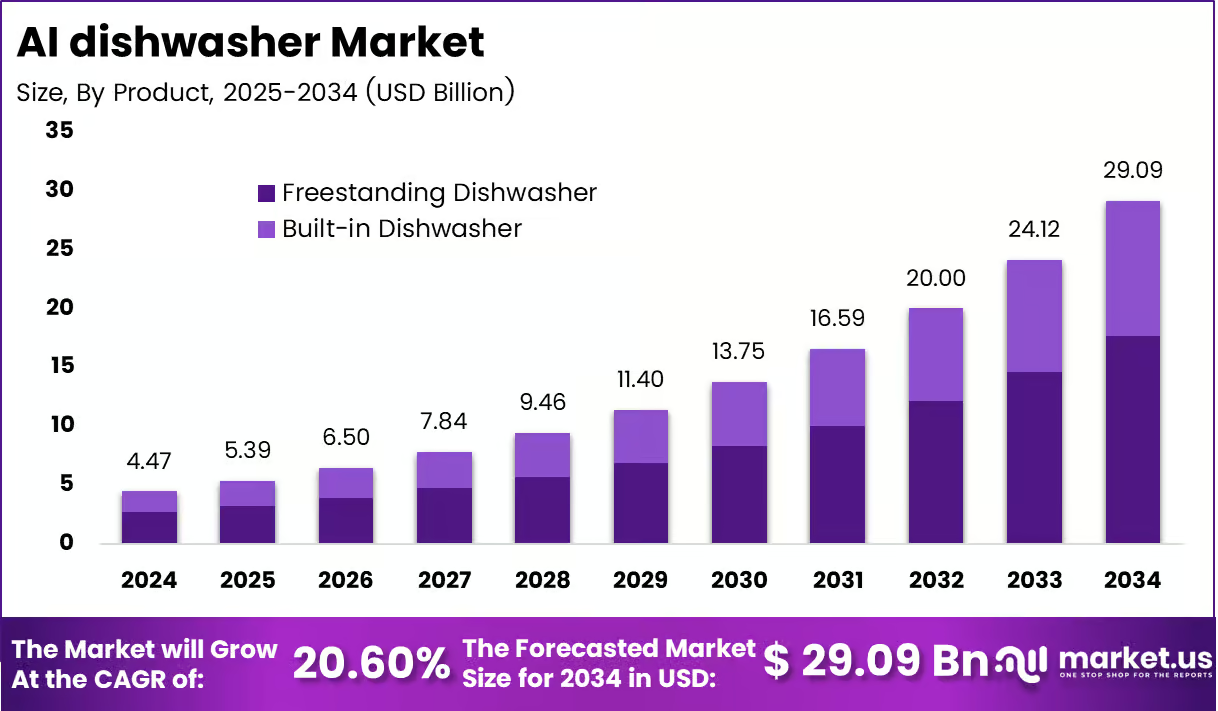
That forecast marks nearly 6.5 times growth over the 2024 base. Rapid gains reflect buyer demand for automated, energy-saving, and connected kitchen equipment. Moreover, North America led the market in 2025 with roughly USD 1.58 billion in revenue, showing where early adoption remains strongest.
Energy rules shape product design directly. According to ENERGY STAR, certified standard units must use no more than 240 kWh yearly and 3.2 gallons per cycle across about 215 cycles. Consequently, makers apply soil sensors and automatic cycle controls to meet these limits without losing wash quality.
ENERGY STAR also estimates savings near 5,800 gallons of water across a certified machine’s working life. Lower utility bills improve payback for households. Additionally, U.S. Department of Energy data show about 8.09 million dishwashers shipped in 2019, with certified models at nearly 91% of volume.
Home connectivity supports remote monitoring, alerts, and software updates. Broadband reached roughly 90% of U.S. households in 2021 and 96.4% of Canadian households in 2024. Furthermore, new U.S. efficiency standards apply from 2027 and could save consumers nearly USD 3.2 billion over thirty years of shipments.
Key Takeaways
- The AI dishwasher market reached USD 4.47 billion in 2024 and should expand to USD 29.09 billion by 2034, growing at a 20.6% CAGR from 2025 to 2034.
- Freestanding models held a dominant 60.7% share in 2024, favored for flexible installation, easy movement, and wide use in urban homes.
- Deep learning led technology with a 40.2% share, enabling smart load detection, water optimization, and adaptive cleaning cycles.
- Commercial applications formed 58.7% of the market, driven by hotels, restaurants, and institutional kitchens adopting AI-based cleaning systems for hygiene and efficiency.
- Offline channels captured 65.7% of sales, supported by buyer preference for appliance stores, live demonstrations, and after-sales service.
- North America led all regions at USD 1.58 billion in 2024, helped by advanced smart home adoption and high disposable incomes.
➤ Evaluate the Report Quality with an Exclusive Sample Download – https://market.us/report/ai-dishwasher-market/request-sample/
Market Segmentation
By Product
Freestanding units captured 60.7% of global revenue in 2024. Easy setup, portability, and fit across kitchen layouts suit rental and city homes. These machines add soil sensing, energy tuning, and voice control. Consequently, buyers gain convenience without remodeling their kitchen cabinets.
Built-in models grow quickly in premium homes and commercial kitchens, where looks and space use matter most. Brands now add connectivity, predictive maintenance, and smart home links. Therefore, integrated designs attract buyers who plan complete kitchen upgrades rather than single appliance replacements.
By Technology
Deep learning led the technology mix with a 40.2% share in 2024. Sensor data lets machines adapt wash cycles, recognise loads, and control water use. This learning ability cuts waste per cycle. Consequently, brands market measurable utility savings as a core product benefit.
Machine learning and natural language processing enable smooth voice commands through popular virtual assistants. Machine vision improves dish detection and wash settings. Moreover, generative AI now supports predictive diagnostics and usage analysis, which together raivirtual assistantsse reliability and lower service calls for owners.
By Application
Commercial buyers held a 58.7% share in 2024. Hotels, restaurants, and large kitchens need consistent hygiene and steady throughput. Smart automation and predictive maintenance reduce downtime and water use. Therefore, operators protect service levels while trimming daily utility and labor costs.
Household demand rises fast as city consumers value time savings and lower bills. Smart home growth and certified efficient models push adoption across developed and emerging economies. Additionally, families treat connected dishwashing as a practical entry point into wider home automation.
By Distribution Channel
Offline retail accounted for 65.7% of sales in 2024. Shoppers want live demonstrations, hands-on checks, and clear service promises before purchase. Electronics chains and showrooms promote premium models through brand partnerships. Consequently, dealer relationships still decide most high-value appliance sales.
Online channels expand quickly because digital buyers value discounts and doorstep installation. Marketplaces and brand portals add virtual demos and AI-based recommendations. Therefore, manufacturers now run dual strategies, using stores for trust and websites for reach, price comparison, and faster reorders.
Regional Analysis
North America leads at USD 1.58 billion in 2024, near 35.3% of global revenue. A large replacement base, strong buying power, and quick AI and IoT uptake explain this lead. Moreover, the United States sets the pace through demand for connected, energy-saving machines.
Europe follows, supported by strict energy rules and sustainability targets in Germany, France, and the UK. Asia Pacific should grow fastest, helped by urban growth, rising incomes, and strong manufacturing in China, Japan, and South Korea. Additionally, Latin America and the Middle East expand through digital transformation projects.
Drivers
Efficiency regulation drives purchases directly. New U.S. standards apply from 2027, and officials estimate nearly USD 3.2 billion in consumer savings across thirty years of shipments. Tighter limits force design upgrades. Consequently, brands promote sensor-led cycles that satisfy rules and protect wash results.
Connectivity forms the second driver. Broadband covered about 90% of U.S. households in 2021 and 96.4% of Canadian households in 2024. Reliable networks make remote control and updates practical. Therefore, buyers accept app-based features that once seemed optional in kitchen appliances.
Use Cases
Households run smart wash cycles that adjust to load size and soil level. The machine selects water volume, temperature, and duration automatically. Moreover, owners start or pause cycles from a phone, track usage, and receive alerts when filters or rinse aid need attention.
Hotels, restaurants, and canteens schedule washing around peak service hours. Connected platforms forecast busy periods and prepare equipment in advance. Consequently, kitchen managers maintain hygiene records, spot faults early, and keep service moving without waiting for reactive repair visits during mealtimes.
Business Opportunities
Manufacturers can build service income around predictive maintenance and remote diagnostics. Connected fleets let brands sell monitoring contracts to hospitality groups. Therefore, suppliers earn recurring revenue, reduce warranty costs, and gather usage data that guides future product design and spare part planning.
Emerging markets offer a second opening as city incomes rise and kitchens modernise. Local assembly and regional supplier networks shorten delivery times. Moreover, entry-level connected models with simple app features help brands win first-time buyers who later upgrade to premium built-in machines.
Major Challenges
Price remains the main barrier. Intelligent machines cost more than basic models because sensors, boards, and software add expense. Consequently, cautious buyers delay upgrades, especially where electricity and water tariffs stay low and payback on efficiency features looks slow.
Data privacy and support capability create further friction. Connected appliances collect household usage details, so buyers expect clear protection and secure updates. However, many markets still lack trained technicians for software-driven repairs. Therefore, brands must invest in service training and transparent data policies.
Top Key Players in the Market
- Robert Bosch GmbH
- LG Electronics
- SAMSUNG
- Haier Group
- Electrolux
- Whirlpool Corporation
- Miele & Cie. KG
- Panasonic Corporation
- Arçelik
- Smeg
- Other Major Players
Conclusion
The AI dishwasher market shows strong momentum across homes and commercial kitchens. Freestanding designs, deep learning controls, commercial buyers, and offline dealers shape current demand. North America leads, while Asia Pacific grows fastest. Efficiency rules and home connectivity support adoption. However, higher prices, privacy concerns, and service gaps still test suppliers in newer markets.
Discuss your needs with our analyst
Please share your requirements with more details so our analyst can check if they can solve your problem(s)