
Market Overview
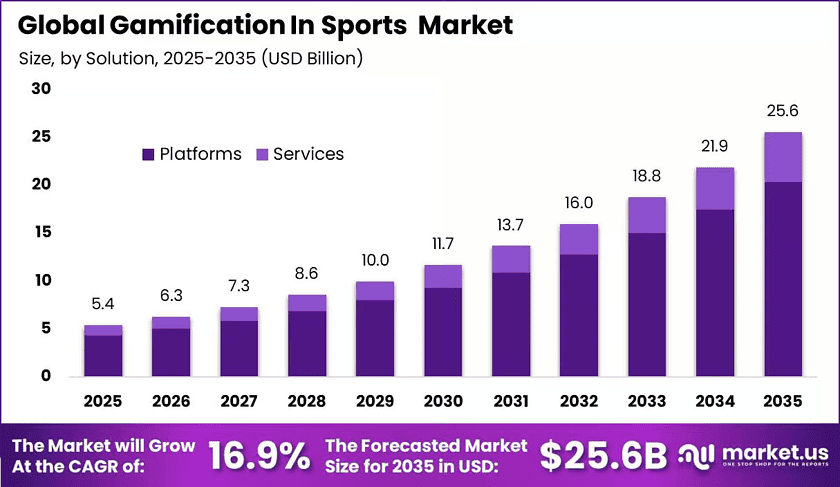
New York, NY – November 06, 2026 – The Global Gamification In Sports Market reached USD 5.4 billion in 2025. Analysts project it will hit USD 25.6 billion by 2035, growing at a CAGR of 16.9% from 2026 to 2035. This steady rise shows how strongly clubs, brands, and fitness platforms now depend on game-based engagement tools.
Sports participation keeps growing, and more people now use digital tools built on points, rankings, rewards, and challenges. According to the Sports and Fitness Industry Association, 250 million Americans took part in at least one sport or fitness activity in 2025. Consequently, gamified sports apps now reach the largest active audience on record.
Moreover, outdoor activity adds a lot of economic value. According to the U.S. Bureau of Economic Analysis, outdoor recreation generated USD 696.7 billion in value added in 2024, or 2.4% of U.S. GDP. This scale pushes leagues, gyms, and brands to adopt tools that bring users back again and again.
Additionally, the U.S. spectator sports and related sector grew to USD 190.8 billion in GDP in 2024, up from USD 175.4 billion in 2023. This growth shows strong fan spending. Therefore, sports organizations are investing more in digital fan experiences that reward loyalty and keep fans active between events.
However, participation is rising beyond the United States too. In Canada, 55% of people aged 15 and above played at least one sport in 2023. Meanwhile, 41.1% of urban adults in Mexico were physically active in 2024. These active populations support long-term demand for game-based sports experiences across North America.
Key Takeaways
- The Gamification in Sports Market is valued at USD 5.4 billion in 2025 and is projected to reach USD 25.6 billion by 2035 at a 16.9% CAGR.
- The Platforms segment led the Solution category with a 79.8% share.
- Cloud-based deployment led the Deployment segment with a 64.6% share.
- Fitness and Wellness led applications with a 38.6% share.
- North America led the market in 2025 with a 42.5% share, generating about USD 2.3 billion in revenue.
➤ Preview Key Insights with an Exclusive Sample Report Download – https://market.us/report/gamification-in-sports-market/request-sample/
Market Segmentation
By Solution
Platforms dominated the solution segment with a 79.8% share. These systems handle challenges, points, leaderboards, rewards, fan profiles, and live scores in one place. Consequently, sports bodies prefer complete platforms over separate tools. Moreover, platforms give them a single base for content, performance tracking, and sponsor campaigns.
Global audiences also drive platform demand. According to the International Olympic Committee, the Olympic website and app reached 325 million unique monthly users during Paris 2024. Additionally, FIFA reported 16 million unique visitors to FIFA.com in June 2025. This heavy traffic requires strong platforms that support real-time rewards and user accounts.
By Deployment
Cloud-based deployment led with a 64.6% share. Sports organizations need flexible systems that can handle sudden jumps in fan traffic. Therefore, cloud tools help them manage live data, mobile users, and personalized rewards. Moreover, clubs avoid heavy spending on in-house IT systems.
Major events show why cloud scale matters. According to the International Olympic Committee, Olympic social channels generated 16.7 billion engagements during Paris 2024. This volume means fast processing of logins, scores, and rankings across many countries. Consequently, cloud providers have become key partners for global sports engagement programs.
By Application
Fitness and wellness led applications with a 38.6% share. According to the World Health Organization, 1.8 billion adults, or 31% of adults worldwide, did not meet activity guidelines in 2022. This gap creates strong demand for motivation tools. Therefore, gamified fitness apps help users build regular exercise habits.
Additionally, WHO recommends 150 to 300 minutes of moderate activity each week. This clear target encourages users to set goals and track progress digitally. Consequently, fitness apps offer step targets, workout streaks, badges, and team challenges. Other segments, including sports betting, fan engagement, athlete performance, and corporate wellness, also widen market reach.
Regional Analysis of Sports Gamification
North America led in 2025 with a 42.5% share, or about USD 2.3 billion in revenue. The region benefits from heavy smartphone use, wide adoption of connected fitness devices, and strong league spending. Moreover, the United States supports growth through fantasy sports, college programs, sports betting, and corporate wellness plans.
Asia Pacific is the fastest-growing region. According to GSMA, the region had over 1.4 billion mobile internet users in 2023, or 51% of its population. This number could reach 1.8 billion by 2030. Consequently, mobile-first users will drive demand for esports, fan rewards, and fitness challenges.
Key Growth Drivers
Rising inactivity among adults strongly drives the market. According to the WHO, inactivity rose from 23.4% in 2000 to 31.3% in 2022. This trend adds about 2.4% to market CAGR. Therefore, providers build streaks, goals, and social challenges that keep inactive users motivated and engaged.
Additionally, wearable data integration adds about 1.8% to CAGR across North America, Europe, and Asia Pacific. Smartwatches and fitness trackers feed live activity data into gamified apps. Consequently, users receive accurate rewards and personal rankings. Moreover, sports streaming interaction adds another 1.5% as fans join live prediction games.
Major Use Cases
Fitness brands use gamification to keep members active. Apps offer daily goals, workout streaks, badges, and team leaderboards. Moreover, these features turn routine exercise into friendly competition. Consequently, users stay with the service longer, and gyms and app providers enjoy better retention and steady subscription income.
Sports leagues and clubs also use game features to engage fans. Fans join prediction games, collect loyalty points, and earn rewards during live matches. Additionally, sponsors connect their campaigns to these activities. Therefore, clubs build stronger fan relationships while creating new revenue through in-app purchases and partner promotions.
Business Opportunities Ahead
Preventive health partnerships offer a major opportunity. Most providers still sell directly to consumers or sports bodies. However, insurers, employers, and public health programs can enroll large user groups at lower cost. Consequently, partner-funded rewards can improve user loyalty and raise software margins for providers.
Commercial gyms present another strong opening. Gym operators want tools that boost attendance and member loyalty. Moreover, gamified classes, challenges, and leaderboards make workouts more social. Additionally, esports reward systems and smart-city activity programs give providers fresh channels to reach new users across many regions.
Major Market Challenges
Data privacy remains a key challenge. Platforms handle sensitive data such as heart rate, location, training history, and payment details. Moreover, this data moves across apps, wearables, clubs, and cloud systems. Therefore, providers must keep investing in consent tools, security testing, and safe data integration.
Subscription fatigue also limits growth. Many consumers hesitate to pay for several fitness and sports apps at once. Consequently, providers struggle to turn free users into paid members. Additionally, pressure on household budgets can lower customer value and slow product investment among smaller companies.
Top Key Players in the Market
- Nike
- Adidas
- Strava
- Peloton
- Under Armour
- Garmin
- Fitbit
- MyFitnessPal
- Zwift
- Fitocracy
- Jogo Health
- Sportle
- CoachMePlus
- Gametize
- MIRROR
Conclusion
The gamification in the sports market shows strong long-term promise. Rising sports participation, growing inactivity concerns, and wider mobile use continue to drive demand. Platforms, cloud deployment, and fitness applications lead the market, while North America holds the top position. However, privacy risks and subscription fatigue need careful handling. Therefore, providers that build secure, engaging, and partner-led solutions will capture the strongest growth opportunities ahead.
Discuss your needs with our analyst
Please share your requirements with more details so our analyst can check if they can solve your problem(s)