Market Overview
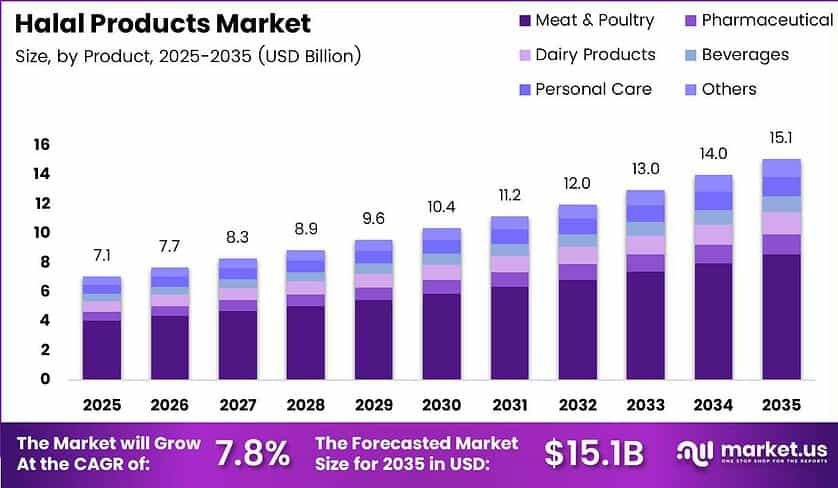
The global halal meat market reached USD 779.7 billion in 2024. Analysts expect it to climb to USD 1,779.2 billion by 2034, growing at a 8.6% CAGR from 2025 to 2034. Rising Muslim populations and ethical food preferences fuel this expansion.
Halal meat comes from animals processed under Islamic dietary laws. Producers follow strict slaughter, handling, and packaging rules. Muslim households, restaurants, and caterers buy it daily. Moreover, many non-Muslim shoppers see it as cleaner and healthier.
Awareness of halal-certified food keeps spreading beyond Muslim communities. Global travel and migration expose more people to halal practices. Consequently, producers reach a wider customer base. Younger Muslim buyers also care about brand quality.
Data-Driven Insights for Smarter Business Decisions: Explore the Full Report
Key Takeaways
- The market will grow from USD 779.7 billion in 2024 to USD 1,779.2 billion by 2034.
- The market will grow at a 8.6% CAGR from 2025 to 2034.
- Poultry leads with a 56.7% share.
- Fresh halal meat holds 62.3% of the type segment.
- B2B and wholesalers distribute 44.8% of halal meat.
- Food service accounts for 58.3% of consumption.
- Asia-Pacific captured 41.2%, valued at USD 321.2 billion.
Market Segmentation Overview
Poultry leads the product segment with a 56.7% share. Chicken offers affordable protein and wide cultural acceptance, and producers raise it more easily than red meat. Consequently, households and caterers rely on it daily. Fresh meat also holds 62.3% of the type segment.
Moreover, buyers view fresh cuts as tastier and healthier than frozen options, so halal butchers reinforce trust through live demonstrations. Additionally, B2B and wholesalers handle 44.8% of distribution. They move large volumes to retailers and restaurants while protecting halal integrity.
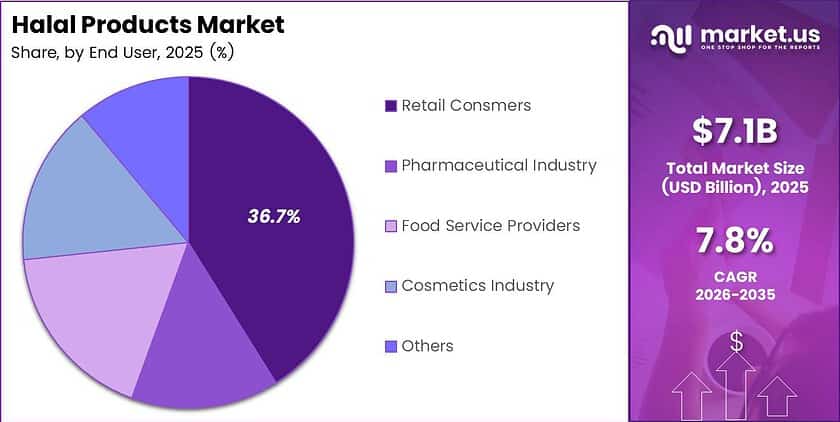
Finally, food service consumes 58.3% of halal meat. Halal-certified restaurants and caterers keep expanding in Muslim and non-Muslim countries, which lifts bulk orders. Household buyers form the other end-user segment. Supermarkets, convenience stores, and online retail complete the channel mix.
Drivers
The growing global Muslim population drives the market most strongly. More households need meat that follows Islamic dietary laws. This trend also shapes food culture in non-Muslim countries. Consequently, suppliers seek halal certification to capture this growing demand and protect their market share.
Moreover, rising awareness among non-Muslim consumers widens the buyer base. Many shoppers associate halal with ethical sourcing and hygiene. Retailers and restaurateurs respond by adjusting their menus and shelves. Therefore, halal meat gains steady mainstream visibility in supermarkets and restaurants.
Data-Driven Insights for Smarter Business Decisions: Explore the Full Report
Use Cases
Restaurants and caterers use halal meat to serve Muslim diners. Halal-certified outlets now operate in many non-Muslim countries too. Chefs also promote transparent sourcing in gourmet menus. This approach builds trust, attracts quality-focused customers, and strengthens repeat business.
Additionally, households buy fresh and processed halal products for daily meals. Online platforms deliver certified meat to regions with few halal stores. Shoppers check certification details and compare prices easily. Consequently, home delivery widens access for busy urban families.
Major Challenges
Strict certification standards slow market entry. Smaller producers face complex inspections covering slaughter, processing, and packaging. The process takes time and costs money. Consequently, many new entrants struggle to expand or win export contracts.
However, the lack of one global halal standard adds confusion. Companies must satisfy different rules across countries. This inconsistency complicates exports and raises compliance costs. Therefore, fewer players compete, which limits market diversity and slows innovation.
Business Opportunities
Expansion into non-Muslim regions offers strong potential. Consumers in Europe, North America, and parts of Asia value halal quality and safety standards. Producers can diversify revenue by targeting them. Educational campaigns help remove cultural barriers and build mainstream appeal.
Additionally, e-commerce platforms open new sales routes. Online stores show certification details and offer wider selections. Home delivery reaches buyers far from halal shops. Therefore, digital retail lets producers scale without large physical networks.
Data-Driven Insights for Smarter Business Decisions: Explore the Full Report
Regional Analysis
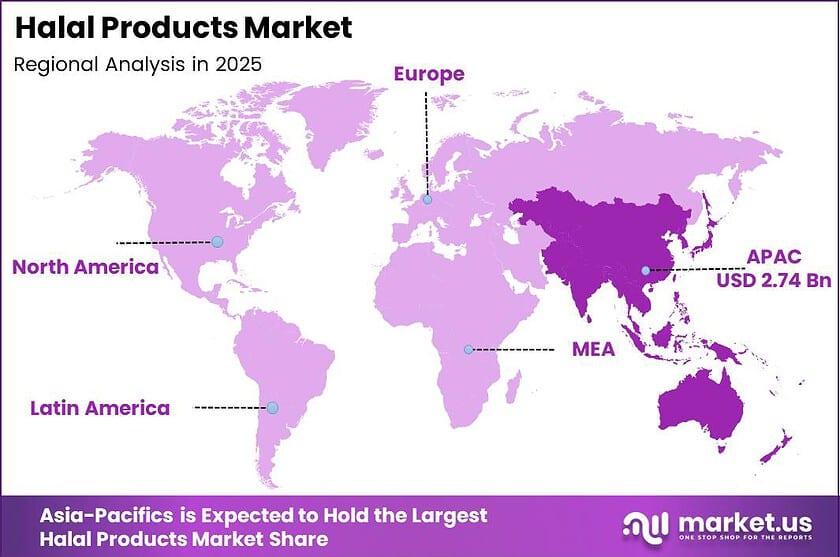
Asia-Pacific leads with a 41.2% share, valued at USD 321.2 billion. Large Muslim populations in Indonesia, Malaysia, and India drive demand. Urbanization also boosts purchases of certified products. Consequently, producers prioritize this region for capacity and distribution investment.
Meanwhile, North America grows as Muslim immigration and non-Muslim interest rise across the United States and Canada. Europe shows strong growth in France, Germany, and the United Kingdom. Moreover, Brazil emerges as a notable halal exporter to Muslim-majority countries, supporting gradual Latin American growth.
Key Players Analysis
Leading companies compete through certified production, plant investment, and product variety. BRF Global targets Muslim-majority markets across Asia-Pacific and the Middle East. Thomas International serves niche halal segments. Tyson Foods expands halal lines using its large supply chain.
- BRF Global
- Thomas International
- Tyson Foods, Inc.
- Hormel Foods Corp
- Nema Halal
- Crescent Foods
- Harris Ranch Beef Co.
- Midamar Corporation
- Danish Crown
- Vion
- Bigard
- Al Kabeer Group ME
- Amana Foods
- Al Islami Foods
- Tariq Halal
- Tahira Foods Ltd
- Saffron Road
- American Foods Group, LLC
- Tallgrass Beef
- Ena Meat Packing
- Al-Aqsa
- SIS Company
- Prairie Halal Foods
- DOUX
- Other Key Players
Recent Developments
- April 2025 — BRF announced a USD 160 million halal plant in Jeddah with 40,000 metric tons capacity.
- March 2025 — Thomas Foods International USA launched halal goat products, including goat cubes, in the U.S.
- November 2024 — Crescent Foods introduced recyclable, resealable chicken packaging.
Conclusion
The halal meat market shows strong growth through 2034. Rising Muslim populations and broader consumer awareness drive demand. Better logistics and certification systems strengthen supply. Consequently, the market keeps attracting global producers and new investment.
Poultry, fresh meat, wholesale channels, and food service dominate their segments. Asia-Pacific leads regional sales, while North America and Europe gain ground. Therefore, producers should watch these strongholds closely and tailor products to each buyer group.
Companies must invest in certification, cold-chain logistics, and online sales to win. They should also target non-Muslim consumers with clear education on halal quality. These steps position firms for a market worth USD 1,779.2 billion by 2034.
Looking for data tailored to your specific market, region, or business need? Request a custom report or consultation — write to us at sales@market.us
Discuss your needs with our analyst
Please share your requirements with more details so our analyst can check if they can solve your problem(s)