
Market Overview
New York, NY – October 28, 2026 – The Global Smart Waste Collection Technology Market at USD 3.4 billion in 2025. Market revenue could reach USD 16.1 billion by 2035, with a projected CAGR of 16.8% during 2026–2035. North America held 42.4% of market revenue in 2025, generating approximately USD 1.4 billion.
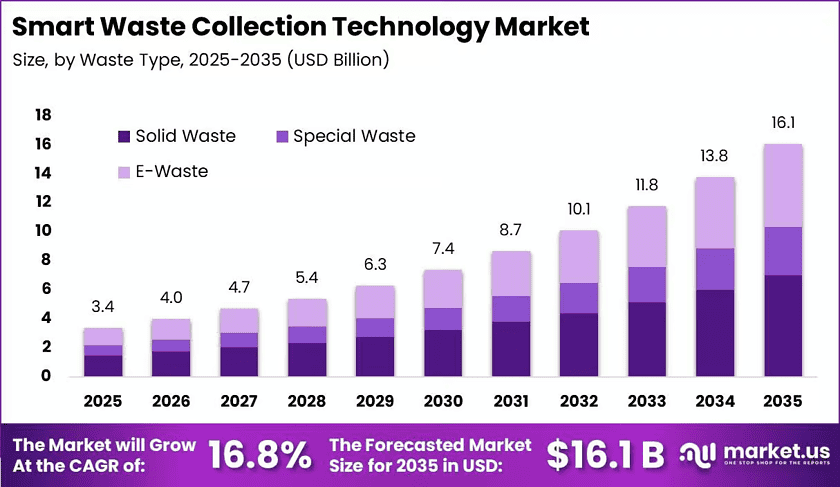
Its outlook reflects growing demand for connected bins, fleet monitoring, and collection software. Moreover, municipalities and private operators increasingly seek practical tools that control costs while maintaining reliable collection services across expanding urban areas and busy commercial districts worldwide. This forecast signals a substantial expansion in spending on digital waste services.
Municipal waste operators face growing pressure from rising disposal volumes, environmental rules, and limited operating budgets. Consequently, connected collection systems offer a practical alternative to rigid pickup schedules. Sensors report container conditions, while routing software helps dispatchers assign vehicles according to actual demand. These capabilities can reduce avoidable journeys and help teams respond before overflowing bins disrupt local public spaces.
Key Takeaways
- The Smart Waste Collection Technology Market value could rise from USD 3.4 billion in 2025 to USD 16.1 billion by 2035. Its projected 16.8% CAGR indicates expanding demand.
- Solid waste held 43.5%, reflecting its central role in routine collection.
- Smart collection held 38.6%, highlighting demand for demand-based pickups.
- Residential customers represented 41.5%, showing the importance of household services.
- North America contributed 42.4% and approximately USD 1.4 billion, establishing its regional leadership in 2025.
➤ Download a Complimentary Sample of This Premium Report (Full TOC Included) – https://market.us/report/smart-waste-collection-technology-market/request-sample/
Market Segmentation
By Waste Type
The report divides waste types into solid waste, special waste, and electronic waste. Solid waste leads because households and businesses require regular collection of everyday materials. Moreover, special waste and discarded electronics create distinct handling needs, encouraging operators to match tracking tools and collection plans with each material stream.
By Method
The method categories include smart collection, smart processing, and smart disposal. Smart collection connects container sensors, vehicle tracking, and route planning to support timely pickups. Additionally, smart processing helps facilities manage incoming materials, while smart disposal supports monitoring at final destinations, linking collection decisions with broader waste management operations.
By Source
The source categories cover residential, commercial, and industrial customers. Households drive frequent pickups across streets, apartment buildings, and communal collection points. Moreover, commercial properties need services that match business activity, while industrial sites require coordinated handling schedules. These differences encourage providers to tailor alerts, reporting tools, and service agreements.
Regional Analysis
North America leads the supplied report’s regional assessment through established collection infrastructure and investment in connected services. Municipalities and private haulers can add monitoring tools to existing operations. Moreover, buyers can use fleet data to improve service visibility, track maintenance needs, and assess whether technology upgrades deliver practical benefits.
Asia Pacific offers growth prospects through expanding cities and smart public service programmes, according to the supplied report. China, India, and Southeast Asian markets present varied deployment needs. Additionally, suppliers must adapt to local networks and procurement practices, while Europe, Latin America, and the Middle East and Africa remain relevant markets.
Drivers
Urban growth increases pressure on collection teams as housing developments and commercial districts expand service areas. Municipalities must manage more collection points without allowing operating costs to rise unchecked. Consequently, connected containers and route planning tools help dispatchers direct available vehicles toward locations that need service most urgently each day.
Environmental requirements encourage operators to improve reporting, reduce unnecessary travel, and support material recovery. Digital public infrastructure also gives waste services access to shared communications and management platforms. Moreover, municipalities can connect collection records with wider service systems, helping teams review performance and identify recurring problems across neighbourhoods more clearly.
Use Cases
Residential collection teams use fill alerts to monitor communal containers near apartment buildings and public spaces. Dispatchers can adjust pickup plans when demand changes rather than follow fixed schedules alone. Moreover, service records help customer support teams investigate missed collections and explain corrective action to residents and property managers.
Commercial and industrial operators use connected fleet tools to coordinate pickups around site access rules and customer schedules. Drivers receive clearer instructions, while supervisors track completed work. Additionally, collection records help account teams resolve service questions and adjust agreements when customers change their waste volumes or operating hours.
Business Opportunities
Suppliers can offer savings-linked contracts that connect payments with verified operating improvements. This approach can reduce customer concerns about upfront spending and uncertain returns. Moreover, providers can combine equipment, software, maintenance, and training within service agreements, creating longer customer relationships while keeping responsibility for system performance clear for both parties.
Technology companies can connect collection platforms with recycling facilities, recovery operations, and environmental reporting tools. Shared records can help customers follow materials beyond the pickup stage. Additionally, regional assembly and local maintenance partnerships can improve support coverage, helping vendors respond to equipment problems and adapt products to local conditions.
Major Challenges
Municipal buyers face upfront equipment costs, borrowing pressure, and competing demands for public funds. Decision-makers may delay purchases when suppliers cannot demonstrate credible savings. Consequently, vendors need clear pilot objectives, transparent pricing, and practical rollout plans that let customers assess results before expanding installations across larger service areas.
Mixed hardware, incompatible software, and uneven network coverage can prevent reliable data sharing across collection systems. Sensors also require battery replacement, maintenance, and protection from damage. Moreover, operators need trained staff and clear security procedures, making successful deployment an ongoing operational commitment rather than a simple equipment purchase.
Top Key Players in the Market
- Sensoneo j. s. a.
- Urbiotica, S.L.
- Republic Services Inc.
- Bigbelly, Inc.
- SUEZ Environmental Services
- Veolia Environnement S.A.
- Ecube Labs Co Ltd
- Waste Management Inc.
- Enevo Oy
- SAP
- Inogen Environmental Alliance, Inc.
Conclusion
Smart waste collection links everyday service needs with better operational information. The supplied report points to growth across household collection, commercial services, and industrial applications. However, suppliers must balance expansion with affordability, reliable integration, and local support. Buyers should judge projects through clear service goals and verified operating results.
Discuss your needs with our analyst
Please share your requirements with more details so our analyst can check if they can solve your problem(s)