
Market Overview
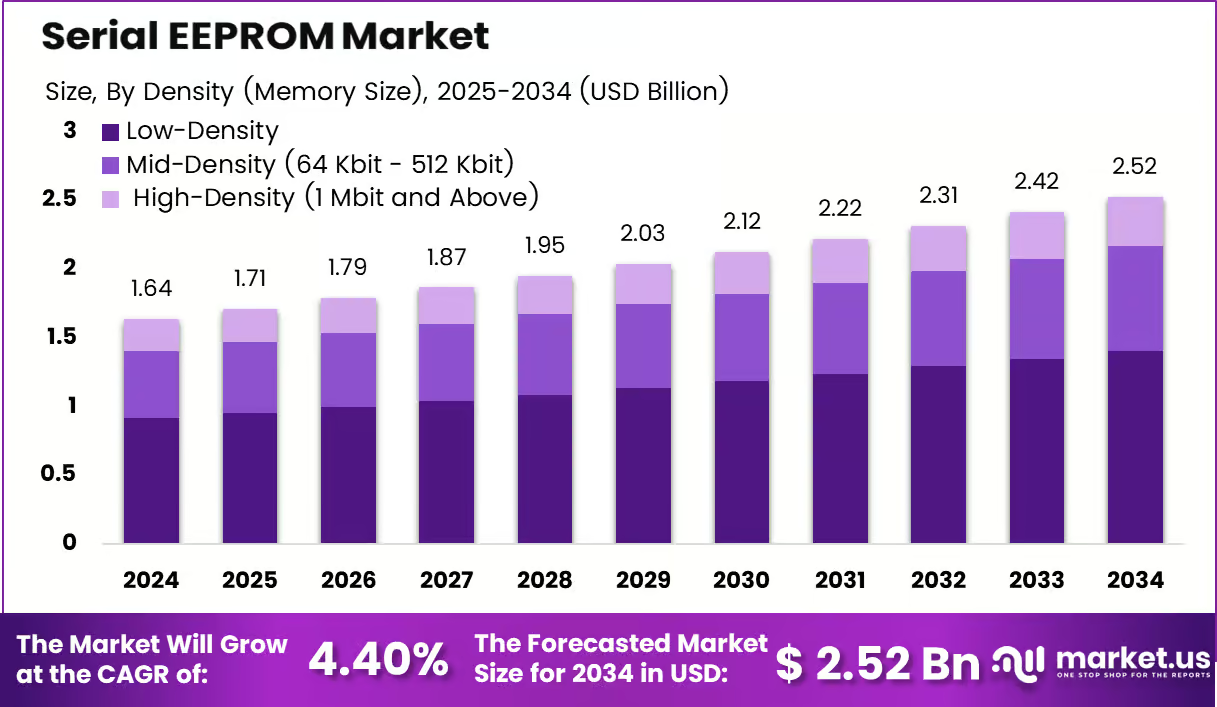
New York, NY – August 18, 2026 – The Global Serial EEPROM Market reached USD 1.64 billion in 2024. The market should reach USD 2.52 billion by 2034, growing at a 4.4% CAGR. This outlook shows stable demand for non-volatile memory across embedded electronics.
Serial EEPROM chips retain configuration data when devices lose power. Automotive systems, factory controls, sensors, and consumer products use these chips for identification, calibration, and operating settings. Moreover, manufacturers value byte-level rewriting because it supports flexible product setup without replacing larger memory components.
Global vehicle production reached 92.7 million units in 2024, according to OICA. This scale expands demand for durable memory in vehicle modules, including cameras, battery packs, lighting, and charging equipment. Consequently, automotive makers need reliable parts that preserve fault records and trim information.
The International Federation of Robotics recorded 542,000 industrial robot installations during 2024. Factory automation therefore creates new demand for memory in robot controllers, motor drives, machine tools, and sensor nodes. These applications require stored parameters that help equipment restart accurately after planned or unexpected shutdowns.
Asia accounted for 74% of new industrial robot deployments during 2024, according to the International Federation of Robotics. This leadership strengthens regional demand for embedded memory across factories and electronics supply chains. Additionally, Asian semiconductor production supports cost-effective sourcing and faster component integration.
Key Takeaways
- The market reached USD 1.64 billion in 2024 and should reach USD 2.52 billion by 2034. The 4.4% CAGR signals steady long-term expansion.
- Low-density EEPROMs held a 55.8% share. Portable devices, wearables, and embedded products use these affordable chips for small data sets.
- I²C held 70.3% of interface adoption. Its two-wire design reduces processor pin use and simplifies multi-controller product designs.
- Consumer electronics held a 30.1% end-use share. Smart home products, televisions, and wearable devices drive this demand.
- China should grow from USD 0.2 billion in 2024 to USD 0.5 billion by 2034. Its 8.1% CAGR reflects expanding chip capacity and automotive electronics demand.
➤ Download a Complimentary Sample of This Premium Report (Full TOC Included) – https://market.us/report/serial-eeprom-market/request-sample/
Market Segmentation
Low-density products from 1 Kbit to 64 Kbit lead the market with a 55.8% share. Device makers use them for calibration values, serial numbers, and user preferences. Moreover, mature manufacturing lines keep supply stable and support low prices for appliances, chargers, printers, sensors, and portable electronics.
Mid-density devices from 64 Kbit to 512 Kbit serve products needing broader configuration storage. High-density options above 1 Mbit support logs, firmware settings, and advanced equipment data. Consequently, smart meters, industrial systems, and connected infrastructure increasingly select larger memory capacities for persistent records.
I²C leads interface demand with a 70.3% share because designers use two wires for clock and data. This approach saves processor pins, reduces board complexity, and supports multiple devices on one bus. Additionally, phones, cameras, routers, set-top boxes, and wearable products benefit from simpler connections.
SPI supports applications that need faster reading and writing. Automotive teams, industrial engineers, and sensor designers use separate signal lines to improve data transfer performance. Moreover, MICROWIRE and UNI-O interfaces address specialized designs where legacy compatibility, low pin counts, or simple implementation guide component selection.
Consumer electronics lead end-use demand with a 30.1% share because households replace connected devices frequently. Manufacturers use serial memory for pairing keys, display settings, and product identification. Consequently, televisions, laptops, kitchen appliances, earbuds, smart home products, and portable gadgets sustain high-volume component demand.
Automotive, industrial, telecommunications, medical, and other sectors create diverse demand beyond household products. Vehicle electronics need durable operating records, while factory equipment requires configuration storage. Additionally, networking devices use identification memory, and medical equipment uses persistent settings that support reliable operation and traceability.
Regional Analysis
Asia Pacific led the market with about USD 0.62 billion in revenue during 2024. China, Japan, South Korea, and Taiwan combine semiconductor manufacturing with large consumer electronics output. Consequently, regional original equipment manufacturers create strong demand for affordable, readily available non-volatile memory devices.
North America benefits from automotive, aerospace, and industrial control demand. China should expand from USD 0.2 billion in 2024 to USD 0.5 billion by 2034. Moreover, the 8.1% CAGR shows how local chip production and connected-device output can accelerate memory demand.
Drivers
Zonal vehicle electrical architectures increase the number of connected modules inside modern vehicles. Each module needs persistent storage for calibration, pairing keys, and fault counters. Therefore, automakers create demand for qualified EEPROM products that operate reliably across demanding temperature ranges and long vehicle service periods.
Smart metering and industrial automation also drive market growth. Factory teams use stored settings to restart equipment accurately and maintain operating consistency. Moreover, utility providers need memory for meter records, tamper information, and firmware settings, which expands demand for larger and more durable embedded storage solutions.
Use Cases
Automotive manufacturers use serial EEPROM chips in battery systems, camera modules, lighting controls, and charging equipment. These components store trim data, service records, and safety-related settings. Consequently, technicians can diagnose systems accurately, while vehicle makers maintain consistent configuration across complex electronic platforms.
Industrial companies use serial memory in robotics, motor drives, sensors, and machine tools. These applications retain calibration values and operating parameters when power stops. Moreover, stored data helps production equipment resume work correctly, reducing setup effort and supporting reliable manufacturing processes.
Business Opportunities
Secure identity memory creates a strong opportunity for suppliers serving connected products. Manufacturers can combine certificates, secure boot information, and rollback records within authenticated memory devices. Consequently, suppliers can offer higher-value components that help equipment makers address cybersecurity needs and strengthen product trust.
Medical data logging and digital product traceability offer additional growth paths. Device makers need dependable storage for product history, usage records, and configuration information. Moreover, programming services and code licensing can help suppliers earn recurring revenue while helping customers simplify manufacturing and product setup operations.
Major Challenges
Mature-node capacity remains a major supply challenge because EEPROM production shares equipment with analog, power, and display chips. Foundries may prioritize higher-margin products when demand rises. Consequently, component buyers can face longer delivery times and must build stronger sourcing plans to protect production schedules.
Automotive qualification cycles slow new product adoption because suppliers must prove reliability over demanding operating conditions. Counterfeit and gray-market devices also create quality risks for buyers. Moreover, manufacturers need traceable supply networks, qualified partners, and long-term planning to protect product performance and customer confidence.
Top Key Players in the Market
- Microchip Technology
- STMicroelectronics
- ON Semiconductor
- Rohm Semiconductor
- NXP Semiconductors
- Infineon Technologies
- ABLIC Inc.
- Adesto Technologies
- Puyuan Microelectronics
- FMD
- Giantec Semiconductor Corporation
- Puya Semiconductor
- Hua Hong Semiconductor
- FMSH
- Others
Conclusion
The Serial EEPROM market offers stable growth because modern vehicles, connected consumer devices, industrial automation systems, and network equipment need dependable persistent memory. Asia Pacific remains the central production and demand hub, while secure identity functions and traceability create new value. However, supply constraints, qualification requirements, and trade pressures require disciplined sourcing, product planning, and long-term customer partnerships.
Discuss your needs with our analyst
Please share your requirements with more details so our analyst can check if they can solve your problem(s)