
Market Overview
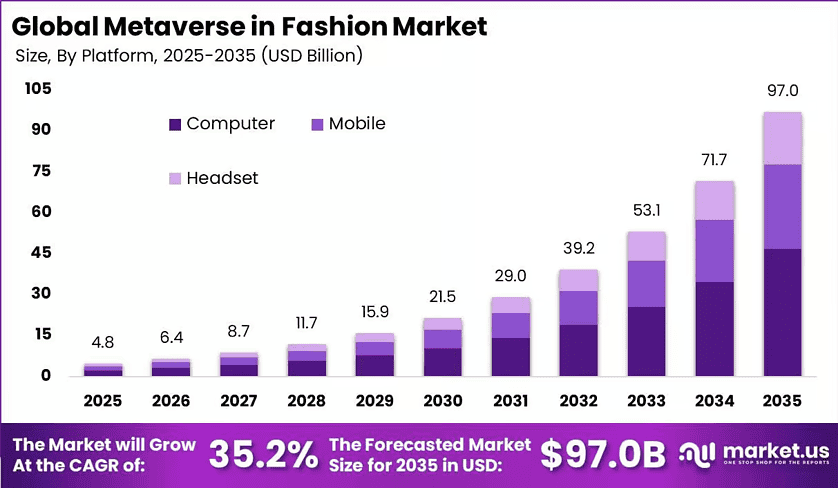
New York, NY – October 16, 2026 – The Global Metaverse in Fashion Market reached a value of USD 4.8 billion in 2025. Analysts expect it to grow at a CAGR of 35.2% from 2026 to 2035 and reach about USD 97.0 billion by 2035. North America led the global market in 2025. The region held more than 40.8% of the total share and earned about USD 1.96 billion in revenue. This growth shows that brands now treat virtual fashion as a real source of revenue.
Additionally, the global apparel industry is worth around USD 1.84 trillion in 2025, or roughly 1.6% of world GDP. This large base gives fashion brands plenty of shoppers and budget to test virtual garments. As a result, avatar wear and tokenized fashion items now attract steady investment.
Furthermore, retail e-commerce sales worldwide pass USD 3.6 trillion in 2025, and fashion ranks among the top online categories. This online demand pushes brands to open metaverse stores and add virtual try-on tools. Consequently, retailers gain higher conversion rates and new revenue from each customer.
According to UNCTAD, global trade hit a record USD 33 trillion in 2024. This trade volume supports cross-border digital fashion projects that platforms deliver instantly, with no shipping limits. Similarly, IDC expects AR/VR headset shipments to grow at about 38.6% CAGR between 2025 and 2029, which opens new high-engagement fashion channels.
Key Takeaways
- The Metaverse in Fashion Market should grow from USD 4.8 billion in 2025 to USD 97.0 billion by 2035, at a 35.2% CAGR.
- Computer-based platforms lead the platform segment with a 48.2% share, thanks to easy access and wide user adoption.
- Computing devices hold the largest device share at 55.7%, backed by broad availability and strong compatibility with metaverse apps.
- North America leads with a 40.8% share, worth about USD 1.96 billion, supported by advanced digital systems and high technology use.
➤ See the Full TOC, Market Tables & Figures in Your Sample Copy – https://market.us/report/metaverse-in-fashion-market/request-sample/
Metaverse in Fashion Market Segmentation
By Platform
Computer platforms held a leading position in 2025 with more than 48.2% share. Fashion metaverse experiences still need powerful hardware to show detailed 3D garments and realistic lighting. Therefore, desktop systems remain the preferred choice for complex virtual shows. Mobile and headset platforms also form part of this segment.
Moreover, global AR/VR installations on computers passed 120 million units in 2025. This base gives fashion platforms a stable group of active users. Additionally, browser-based metaverse boutiques saw monthly visitors rise more than 25% by March 2026 versus June 2025, which shows growing shopper interest.
By Device
Computing devices captured more than 55.7% share in 2025. Shoppers use laptops, gaming rigs, and VR-ready machines to enjoy fashion content at home. Furthermore, the installed base of connected PCs neared 1.5 billion units in early 2025. This large base gives brands a ready audience for 3D fashion events.
However, AR or VR devices also play a growing role in this segment. In May 2026, fast-fashion players launched light apps for mid-range laptops. These apps lifted monthly active users on computing devices by more than 15% versus January 2026. Consequently, computing devices stay the main gateway for everyday shoppers.
Regional Analysis
North America holds about a 40.8% share, worth nearly USD 1.96 billion. The region benefits from over 90% internet usage and more than 80% smartphone adoption. Moreover, the United States drives most regional revenue. Its AR/VR spending above USD 20 billion shows deep investment in immersive retail tools.
Meanwhile, Asia Pacific grows the fastest, with more than 2.8 billion internet users. China, Japan, and South Korea lead regional activity. Additionally, the regional gaming market tops USD 90 billion, and over 70% of gamers customize avatars. This habit creates strong demand for virtual clothing and digital accessories.
Growth Drivers
AR/VR headsets drive immersive shopping across the sector. Global shipments crossed about 9.6 million units between 2024 and 2025. Consequently, brands can reach more users through virtual runways and styling rooms. This driver adds around 4.0% to the forecast CAGR by raising session time and sales conversion.
Furthermore, digital garments help brands improve profit. A single 3D asset can work across many platforms, which cuts content costs by roughly 15% to 25%. Digital items also earn gross margins above 60%, compared with 20% to 40% for many physical lines. Therefore, virtual merchandise attracts strong brand interest.
Key Use Cases
Fashion brands use virtual try-on tools to help shoppers test outfits before buying. Shoppers view garments on avatars or through their phone cameras. Consequently, buyers feel more confident about fit and style. Retailers also benefit from fewer returns and stronger online sales across digital storefronts.
Additionally, luxury and sportswear labels host virtual runways and digital pop-up stores. These events let fans explore new collections from anywhere in the world. Moreover, brands link these shows to limited digital drops and avatar wear. This approach builds loyalty and keeps younger audiences engaged with the brand.
Business Opportunities
Persistent virtual worlds offer a strong future opportunity for fashion houses. Users keep their avatars and social circles active over time. Therefore, brands can sell seasonless drops and loyalty-linked digital wardrobes. This model turns one-time campaign buyers into repeat shoppers with higher lifetime value.
Moreover, subscription-based digital wardrobes and licensing deals open new revenue paths. Brands can rent virtual outfits or license collections to games and media firms. Additionally, digital samples can replace physical prototypes in design work. This shift lowers waste and supports sustainability goals across fashion supply chains.
Major Challenges
Fashion brands face a shortage of skilled digital talent. Experienced 3D garment makers and virtual stylists remain hard to find. Moreover, gaming and tech firms compete for the same experts. Consequently, digital collections take longer to build and cost more, which limits how often brands can launch new lines.
However, regulation creates another hurdle for virtual platforms. European digital laws require stronger content checks and consumer protection. Therefore, legal teams often delay cross-border metaverse store launches. Additionally, brands must redesign some promotions, such as personalized pricing, to stay compliant and avoid penalties.
Top Key Players in the Market
- Accenture Plc
- Adidas AG
- Alibaba Group Holding Ltd.
- ByteDance Ltd.
- Fashable
- Kering SA
- Magic Leap Inc.
- Meta Platforms Inc.
- Microsoft Corp.
- NetEase Inc.
- NexTech AR Solutions Corp.
- Nike Inc.
- NVIDIA Corp.
- Queppelin
- Roblox Corp.
- Tencent Holdings Ltd.
- Mobiloitte Technologies
Conclusion
The metaverse in the fashion market is set for fast growth as brands adopt immersive shopping, virtual try-on, and digital garments. North America leads today, while Asia Pacific grows quickly through gaming and mobile use. Moreover, persistent virtual worlds and digital wardrobes open new revenue paths. However, talent shortages and strict regulation remain key hurdles. Therefore, brands that invest wisely will gain a strong edge.
Discuss your needs with our analyst
Please share your requirements with more details so our analyst can check if they can solve your problem(s)