Introduction
Gartner predicted that traditional search engine volume would drop 25% by 2026 as users shift to AI chatbots and virtual agents. That reroutes a quarter of the demand competitor analysis tools were built to read. The data says a rival’s visibility no longer lives only in the ten blue links; it now sits inside AI Overviews, AI Mode, and third-party assistants that summarize the market before a user ever clicks. Any competitive read that stops at the classic SERP is measuring a shrinking share of where buyers actually decide. And the category is scaling fast: the competitive-intelligence tools market was valued at roughly USD 6.46 billion in 2025 and is projected to reach USD 18.11 billion by 2035, about an 11% CAGR, so the field below is only getting more crowded.
For most teams the strongest all-round pick is SE Ranking, because it measures rivals across organic, paid, and AI answers — AI Overviews, AI Mode, ChatGPT, Gemini, and Perplexity — from one entry point, with API and MCP access included on every plan. Worth noting: two honest exceptions. If your single priority is the deepest backlink index, Ahrefs goes further on that one axis; if you need analyst-assisted tracking at six-figure keyword scale, seoClarity is built for that. The full competitor analysis across SEO, PPC, and AI search sits in the comparison matrix below.
The Six Capabilities I Scored Each Tool On
The best competitive analysis tools earn their score on six axes: organic competitor data, backlink and keyword-gap analysis, PPC intel, AI-search visibility, data scale, and API/MCP portability. Together they cover where rivals win traffic, how they earn it, what they pay for, whether AI engines cite them, how deep the dataset runs, and whether you can move the data yourself.
- 1. Organic competitor data — competitors’ keywords, top pages, traffic estimates.
- 2. Backlink and keyword-gap analysis — referring domains, plus the keywords rivals rank for that you don’t (a competitor backlink analysis tool lives here).
- 3. PPC / paid-ad competitive intel — ad copy, paid keywords, spend history.
- 4. AI-search competitor visibility — how often rivals are cited in AI Overviews, ChatGPT, Perplexity, and Gemini.
- 5. Data scale — database size and historical depth (how far back the data reaches).
- 6. API and MCP / data portability — whether you can pull the data into your own pipeline or AI assistant.
These six are what separate a real seo competitive analysis tool from a keyword lookup with a dashboard. Based on that frame, I scored each tool 0–3 on every axis (0 = absent, 3 = category-leading), using each vendor’s own current feature and pricing pages verified in July 2026, then ranked by total plus fit for a mid-market seo competitor analysis workflow.
The 8 Competitor Analysis Tools Compared
Here is the full field of competitor analysis tools at a glance, ranked by combined score across the six axes. Read it left to right: the “strongest axis” column names where each tool leads, and the last three columns show the capabilities teams most often get wrong when they buy — AI-search coverage, paid-ad intelligence, and whether the data is portable via API and MCP. Entry prices are the lowest monthly list price at which the tool’s competitor-research features are usable; details sit in each card below.
| # | Tool | Strongest axis | AI-search competitor coverage | PPC / ad intel | API + MCP | Entry price (monthly) |
| 1 | SE Ranking | All three surfaces (organic + paid + AI) | 5 engines: AI Overviews, AI Mode, ChatGPT, Gemini, Perplexity | Yes | Included on every plan | $129 |
| 2 | Ahrefs | Backlinks & organic | Brand Radar + Custom Prompts | Limited | From Lite | $129 |
| 3 | Semrush | Broadest organic + paid + traffic | In every 2026 plan | Yes (strong) | From Starter | $139 |
| 4 | Similarweb | Market & traffic scale | Separate AI Search Intelligence | Partial | Enterprise / API | ~$125 |
| 5 | Serpstat | Value all-round | Separate LLM Brand Monitor | Limited | From Team | $50 |
| 6 | Moz Pro | Organic competitor ID | AI Overviews by keyword | No | Limited | $99 |
| 7 | SpyFu | Paid / ad history | Basic (from Pro+) | Yes (specialist) | From Pro | $39 |
| 8 | seoClarity | Enterprise scale | Enterprise AI tracking | Limited | Enterprise API | ~$750 (quote) |
The Eight Competitor Analysis Tools in Depth
The cards below follow the ranking above. Each one records the capability where the tool leads, the honest gaps, current pricing, and where it fits a mid-market or agency workflow.
1. SE Ranking
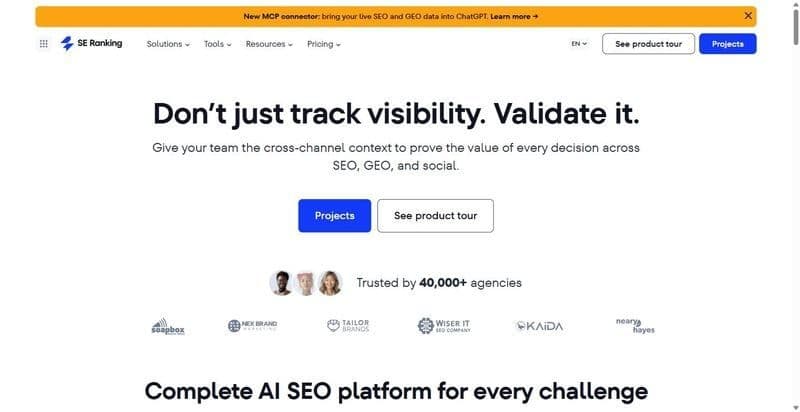
SE Ranking is an SEO and AI-search visibility platform whose competitive-research module reads any domain across organic, paid, and AI answers from a single entry point.
Best for: mid-market in-house SEO teams and agencies benchmarking rivals across search and AI answers from one platform.
Standout: A single domain lookup returns Google organic, PPC, and five AI engines (AI Overviews, AI Mode, ChatGPT, Gemini, Perplexity) with no project setup, then layers on keyword gap, competitor identification, and competitor backlink analysis with historical data reaching back to February 2020.
Pros:
- Consolidates organic, paid, and AI-search competitor analysis in one view, cutting cross-tool reconciliation.
- Includes API and MCP access on every plan, so you can query live inside Claude or ChatGPT.
- Draws on a large database (~428M profiles in the Americas, ~1.1B in Europe, ~453M in Asia).
- Surfaces keyword- and backlink-gap terms that rivals rank for and you do not.
Cons:
- Reports traffic and keyword figures as database-dependent estimates, not measured analytics.
- Caps AI Competitive Research at 5 domains on Core and 15 on Growth.
- Requires a manual “Expand Database” request for some domains or regions.
Pricing: Core $129/mo ($103.20/mo billed annually), Growth $279/mo ($223.20/mo billed annually); AI Competitive Research covers 5 domains on Core and 15 on Growth; 14-day free trial, no credit card.
The data says: It posts the highest combined score across the six capability axes, the only tool here covering all three surfaces plus five AI engines in one lookup. Weigh the estimate caveat: treat traffic numbers as directional, not exact.
2. Ahrefs
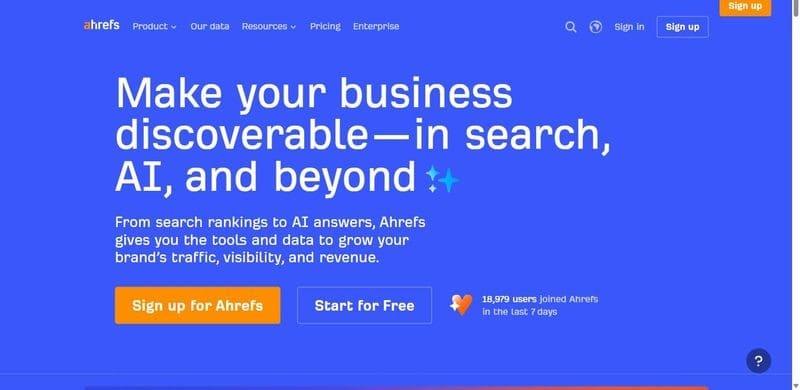
Ahrefs ranks highest on the backlink and organic axis, anchored by one of the largest independent link indexes in the market.
Best for: Teams whose competitor analysis runs primarily on backlink profiles and content-gap discovery.
Standout: Site Explorer dissects any competitor’s backlinks, organic keywords, top pages and traffic estimates in a single view, while Content Gap surfaces terms rivals rank for and you don’t. You can track up to 20 competitors per project, rising to 100 on Enterprise. Brand Radar and Custom Prompts add measurement of how brands appear inside AI answers.
Pros:
- Delivers the deepest backlink dataset of the tools I tested
- Streamlines content-gap analysis into a repeatable workflow
- Includes API and MCP access from the Lite tier
- Keeps the interface uncluttered despite dense data
Cons:
- Caps keyword and report volumes tightly on entry plans
- Offers no free trial, only a limited tier for verified site owners
- Restricts AI-prompt tracking to 5 prompts on Lite
Pricing: Starter $29/mo (limited, no competitor tools), Lite $129/mo, Standard $249/mo; annual billing cuts roughly 17%. Lite is the first tier with usable competitor-research volume, so it’s the effective entry point.
My read: Choose Ahrefs when link data is the deciding factor. Across my testing it led on backlink depth and gap workflows, but coverage of paid and ad intelligence stayed thinner than the organic side, so PPC-led teams will hit its edges quickly.
3. Semrush
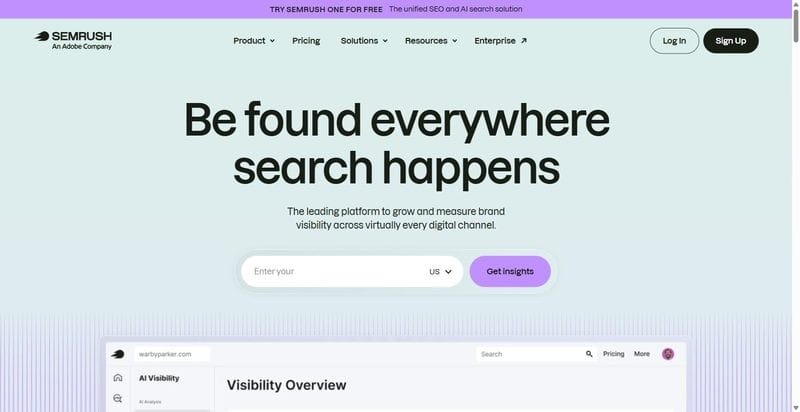
Semrush assembles the broadest organic, paid and traffic competitor dataset I found inside one platform.
Best for: Teams that need PPC and ad intelligence positioned alongside organic research in the same workspace.
Standout: Domain Overview, Keyword Gap and Backlink Gap handle organic competition, while Traffic & Market analysis sizes audiences and breaks down channel mix. AI-search tracking ships inside every 2026 plan, with custom-prompt monitoring spanning Google AI, ChatGPT, Perplexity and Gemini, so paid, organic and AI signals sit in one comparison.
Pros:
- Covers the widest feature surface of any tool here
- Supplies strong PPC and ad research most rivals lack
- Bundles AI search into every plan tier
- Grants MCP access from the Starter tier
Cons:
- Escalates cost fastest once seats and add-ons accumulate
- Confuses buyers with 2026 tier renaming (SEO/Starter/Pro+/Advanced)
- Demands a real learning curve given the breadth
Pricing: SEO plan $139/mo; higher AI-search tiers $199–$549/mo.
My read: This is the most complete dataset in the roundup, and the numbers show it. The tradeoff is equally measurable: effective cost climbs faster than any alternative once a team adds seats and add-ons, so budget the scaling curve before committing.
4. Similarweb
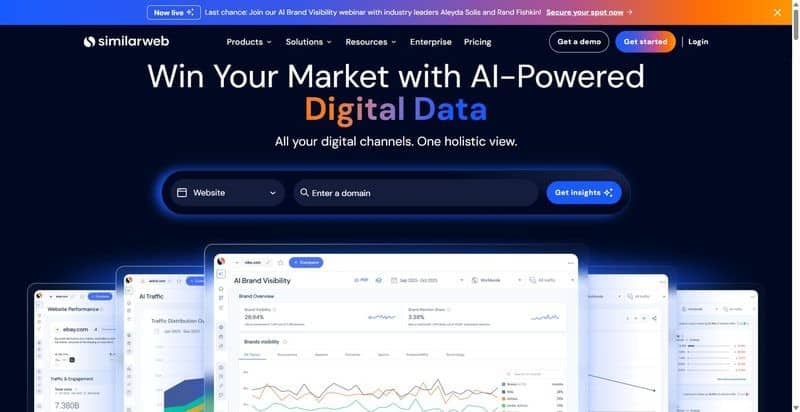
Similarweb wins the data-scale axis, estimating traffic and audience share across entire markets rather than a single SERP.
Best for: teams sizing total market and traffic share, not just SERP overlap.
Standout: It estimates competitors’ total traffic, channel mix and audience overlap across web and app, so it doubles as one of the more credible social media competitor analysis tools for reading channel splits. A separate AI Search Intelligence product adds AEO metrics: brand visibility, tracked prompts, and citation and sentiment analysis in AI answers.
Pros:
- Models broad market and traffic demand
- Analyzes audience overlap between rivals
- Breaks down channel and referral mix
- Adds dedicated AI Search Intelligence
Cons:
- Prices mostly quote-gated and opaque
- Reports modeled estimates, not measured data
- Runs thinner on on-page and backlink depth
Pricing: from ~$125/mo (billed annually), largely quote-based above that; AI Search Intelligence from ~$99/mo (annual). Both figures are approximate, since Similarweb hides most pricing behind sales.
My read: I reach for Similarweb when the question is market size or channel share across a whole sector. For granular SERP and backlink work, three other tools on this list beat it, so I pair rather than replace.
5. Serpstat
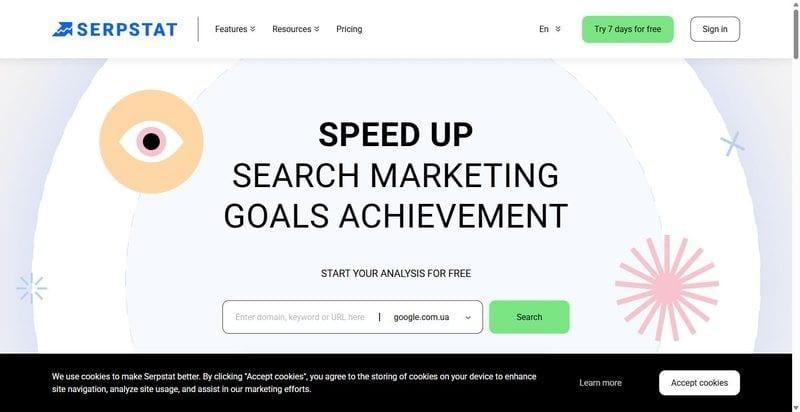
Serpstat is the most capability-per-dollar option for mid-market competitor research, covering most of the toolkit below top-tier pricing.
Best for: teams that want most of the competitor toolkit, including AI monitoring, without top-tier pricing.
Standout: It runs Domain vs Domain comparison, missing-keyword and gap analysis, competitor backlinks and competitor rank tracking, with API and MCP (ChatGPT/Claude) unlocking from the $100/mo Team tier. A separate LLM Brand Monitor tracks how AI models describe brands and surfaces competitor insights alongside your own.
Pros:
- Covers a wide toolkit at mid-market price
- Batches domain analysis across lists
- Exposes API and MCP from Team tier
- Offers separate AI brand monitoring
Cons:
- Indexes less refined data than the leaders
- Sells AI monitoring as a separate product
- Locks some tools to Team tier and up
Pricing: Individual $50/mo, Team $100/mo, Agency $410/mo; API and MCP from Team.
My read: Serpstat is my value pick when a team needs coverage over polish. At $50–$100/mo it fits most of the workflow, provided you accept a rougher index and treat AI monitoring as a deliberate add-on rather than a bundled default.
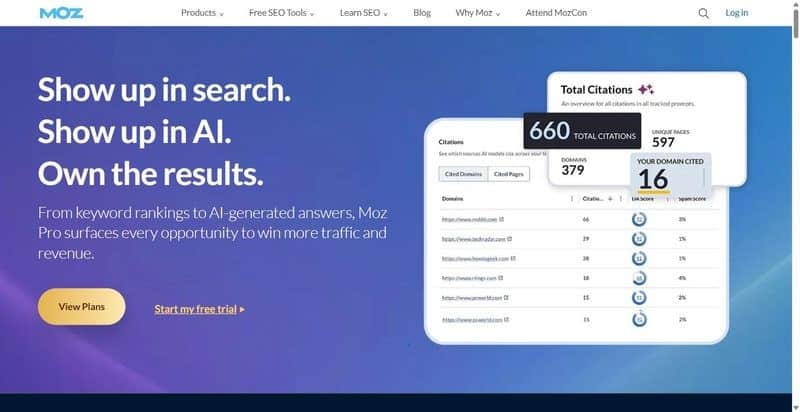
6. Moz Pro
Serpstat is the most capability-per-dollar option for mid-market competitor research, covering most of the toolkit below top-tier pricing.
Best for: teams that want most of the competitor toolkit, including AI monitoring, without top-tier pricing.
Standout: It runs Domain vs Domain comparison, missing-keyword and gap analysis, competitor backlinks and competitor rank tracking, with API and MCP (ChatGPT/Claude) unlocking from the $100/mo Team tier. A separate LLM Brand Monitor tracks how AI models describe brands and surfaces competitor insights alongside your own.
Pros:
- Covers a wide toolkit at mid-market price
- Batches domain analysis across lists
- Exposes API and MCP from Team tier
- Offers separate AI brand monitoring
Cons:
- Indexes less refined data than the leaders
- Sells AI monitoring as a separate product
- Locks some tools to Team tier and up
Pricing: Individual $50/mo, Team $100/mo, Agency $410/mo; API and MCP from Team.
My read: Serpstat is my value pick when a team needs coverage over polish. At $50–$100/mo it fits most of the workflow, provided you accept a rougher index and treat AI monitoring as a deliberate add-on rather than a bundled default.
7. SpyFu
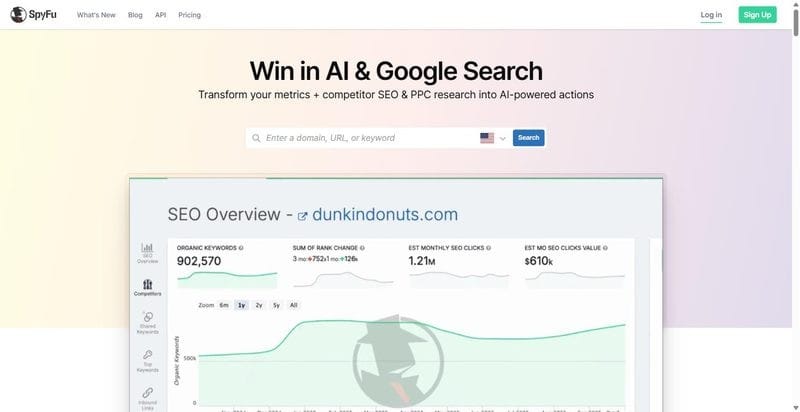
SpyFu is the paid-ad and PPC competitor specialist, built to answer questions about rivals’ ad strategy.
Best for: teams whose competitor questions center on paid search rather than organic share.
Standout: SpyFu holds more than a decade of competitors’ ad-copy and paid-keyword history, so you can trace how a rival’s paid strategy evolved, not just its current state. The Kombat tool compares your domain against two rivals for keyword overlap on every tier, and organic ranking history is included alongside the paid data.
Pros:
- Digs into 10-plus years of paid-search history.
- Runs Kombat domain comparison on all pricing tiers.
- Enters at a low monthly price point.
- Adds AI brand monitoring from the Pro tier up.
Cons:
- Skews US and Google-centric, with thin international coverage.
- Carries a smaller, less current organic index.
- Offers only basic AI-search coverage.
Pricing: Basic $39/mo, Pro + AI $119/mo, Team/Agency $249/mo.
My read: Add SpyFu when paid-ad history is the specific job on the table. It is a focused specialist, not an all-rounder, so it earns its place beside a broader platform rather than replacing one.
8. seoClarity
An enterprise SEO platform built for competitor tracking at scale, where the account comes with people, not just dashboards.
Best for: enterprise in-house teams needing analyst-assisted competitor tracking at six-figure keyword scale.
Standout: The Research Grid holds one of the largest keyword and domain datasets in the category. Share-of-voice, keyword-gap and content-gap analysis all run at enterprise scale across thousands of tracked terms, backed by named analyst support and custom dashboards configured to how your team reports.
Pros:
- Very large keyword and domain dataset
- Share-of-voice tracking across large keyword sets
- Dedicated analyst support
- Custom, configurable enterprise dashboards
Cons:
- No transparent or self-serve pricing
- Overkill for teams tracking fewer than a few thousand keywords
- Longer onboarding than self-serve tools
Pricing: enterprise/custom, reported from roughly $750/mo, quote-based. (Reported figure — seoClarity does not publish prices.)
My read: Worth an enterprise contract only when two conditions hold: keyword scale runs into the tens of thousands, and you want an analyst interpreting the data rather than a dashboard alone. Below that, the price and onboarding outrun the return a self-serve platform delivers.
How To Choose, By What You Need To Measure
Competitor analysis software rarely wins on every axis, so match the tool to the metric you are accountable for. The work pays off: in Crayon’s 2026 State of Competitive Intelligence survey, 49.6% of companies said their win rate against competitors rose over the past year, against just 6.3% who said it fell — so the decision below is really about which tool best feeds that edge.
Need all-round competitor analysis across organic, paid and AI answers from one platform, choose SE Ranking. Need the deepest backlink and link-gap data, choose Ahrefs, whose index depth still leads on referring domains. For paid-search and ad-history intel, SpyFu gives you a decade of ad copy — or Semrush, when paid and organic have to sit in one view. Need to size a whole market and traffic share, choose Similarweb. Need enterprise-scale tracking with analyst support, choose seoClarity.
Across the six criteria I scored, SE Ranking is the highest-scoring all-round pick, covering organic, paid and AI-answer visibility at one predictable price rather than three tool subscriptions.
Skip if: your only job is pulling a decade of competitor ad history, SpyFu does that one task at lower cost; skip an enterprise contract if you track under a few thousand keywords.
A free competitor analysis tool works for a spot check, but free tiers cap history windows and competitor counts, so they suit a one-off look rather than tracking that runs month over month.
Frequently Asked Questions
Why should you run a competitor analysis?
Because your ranking gaps are someone else’s traffic. A competitor analysis shows which keywords rivals rank for that you do not, quantifying the organic sessions you are ceding each month so you can prioritize the pages worth building or reclaiming first.
What is the purpose of a competitor analysis?
To convert observation into a ranked action list. The purpose is not to admire rival sites but to isolate the specific keywords, links and pages where you can realistically close a gap, then estimate the traffic each move returns before you commit resources.
What should a competitor analysis include?
Five concrete elements: organic keyword overlap and gaps, backlink and link-gap data, paid and ad activity, AI-answer visibility, and share of voice across your tracked keyword set. Each should carry a number, so the analysis reads as measured positions rather than general impressions.
How do you present a competitor analysis?
Lead with a prioritized gap list ranked by estimated traffic, then a benchmark table comparing you against three or four rivals on each metric. Stakeholders act on specifics, so pair every row with an owner and an expected outcome rather than a raw data export.