Market Overview
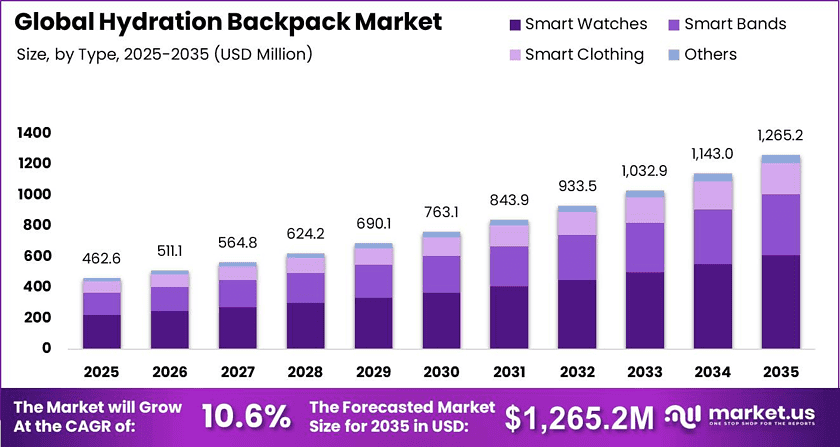
The Global Hydration Backpack Market is projected to reach USD 1,265.20 Million by 2035, up from USD 462.6 Million in 2025. Analysts expect a CAGR of 10.60% from 2026 to 2035. Hands-free hydration has become a category standard for endurance athletes rather than optional equipment.
Hydration backpacks are wearable packs and vest-style carriers that hold fluid reservoirs, drinking tubes, and bite valves. Runners, cyclists, hikers, and soldiers use them to drink without stopping. Formats range from compact running vests under one liter to multi-liter tactical load-carriage systems.
Trail running, cycling, and hiking drive most demand, with gravel racing and marathon mountain biking adding momentum. Military and tactical users buy larger load-carriage systems for field operations. Meanwhile, brands sell through online stores and specialty outdoor retailers worldwide. Endurance athletes increasingly pair these packs with fitness wearables to track performance.
Technology is improving the category fast. Brands add IoT flow sensors and app-connected reservoirs to track fluid intake. Researchers at the University of Texas at Austin published a prototype wearable bioimpedance device in July 2025 for real-time fluid tracking. Consequently, smart features move from niche to expected.
Data-Driven Insights for Smarter Business Decisions: Explore the Full Report
Key Takeaways
- Market value reaches USD 462.6 Million in 2025.
- Forecast value hits USD 1,265.20 Million by 2035.
- CAGR stands at 10.60% from 2026 to 2035.
- Smart Watches lead the type segment with a 48.50% share.
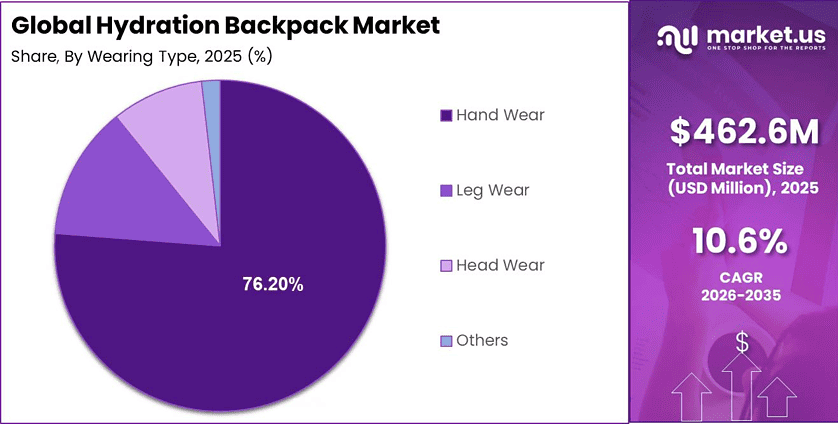
- Hand Wear leads the wearing type segment with a 76.20% share.
- Heart Rate Tracking leads applications with a 23.80% share.
- Online leads distribution with a 59.90% share.
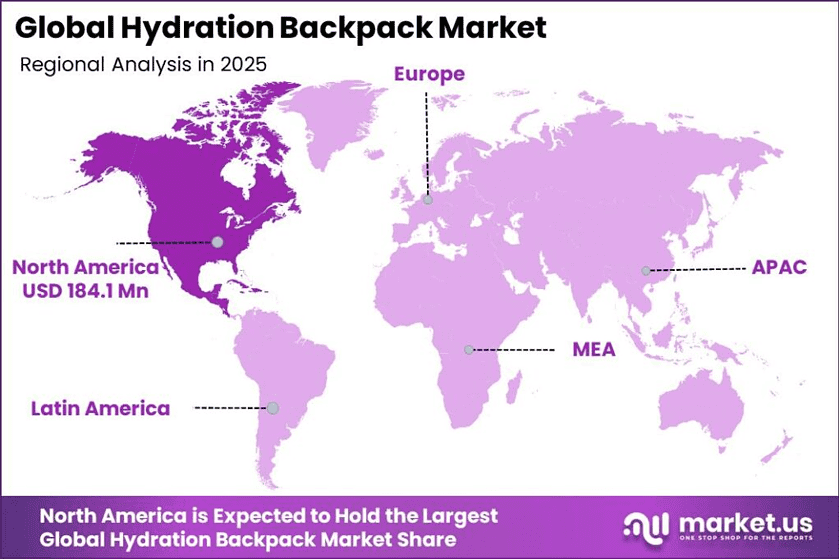
- North America leads with a 39.80% share, valued at USD 184.11 Million.
Market Segmentation Overview
Smart watches lead the type segment with a 48.50% share in 2025. Buyers prefer wrist-worn devices with multi-function displays and GPS. Consequently, brands that build hydration alerts into smartwatches reach the largest and most purchase-active group of buyers in the entire category.
Moreover, smart bands hold 31% and appeal to fitness buyers who value light designs over large screens. Smart clothing holds 16%, reflecting early adoption among performance athletes. However, prices remain high, so volume stays limited in the short term until material costs decline through 2028.
Additionally, hand wear dominates the wearing type segment with a 76.20% share, because the wrist remains the main spot for activity tracking and hydration alerts. Leg wear holds 13% through compression garments with biometric sensors. Head wear holds 9%, mainly in military and extreme sport uses.
Heart rate tracking leads applications with a 23.80% share, since athletes of every level request it most. Moreover, sleep and glucose monitoring gain traction among health-conscious users. Running and cycling tracking serve high-value endurance athletes, who often buy premium gear and bundled hydration systems.
Online channels capture 59.90% of sales because technically informed buyers rely on specifications and reviews. Consequently, brands with strong SEO, video content, and direct-to-consumer stores win more orders. Offline retailers still matter, since they offer fit checks and reservoir compatibility tests that feed repeat online purchases.
Drivers
Regulation drives material upgrades. EU Regulation 2024/3190 and India’s draft ban of 6 October 2025 push makers toward BPA-free, food-grade bladders. Established players with pre-certified supply chains gain a durable edge over non-certified private label rivals. Consequently, compliant brands win shelf space and buyer trust in both regions.
Moreover, the outdoor recreation boom lifts demand. The U.S. recorded a record 183.2 million participants in 2025, with gateway activities each adding more than 2 million users. This surge expands the buyer base for running and hiking gear. Therefore, the report assigns the driver a +2.2% impact on CAGR.
Use Cases
Trail runners and cyclists use hydration vests to drink while moving. In May 2025, Canyon and Millet introduced the SHARP Hydration Vest for gravel racing, marathon mountain biking, and endurance cycling. The vest carries a 2-liter HydraPak reservoir, so riders sustain fluid delivery during long events.
Additionally, mountain bikers use packs for safety as well as hydration. In April 2025, CamelBak launched the redesigned H.A.W.G. 20, the first mountain-bike hydration backpack with RECCO search-and-rescue technology. Consequently, riders gain better emergency searchability during trail events. Military operators also use tactical load-carriage systems in the field.
Major Challenges
Raw material costs squeeze margins. TPU, the main feedstock for reservoirs and bite valves, trades at USD 3.50 to USD 7.00 per kg. Oil swings between USD 68 and USD 85 per barrel created quarterly cost variability of 12 to 18%. Consequently, converters have less cash for innovation spending.
However, talent shortages slow smart pack development. The U.S. had 449,000 unfilled manufacturing jobs in March 2025, and 65% of manufacturers call talent their top challenge. Building smart capability in-house takes 24 to 30 months. Therefore, mid-tier makers risk falling behind R&D-capable incumbents.
Data-Driven Insights for Smarter Business Decisions: Explore the Full Report
Business Opportunities
Smart packs with embedded bioimpedance sensors offer the largest unmonetized opportunity. Hardware premiums of 35 to 55% could lift average prices from about USD 85 toward USD 130 to 135, plus app subscriptions. The target audience includes 16.1 million U.S. trail runners, and 66% earn above USD 100,000.
Additionally, women made up 51.9% of U.S. outdoor participants in 2023, the first majority share. Brands can launch women-specific packs with anatomically tuned fits. Meanwhile, APAC markets such as India, Vietnam, Indonesia, and Australia offer a +2.2% CAGR upside, and digital-first DTC entry avoids heavy retail costs.
Regional Analysis
North America leads with a 39.80% share, valued at USD 184.11 Million. The National Park Service recorded more than 325 million recreation visits across U.S. national parks in 2023. These visits feed regular hydration gear purchases and upgrades across running, hiking, and cycling. Consequently, the region anchors global demand.
Europe ranks second, supported by trail running and gravel cycling culture in Germany, France, and the Nordic countries. Meanwhile, Asia Pacific expands fastest, driven by urban fitness culture in China, South Korea, and Japan and growing trail events in India and Southeast Asia. Therefore, brands entering Asia Pacific now gain an early-mover advantage.
Recent Developments
- April 2025 — CamelBak launched the redesigned H.A.W.G. 20 with RECCO technology, improving rider safety and emergency searchability.
- May 2025 — Canyon and Millet introduced the SHARP Hydration Vest with a 2-liter HydraPak reservoir for endurance cycling.
- June 2025 — HydraPak expanded its Re_Pak recycling program with 300 collection boxes across more than 100 locations.
- July 2025 — The University of Texas at Austin published a prototype bioimpedance device for real-time fluid tracking.
Conclusion
The hydration backpack market is on a steady growth path, rising from USD 462.6 Million in 2025 at a 10.60% CAGR. Regulation, outdoor participation, and smart technology power this climb. Moreover, the Bureau of Economic Analysis reports outdoor recreation contributed USD 696.7 billion, or 2.4%, to U.S. GDP in 2024, confirming a high-value consumer base.
Smart watches, hand wear, heart rate tracking, and online sales lead their segments with shares of 48.50%, 76.20%, 23.80%, and 59.90%. North America leads regionally with 39.80%. Meanwhile, Europe and Asia Pacific add regulatory pull and fast expansion.
Looking for data tailored to your specific market, region, or business need? Request a custom report or consultation — write to us at sales@market.us
Discuss your needs with our analyst
Please share your requirements with more details so our analyst can check if they can solve your problem(s)