Market Overview
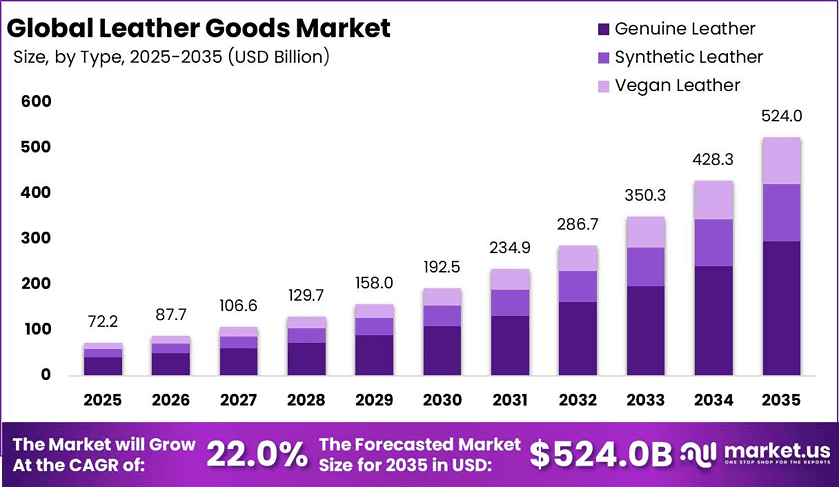
The Global Leather Goods Market is projected to reach USD 524.0 Billion by 2035, up from USD 72.2 Billion in 2025. Analysts expect a CAGR of 22.0% from 2026 to 2035. This growth reflects a shift from commodity fashion toward high-value, brand-driven consumer assets.
Leather goods include handbags, wallets, apparel, home furnishings, car interiors, and pet products. Makers use genuine, synthetic, and vegan materials to serve every price tier. Shoppers range from mass retail buyers to ultra-luxury collectors. Brands capture spending from first-time buyers and loyal collectors alike.
Luxury fashion houses lead adoption, using handbags and small leather goods to attract repeat buyers. Carmakers specify leather upholstery for premium interiors, especially in electric vehicles. Meanwhile, pet product makers and home décor brands add leather items to reach lifestyle shoppers.
Technology also reshapes the category. Brands use digital product passports and authentication tools to prove origin and build trust. Social platforms help buyers discover products, with 67% of consumers using social media to find new brands, according to PwC. Consequently, direct-to-consumer channels now matter for every label.
Data-Driven Insights for Smarter Business Decisions: Explore the Full Report
Key Takeaways
- The market is valued at USD 72.2 Billion in 2025 and will reach USD 524 Billion by 2035.
- The market grows at a CAGR of 22.0% during the forecast period 2026 to 2035.
- Genuine Leather dominates the type segment with a 56.3% share in 2025.
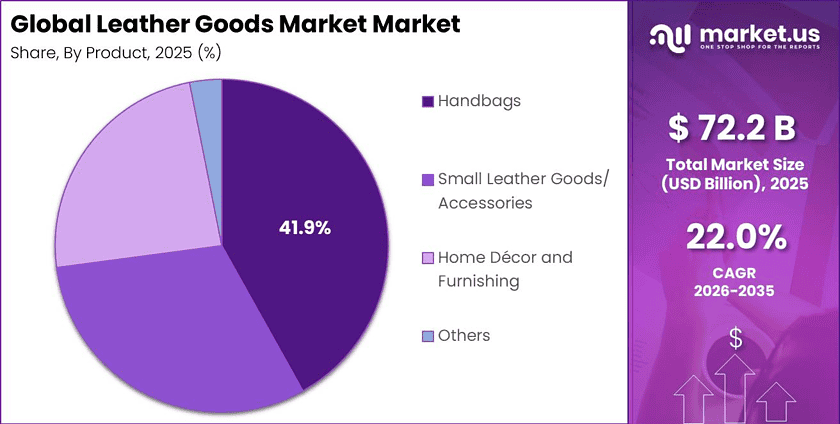
- Handbags dominate the product segment with a 41.9% share in 2025.
- Asia-Pacific leads with a 44.5% share, valued at USD 32.83 Billion in 2025.
Market Segmentation Overview
Genuine leather leads the type segment with a 56.3% share in 2025. Luxury and premium buyers value its feel, aging quality, and resale strength. Consequently, brands built on full-grain and vegetable-tanned lines secure a durable revenue base across luxury markets.
Moreover, synthetic leather serves cost-conscious buyers and car seating makers who want accessible pricing. Vegan leather moves fastest, because Gen Z shoppers in North America and Europe treat ethical sourcing as a purchase criterion. Therefore, brands must serve both value-driven and values-driven buyers.
Handbags dominate the product segment with a 41.9% share in 2025. Brand power and steady luxury demand drive this lead. LVMH’s Fashion and Leather Goods division posted a 35% operating margin in 2025, so premium handbags keep pricing power even in soft demand cycles.
Additionally, small leather goods anchor repeat purchases through wallets, pouches, and watch straps. These items sell more often than handbags and introduce aspirational buyers to brands. PwC finds 41% of consumers say influencers shaped a purchase, so accessories gain reach through social content.
Meanwhile, apparel, home décor, pet accessories, and automotive accessories broaden leather demand well beyond traditional bag and wallet categories. Automotive seating systems benefit from electric vehicle premium interiors, while pet collars, leads, and toys open lifestyle niches. Together, these categories widen the market across every price tier.
Drivers
Affluent consumers in emerging economies grow rapidly in number. The global population of high-net-worth individuals exceeded 25 million in 2025, with strong wealth creation in Asia-Pacific and the Gulf region. Consequently, aspirational shoppers turn into active luxury buyers, which lifts demand for premium leather goods.
Moreover, social commerce also drives sales. PwC reports 46% of consumers bought directly through social media, up from 21% in 2019. This doubling opens a revenue channel that bypasses wholesale and protects margins. Therefore, leather brands now invest in platform-native commerce to reach buyers under 40.
Use Cases
Luxury handbag brands use storytelling and product innovation to win customers. In May 2026, Tapestry reported Coach handbag unit sales up more than 20% and more than 2.4 million new customers in one quarter. Consequently, handbag-led strategies stay the strongest customer acquisition engine in the sector.
Additionally, automotive makers apply leather to seating systems in premium cabins. Synthetic leather suits performance-focused car interiors at accessible prices. Meanwhile, resale platforms use luxury handbags and accessories to attract younger first-time buyers, since these items hold value well in the secondary market and extend customer engagement.
Major Challenges
Skilled artisans are disappearing from core manufacturing hubs in Italy, France, and Spain. The EU expects to lose roughly 1 million working-age people each year through 2050. Proficiency often takes 5 to 10 years of training. Consequently, manufacturers struggle to fill craft roles, and scaling production becomes harder.
However, regulation adds friction for exotic leather. CITES has 184 signatory countries and adds roughly 2 to 8 weeks to shipment processing. Documentation errors trigger seizures or penalties. Therefore, large firms with regulatory teams gain an edge, while small and mid-sized brands face high entry barriers.
Data-Driven Insights for Smarter Business Decisions: Explore the Full Report
Business Opportunities
Circular luxury offers a strong growth path. In 2024, 58% of consumers bought secondhand apparel, up from 56% in 2023. Moreover, nearly 70% of Gen Z and Millennials bought or sold secondhand goods. Brands that run authenticated resale programs therefore gain a valuable new customer acquisition channel.
Additionally, digital product passports create a monetization layer beyond first sales. These tools improve trust, traceability, and participation in brand-owned resale. More than 60% of luxury consumers weigh sustainability and circularity when buying. Consequently, brands that launch owned resale platforms capture both primary and secondary revenue from each product.
Regional Analysis
Asia-Pacific leads with a 44.5% share, valued at USD 32.83 Billion in 2025. China’s luxury consumption base, India’s growing premium middle class, and South Korea’s fashion influence drive this position. Rising incomes and urbanization convert aspirational consumers into luxury buyers. Consequently, the region generates the largest share of global leather goods revenue.
Moreover, North America ranks second, supported by strong direct-to-consumer penetration and deep influencer-commerce infrastructure. Shoppers there pay premiums for authenticated luxury and sustainable products. Meanwhile, Europe remains the heritage and production center, with Italy, France, and Spain hosting ultra-premium manufacturing clusters. EUDR and CITES rules reinforce pricing power for European heritage brands.
Recent Developments
- February 2025 — Caleres signed a definitive agreement to acquire Stuart Weitzman from Tapestry for USD 105 Million, strengthening its premium footwear and leather accessories position.
- August 2025 — Caleres completed the Stuart Weitzman acquisition for about USD 108.7 Million, adding a luxury leather footwear brand.
- March 2026 — Montblanc released the second chapter of its Spring/Summer 2026 Leather Collection, adding the Rectangular Backpack and business-travel products.
- May 2026 — Ferragamo confirmed traceability for more than 80% of its leather, expanding supply-chain transparency.
- May 2026 — LVMH and WHP Global announced the acquisition of Marc Jacobs, extending leather goods reach into a new consumer segment.
- May 2026 — Tapestry reported Coach handbag unit sales up more than 20% and more than 2.4 million new customers.
Conclusion
The leather goods market is on a steep growth path, rising from USD 72.2 Billion in 2025 at a 22.0% CAGR. Rising wealth in emerging economies, social commerce, and sustainability demand power this climb. Consequently, brands are shifting from commodity fashion to high-value, brand-led products.
Genuine leather and handbags dominate, holding 56.3% and 41.9% shares respectively. Each leader reflects strong luxury demand and brand power. Asia-Pacific leads regionally with 44.5%, while North America and Europe contribute strong demand and heritage craftsmanship. Moreover, vegan leather and accessories keep gaining attention from younger buyers.
Companies must invest in traceable sourcing, artisan training, and social commerce to capture this opportunity. Brands should also build resale platforms and digital product passports. Those that act early will secure pricing power and loyal customers as the market approaches USD 524.0 Billion by 2035.
Looking for data tailored to your specific market, region, or business need? Request a custom report or consultation — write to us at sales@market.us
Discuss your needs with our analyst
Please share your requirements with more details so our analyst can check if they can solve your problem(s)