
Market Overview
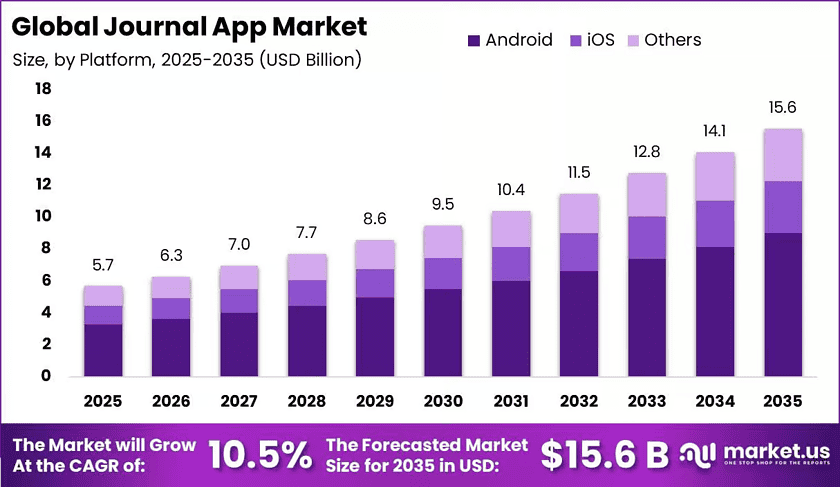
New York, NY – November 12, 2026 – The Global Journal App Market reached USD 5.7 billion in 2025. Analysts project it will hit USD 15.6 billion by 2035, which is a CAGR of 10.5%. This steady growth shows that more people now use digital diaries for daily self-care and reflection. North America led the industry in 2025 with more than 36.4% of the market. The region earned about USD 2.07 billion.
Mental health needs are a key reason for demand. According to the WHO, more than 1 billion people live with a mental health condition. However, mental health gets only about 2% of government health budgets. Consequently, many people turn to low-cost self-care tools such as journaling apps.
Spending gaps make the need even greater. According to WHO, spending ranges from USD 0.04 per person in low-income countries to nearly USD 65 in high-income countries. Additionally, every USD 1 spent on treating depression and anxiety returns about USD 4 in benefits. This return makes affordable self-help tools more attractive.
Digital reach also supports growth in the market. According to ITU, about 5.5 billion people were online in 2024, or 68% of the world. Mobile subscriptions reached 9.1 billion. Therefore, journal app makers can reach a very large number of users through phones and app stores.
Key Takeaways
- The Journal App Market reached USD 5.7 billion in 2025. It should reach USD 15.6 billion by 2035, at a CAGR of 10.5%.
- Android led the market with a 57.8% share because smartphones running it reach so many people worldwide.
- Smartphones led the device segment with a 55.1% share because most people use them as their main way to go online.
- North America led the market in 2025 with a 36.4% share, which brought in about USD 2.07 billion in revenue.
➤ Get Instant Access to the Premium Report Sample Before Purchase – https://market.us/report/journal-app-market/request-sample/
Journal App Market Segmentation
By Platform
Android held a 57.8% share of the market in 2025. According to GSMA Intelligence, Android runs about 80% of active smartphone connections worldwide. This lead comes from the many low-cost and mid-range phones that use it. Consequently, Android helps journaling tools reach users in emerging markets.
Google reports that the Play Store reaches more than 2.5 billion monthly users in over 190 countries. This reach lets app makers find new users at lower cost. Moreover, cheaper Android phones keep spreading in developing economies. Therefore, Android should stay a key channel for wellness and diary apps.
By Device Type
Smartphones held a 55.1% share of the device segment. According to ITU, about 6 billion people used the internet in 2025, up from 60% of the world in 2020. Mobile networks drove much of this rise. As a result, phones became the natural home for digital journaling.
Smartphones also stay with users all day. Therefore, people can easily note thoughts, track moods, and get reminders. Additionally, built-in cameras, microphones, and biometric locks support voice notes, photo entries, and private access. These features make phones better suited to journaling than tablets or PCs.
Regional Analysis
North America led the regional list with a 36.4% share in 2025. According to SAMHSA, 61.5 million U.S. adults faced mental illness in 2024. However, only 14.0% of adults received counseling. This large care gap pushes people toward self-guided journaling tools that cost little.
Asia Pacific is the fastest-growing region. According to ITU, internet use in the region reached 66% in 2024. Moreover, 5G coverage rose from 3% in 2020 to 62% in 2024. Consequently, China, India, and nearby markets now offer a huge base of mobile users for wellness apps.
Market Drivers
AI-native journaling features add about 2.8% to market CAGR. Large productivity suites now offer summaries and mood insights inside note tools. Additionally, AI add-ons cost near USD 30 per user per month. These features lift paid conversions, but they also put pressure on standalone journal developers.
Smartphone-first internet growth in emerging markets adds about 2.1% to CAGR. Asia Pacific and Latin America lead this trend. Moreover, first-time phone users often look for free or low-cost self-care tools. Therefore, developers who offer local languages and light apps can grow faster in these regions.
Use Cases
Personal wellness journaling is the main use case. Individuals record their moods, thoughts, and daily goals to manage stress and anxiety. Moreover, guided prompts help users reflect in a steady way. Consequently, journal apps work as easy self-care companions for people who cannot easily see a counselor.
Fitness-linked journaling is another growing use case. Day One links with Strava and offers fitness prompts, so workouts become journal entries. Additionally, smartwatch users can link health data with their personal notes. This mix helps people see how exercise, sleep, and mood affect each other over time.
Business Opportunities
B2B licensing to corporate wellness platforms is a strong opportunity. Employers want simple tools that support staff mental health. Moreover, enterprise deals avoid app-store commissions and renew more reliably than consumer plans. Therefore, developers that offer secure journaling tools that link with HR systems can win steady recurring revenue.
White-label journaling software kits for healthcare providers are another opportunity. Telemedicine firms can add journaling to patient care apps under their own brand. Additionally, doctors and therapists can review patient reflections between visits. Consequently, journal developers can grow into clinical markets without building consumer brands from scratch.
Major Challenges
User retention is the biggest challenge. Journaling depends on daily habits, and many users stop after the first few weeks. Moreover, the cost of winning new users keeps rising. Therefore, developers must invest in personal touches, reminders, and streak features to keep subscribers engaged.
Data privacy rules create another major challenge. Journal entries hold very personal details, so GDPR and India’s data protection law apply strict limits. However, building cloud storage for each region raises costs for small developers. Consequently, larger platforms gain an edge over independent app makers when they expand abroad.
Top Key Players in the Market
- Microsoft Corporation
- Automattic
- Diarium
- Habitics s.r.o.
- Waffle Journal
- Daybook Labs Inc
- Pixel Crater Ltd.
- Pixite
- Penzu Inc.
- HappyFeed Inc.
- Reflectly
Conclusion
The journal app market is growing steadily as mental health needs and mobile access rise around the world. Android and smartphones lead adoption, while North America leads in revenue and Asia Pacific grows fastest. Moreover, AI features and corporate wellness deals open new ways to grow. However, developers must solve retention and privacy problems to build lasting businesses in this competitive digital self-care space.
Discuss your needs with our analyst
Please share your requirements with more details so our analyst can check if they can solve your problem(s)