
Market Overview
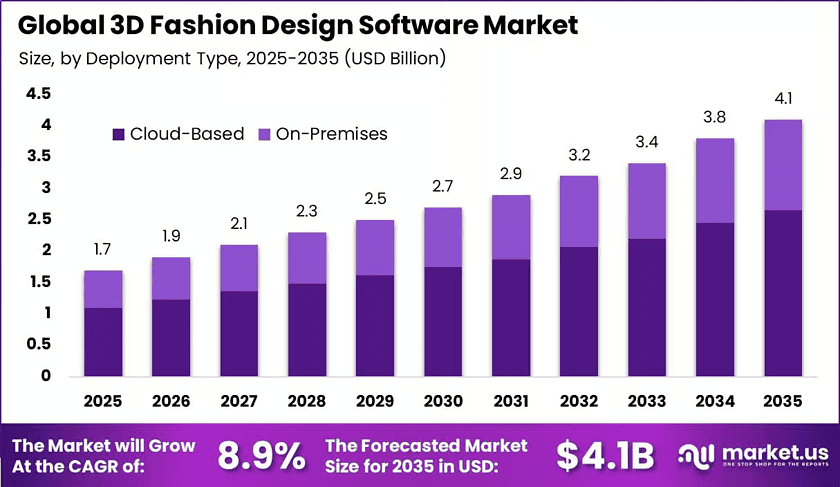
New York, NY – November 17, 2026 – The Global 3D Fashion Design Software Market reached a value of USD 1.7 billion in 2025. Analysts expect it to grow at a CAGR of 8.9% from 2026 to 2035 and reach about USD 4.1 billion by 2035. North America led the market in 2025 with a 37.6% share and about USD 0.6 billion in revenue.
Apparel brands use digital design platforms to shorten product development and cut physical sampling costs. Moreover, these tools help teams handle more styles and sizes. According to the European Environment Agency, the EU textile and clothing industry earned about EUR 170 billion in 2023. This large industry gives software vendors a wide customer base.
Additionally, the EU produced around 7.6 million tonnes of finished textiles worth EUR 81 billion. This production volume increases demand for virtual garment creation, fit checks, and fabric visualization. Consequently, more brands now approve their collections digitally. Mills and studios also gain faster feedback loops and fewer costly sample rounds.
Furthermore, U.S. clothing store sales reached about USD 303.7 billion in 2024. This strong retail base pushes regional brands toward virtual fashion design tools that speed up launches. However, sourcing volumes also shape demand. U.S. textile and apparel imports reached 76.9 billion square-meter equivalents, which was 8.8% higher than a year earlier. Therefore, brands rely on 3D apparel software for remote approvals, fewer samples, and faster e-commerce visuals.
Key Takeaways
- The 3D Fashion Design Software Market was valued at USD 1.7 billion in 2025 and is forecast to reach USD 4.1 billion by 2035, growing at a CAGR of 8.9%.
- The cloud-based deployment segment held a leading 64.7% share, driven by collaboration needs across global design and sourcing teams.
- Visualization and marketing led application use cases with a 30.6% share, supported by rapid e-commerce growth.
- Windows led the platform segment with a 68.3% share, while large enterprises accounted for 60.4% of demand.
- Fashion houses were the leading end-user segment, holding a 52.2% share of the market.
- North America led the market in 2025 with a 37.6% share and about USD 0.6 billion in revenue.
➤ Preview Key Insights with an Exclusive Sample Report Download – https://market.us/report/3d-fashion-design-software-market/request-sample/
3D Fashion Design Software Market Segmentation
By Deployment Type
Cloud-based platforms held a leading 64.7% share of the market. Designers, factories, and retail teams need fast shared access to garment files. Moreover, according to Eurostat, 52.7% of EU enterprises bought paid cloud services in 2025. This wide adoption makes browser-based design tools easy for fashion companies to accept.
Additionally, Eurostat reports that 84.7% of large enterprises used paid cloud services, while 49.3% of small businesses did the same. This gap shows room for growth among smaller firms. Consequently, cloud systems help teams work from one updated file, reduce version errors, and speed up fit approvals.
By Application
Visualization and marketing led applications with a 30.6% share. Brands need quality digital product images before garments reach stores. Moreover, these visuals cut spending on studio shoots, models, and repeated photography. The savings grow larger when brands sell each product in many colours and sizes across online channels.
Furthermore, according to the U.S. Census Bureau, U.S. retail e-commerce sales reached USD 340.2 billion in the second quarter of 2026. Online sales made up 17.1% of total retail. This steady shift to digital shopping raises demand for scalable 3D product visuals that teams can update quickly.
By Platform
Windows led the platform segment with a 68.3% share. According to StatCounter GlobalStats, Windows held 70.2% of worldwide desktop usage in May 2025. This large installed base makes Windows the default choice for studios. Moreover, Windows workstations support the powerful graphics cards needed for fabric draping and detailed rendering.
By Organization Size
Large enterprises led with a 60.4% share because they manage complex global sourcing and retail networks. For example, Nike reported fiscal 2025 revenue of USD 46.3 billion with about 77,800 employees. Consequently, firms of this scale find physical sampling and manual file sharing costly, so they invest in digital workflows.
Similarly, Ralph Lauren operated through more than 9,400 wholesale doors and sourced about 96% of its products outside the United States in fiscal 2025. Such wide supplier networks need shared digital garment files. Meanwhile, SMEs form a growing segment as lower-cost subscription tools become easier to adopt.
By End-user
Fashion houses led end users with a 52.2% share. These companies control the full design process, from silhouette and fit to fabric drape and trims. Therefore, they use 3D tools to make faster design decisions. Levi Strauss and Co. sold products in about 120 countries during fiscal 2024, showing its global reach.
Moreover, Tapestry, which owns Coach and Kate Spade New York, recorded USD 7.0 billion in fiscal 2025 net sales. Large houses like this must share visuals and technical files across many channels. Meanwhile, independent fashion designers adopt affordable tools to build collections without heavy sampling budgets.
Regional Analysis
North America held a leading 37.6% share in 2025, generating about USD 0.6 billion. Strong apparel brands, retailers, and technology firms with big digital budgets drive this lead. Moreover, according to the U.S. Census Bureau, e-commerce sales reached USD 340.2 billion in Q2 2026. This online scale increases demand for accurate garment visuals.
Asia Pacific should grow fastest, thanks to its large apparel manufacturing base. According to the World Bank, East Asia and Pacific has around 1.5 billion active internet users. Additionally, the region held 60% of global ICT manufacturing value added in 2022. Consequently, production hubs can adopt cloud and 3D fashion tools with ease.
Market Drivers
Virtual sampling adoption leads growth, adding an estimated 2.1% to the baseline CAGR. Brands test fit, drape, and colourways before making physical samples. Moreover, EU households discarded nearly 16 kilograms of textiles per person in 2022. This waste level pushes companies to cut needless sampling and save material.
Cloud workflow migration adds an estimated 1.7% to growth, mainly in North America and Europe. Teams move design files to shared online platforms for remote reviews. Furthermore, Style3D reported that Mengdi Group cut a workflow from 3 days to 10 minutes in 2026. Therefore, connected tools deliver clear time savings.
Use Cases
Fashion brands use 3D software to create virtual samples for fit reviews. Designers adjust shape, grading, and fabric drape on screen before any cutting begins. Moreover, buyers and suppliers can approve styles remotely. Consequently, companies reduce shipping of physical samples and speed up their seasonal collection planning.
Online retailers use digital garment models to produce product images for web stores. Shoppers can view clothes on different body types and sizes. Additionally, brands refresh colours and styles without new photo shoots. Therefore, retailers build richer product pages faster and give customers clearer choices before buying.
Business Opportunities
Digital Product Passport integration offers a strong opportunity in Europe. The European Commission plans textile passport rules that require product data when goods enter the EU market. Moreover, 3D design tools already hold material and composition details. Consequently, vendors that link design data with compliance exports can sell higher-value subscription services.
SME subscription expansion creates another growth path in Asia Pacific and Latin America. Small firms dominate the textile and apparel ecosystem but often lack large software budgets. However, affordable cloud packages lower the entry barrier. Therefore, vendors offering simple pricing and easy onboarding can reach many new small brands and workshops.
Major Challenges
Digital material data gaps slow wider adoption. Accurate garment simulation needs reliable data on fabric weight, stretch, thickness, and texture. However, many mills still lack complete digital records. Consequently, design teams spend extra time cleaning data, and vendors must invest in material libraries and testing standards to improve accuracy.
Specialist talent shortages also limit growth across the global industry. Fashion companies need staff skilled in both garment design and 3D tools. Moreover, training takes time and adds cost for smaller brands. Therefore, firms often delay full rollouts, while vendors respond with simpler interfaces and stronger training programs.
Top Key Players in the Market
- Adobe
- Autodesk Inc.
- Bluecherry
- Browzwear
- CLO Virtual Fashion LLC.
- Corel Corporation.
- DigitalFashionPro.com
- MAXON COMPUTER GMBH.
- Optitex
- Wild Ginger Software, Inc.
- Lectra
- EFI Optitex
- Gerber Technology
- Dassault Systèmes
- Vizoo
- Style3D
Conclusion
The 3D fashion design software market keeps growing steadily as apparel brands shift to digital workflows. Cloud platforms, visualization tools, and virtual sampling drive this change. Moreover, large fashion houses and North American firms lead adoption, while Asia Pacific grows fastest. However, material data gaps and talent shortages remain hurdles. Therefore, vendors offering connected, affordable, and compliance-ready platforms stand to gain the most.
Discuss your needs with our analyst
Please share your requirements with more details so our analyst can check if they can solve your problem(s)