
Market Overview
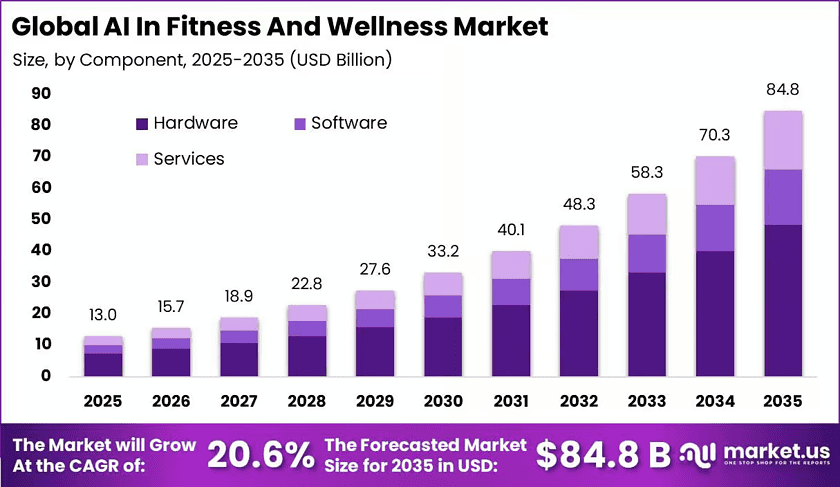
New York, NY – November 13, 2026 – The Global AI In Fitness And Wellness Market reached USD 13.0 billion in 2025. Moreover, analysts expect it to reach about USD 84.8 billion by 2035, growing at a 20.6% CAGR. North America led the market in 2025 with a share of more than 40.6%. The region generated about USD 5.3 billion in revenue.
Consumers want personalized fitness, preventive care, and wellness results they can measure. According to the World Health Organization, about 1.8 billion adults, or 31% of adults worldwide, missed activity targets in 2022. Consequently, this large inactive group gives AI coaching platforms a wide customer base to reach.
Physical inactivity rose from 26% in 2010 and could reach 35% by 2030. Therefore, the health gap keeps getting wider. AI fitness platforms respond with custom workouts, real-time coaching, activity tracking, and recovery guidance. These tools also send health alerts through smartphones, smartwatches, connected equipment, and health apps.
According to the Health and Fitness Association, about 77.0 million Americans belonged to fitness facilities in 2024. Additionally, the industry earned USD 22.4 billion across more than 55,000 locations. This large member base gives AI providers a strong market for retention tools, remote coaching, and hybrid digital fitness services.
Key Takeaways
- The AI in Fitness and Wellness Market was worth USD 13.0 billion in 2025. It should reach USD 84.8 billion by 2035, growing at a 20.6% CAGR.
- Hardware led the component segment with a 57.1% share in 2025.
- Cloud-based solutions led deployment mode with a 66.4% share in 2025.
- Personalized fitness training led applications with a 42.7% share in 2025.
- Individuals led the end-user segment with a 53.8% share in 2025.
- North America led the market in 2025 with a 40.6% share and about USD 5.3 billion in revenue.
➤ Grab the Exclusive Preview of This Premium Research Report Now – https://market.us/report/ai-in-fitness-and-wellness-market/request-sample/
Market Segmentation Analysis
By Component
Hardware held a leading 57.1% share of the AI fitness market in 2025. Smartwatches, fitness bands, smart rings, and connected exercise machines support this lead. Moreover, these devices collect data on heart rate, sleep, and workouts all day. AI platforms use this data to give more accurate and personal advice.
According to IDC, global wearable shipments reached 145.7 million units in the first quarter of 2026, up 4.3% year on year. Additionally, IDC expects 693.2 million units by 2030. This steady growth means more people will carry devices that feed AI wellness tools with daily health data.
By Deployment Mode
Cloud-based solutions led deployment with a 66.4% share in 2025. Gyms, clinics, trainers, and wellness platforms use cloud AI without buying costly servers. According to Eurostat, 45.2% of EU businesses bought cloud services in 2023. Therefore, wider business cloud use makes AI wellness services cheaper and easier to launch.
By Application
Personalized fitness training led applications with a 42.7% share in 2025. Users want workout plans that fit their fitness level, health, and schedule. According to the CDC, only 22.5% of U.S. adults aged 25 and above met both activity guidelines in 2022. Consequently, people clearly need simpler and more personal exercise support.
U.S. guidelines suggest 150 to 300 minutes of moderate activity each week. They also suggest muscle training on two or more days. Moreover, AI systems track these targets and adjust workout intensity on their own. These tools also change schedules when users miss sessions or show signs of fatigue.
By End-User
Individuals led end users with a 53.8% share in 2025. Consumers now use AI fitness apps without needing gyms or clinics. According to the International Telecommunication Union, about 5.5 billion people used the internet in 2024. Therefore, wider online access lets more people use mobile coaching, diet tracking, and sleep monitoring.
Mobile devices further support this growth. World Bank data showed 108 mobile subscriptions per 100 people in 2023. This figure means most people already own devices that can run digital health apps. Additionally, providers can add AI wellness features through software updates, so users avoid high extra costs.
Regional Analysis
North America led the market in 2025 with a 40.6% share and about USD 5.3 billion in revenue. The region has a mature fitness industry and strong consumer spending. Moreover, the Health and Fitness Association reported nearly 96 million U.S. facility users in 2024. This large base drives demand for AI coaching and member tools.
Asia Pacific is the fastest-growing regional market. According to the International Telecommunication Union, internet use in the region reached 77% in 2025, up from 50% in 2019. Consequently, millions of new mobile users can now reach AI health apps. Rising consumer spending also supports faster regional adoption.
Key Market Drivers
Wearable health data drives strong market growth. AI platforms use regular heart, sleep, and activity data to shape workouts and recovery plans. Moreover, analysts estimate this trend adds about 3.4% growth above the 20.6% base CAGR. This boost shows that connected devices sit at the center of AI fitness value.
Personalized training subscriptions also push the market forward, especially in North America and Europe. Analysts estimate this driver adds about 2.8% to growth in the short term. Additionally, gyms and digital platforms use paid plans to keep members active. Therefore, recurring revenue models encourage providers to invest in better AI coaching.
Major Use Cases
Gyms and fitness centers use AI to track exercise form and suggest the right workouts. Trainers receive alerts when members skip sessions or lose interest. Moreover, these tools help gyms deliver personal coaching to many members at once. Consequently, fitness operators improve member loyalty while keeping staff costs under control.
Employers use AI wellness platforms to support staff health and stress management. Workers get guided routines, sleep advice, and mental wellness check-ins on their phones. Additionally, companies receive simple reports on overall program use. Therefore, employers build healthier teams and reduce lost workdays through easy digital support.
Business Opportunities
Employer wellness platforms offer a strong growth path for AI fitness providers. Most current solutions focus on consumer apps and gym services. However, companies now want tools that lower stress and improve staff health. Providers that win employer contracts can lower customer costs and keep users longer.
Emerging markets in Asia Pacific, Latin America, and Africa create another clear opportunity. Mobile phone use keeps spreading across these regions. Moreover, many consumers there skip gyms and prefer low-cost app-based coaching. Therefore, providers that offer local languages and simple pricing can capture large new user groups.
Major Challenges
Battery material sourcing remains a major challenge for wearable and smart equipment makers. A small group of suppliers controls key battery parts. Moreover, shipping delays and rising energy prices add further pressure. Consequently, device makers face higher component costs and longer wait times for key materials.
Algorithm accuracy also creates problems for AI wellness providers. Health readings can vary across skin types, body shapes, and activity styles. However, users expect correct advice every time. Therefore, providers must test their models carefully and update them often to protect user trust and safety.
Top Key Players in the Market
- Fitbit
- Apple Inc.
- Google LLC
- Samsung Electronics Co., Ltd.
- Garmin Ltd.
- HealthifyMe
- Nike, Inc.
- Adidas AG
- Under Armour, Inc.
- Amazon.com, Inc.
- Microsoft Corporation
- IBM Corporation
- Xiaomi Corporation
- Polar Electro Oy
- Wahoo Fitness
- Orangetheory Fitness
- ClassPass Inc.
- Tonal Systems, Inc.
- Virtuagym
- Zwift, Inc.
- Technogym S.p.A.
- Asana Rebel GmbH
- Viome Inc.
- Mirror (Lululemon Athletica Inc.)
- Peloton Interactive, Inc.
Conclusion
The AI in Fitness and Wellness Market is growing fast as consumers look for personal and measurable health support. Wearable hardware, cloud platforms, and personalized training lead the market today. Moreover, North America holds the top spot, while Asia Pacific grows fastest. However, privacy rules, battery supply risks, and accuracy concerns remain. Overall, providers that offer trusted and easy AI coaching will capture lasting value.
Discuss your needs with our analyst
Please share your requirements with more details so our analyst can check if they can solve your problem(s)