
Market Overview
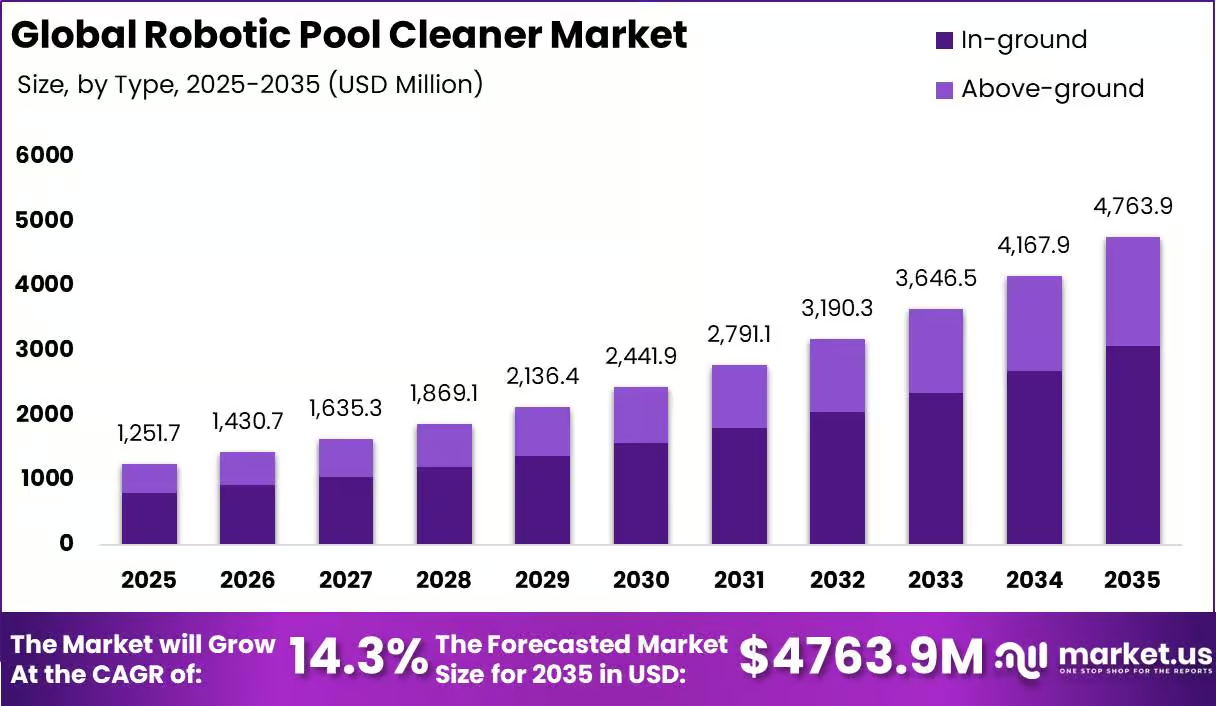
New York, NY – September 21, 2026 – The Global Robotic Pool Cleaner Market reached USD 1,251.7 million in 2025. Analysts expect growth at a 14.3% CAGR between 2026 and 2035, lifting revenue to about USD 4,763.9 million. North America led the market in 2025 with more than a 36.7% share and close to USD 459.37 million in revenue.
United States data shows roughly 10.4 million residential pools and nearly USD 8.8 billion in pool cleaning service revenue during 2025. Millions of pools therefore need frequent servicing. Moreover, owners already spend billions on upkeep, creating a ready economic base for automated cleaning machines.
Robotic units draw about 100–200 watts per hour, or 0.2–0.4 kWh per two-hour cycle. Suction cleaners consume 4–8 kWh across a four-hour cycle. This gap cuts electricity bills sharply. Consequently, dealers use running-cost savings as a core selling argument.
About 8% of U.S. households own a swimming pool, mostly in warmer states with longer swim seasons. Longer seasons raise cleaning frequency and labor spending. Therefore, homeowners and service firms pick devices that reduce labor hours per visit and improve technician output.
Key Takeaways
- The Robotic Pool Cleaner Market should grow from USD 1,251.7 million in 2025 to USD 4,763.9 million by 2035, at a 14.3% CAGR across the forecast period.
- North America dominates with a 36.7% share, worth about USD 459.37 million in 2025, backed by high pool ownership and advanced technology adoption.
- In-ground pool cleaners lead by type with a 64.6% share, because residential and commercial pools use them widely.
- Multi-surface cleaning robots form the largest cleaning type segment at a 69.2% share, driven by demand for efficient cleaning across different pool surfaces.
- Residential users dominate end use with a 77.3% share, helped by rising adoption of smart and automated home appliances.
- Offline channels hold a leading 53.2% share, supported by buyer preference for specialist pool retailers and home improvement stores.
➤ Grab the Exclusive Preview of This Premium Research Report Now – https://market.us/report/robotic-pool-cleaner-market/request-sample/
Market Segmentation
By Type
In-ground pools captured more than a 64.6% share in 2025. Permanent pools include large floors, curved walls, deep ends, steps, and waterlines that need automated coverage. Owners also prefer independent units that bypass the main filtration circuit. Consequently, replacement demand keeps widening through 2026.
By Cleaning Type
Multi-surface cleaning held more than a 69.2% share in 2025. Buyers want one machine that scrubs floors, climbs walls, and cleans waterlines across tile, vinyl, fiberglass, and concrete. Moreover, that flexibility removes the need for separate tools in irregular pools with benches, slopes, and spas.
By End-User
Residential buyers controlled more than a 77.3% share in 2025. Homeowners replace repeated brushing and vacuuming with scheduled cycles that run overnight or before work. Backyard pools gather leaves, dust, hair, and sunscreen residue. Therefore, regular debris removal keeps water clearer and eases filter load.
By Distribution Channel
Offline retail secured more than a 53.2% share in 2025. Shoppers inspect weight, cable reach, brush material, filter access, and warranty terms before buying. Store staff match units to pool size, wall finish, and power access. Additionally, dealers handle installation advice and local repair intake.
Regional Analysis
North America remains the leading region with an estimated 36.7% share and about USD 459.37 million in value. High pool penetration in the United States explains this strength, where automatic cleaning products already generate more than 44% of global revenues. Consequently, automation preference stays firmly established.
Rising wages and technician shortages in California, Florida, and Texas push buyers from manual service toward robotic systems. Households want lower recurring costs and steady water hygiene. Moreover, cordless and energy-saving models grow at double-digit rates, matching regional interest in sustainability and cheaper operation.
Drivers
Pool installations across the United States, France, Spain, and Australia expanded by an estimated 3–5% each year from 2024 to 2026. New pools widen the addressable base directly. Therefore, this trend adds roughly 3.0% to growth above the baseline forecast, mainly through replacement of manual cleaners.
Energy rules in the European Union and Australia also lift demand, contributing about 2.4% to forecast growth. Pool quotations must now list energy performance and equipment details. Consequently, installers specify robotic cleaners inside packaged projects, which raises average revenue per pool and improves product mix.
Use Cases
Homeowners use robotic cleaners for routine upkeep between professional service visits. The machines scrub floors, walls, and waterlines on a set schedule without manual effort. Moreover, consistent debris removal supports clearer water, protects filters, and helps families prepare pools quickly for the swimming season.
Hotels, resorts, water parks, and municipal centres apply these machines across busy public pools. Operators schedule cycles outside peak swimming hours to avoid guest disruption. Therefore, facility teams free technicians for water testing, safety checks, and equipment care, which improves service quality and daily readiness.
Business Opportunities
Vendors can build networked fleet management for commercial pool portfolios. Sensor data and cloud dashboards guide cleaning schedules, remote diagnostics, and predictive maintenance. Consequently, suppliers earn recurring software and service income, which balances hardware-heavy revenue and strengthens long-term customer relationships across hospitality and municipal accounts.
Subscription and hardware-as-a-service plans open another path in North America and Europe. Monthly plans lower the entry barrier for cautious households. Moreover, local assembly in Asia, Latin America, and the Middle East lets brands cut delivery times, reach new dealers, and expand affordable product lines.
Major Challenges
Suppliers manage a complex chain covering motors, pumps, sensors, batteries, control boards, and plastics. Parts arrive from Asia, Europe, and North America, so lead times stretch and working capital tightens. Consequently, port delays and input price swings compress margins and slow expansion into smaller markets.
Service capability gaps create a second hurdle, especially in emerging and secondary markets. Buyers need spare parts, repairs, and trained technicians close to home. However, weak support networks raise doubts about durability and reliability. Therefore, brands must invest in dealer training and local after-sales infrastructure.
Top Key Players in the Market
- Milagrow HumanTech
- Mariner 3S AG
- Aquatron Robotic Technology
- Hangzhou Gaoyue Technology Co. Ltd
- Maytronics
- Zodiac Pool Systems
- KOKIDO
- Pentair
- iRobot Corporation
- Polaris Inc.
- BTW Holding GmbH
- Hayward Industries, Inc.
Conclusion
The robotic pool cleaner market shows steady, broad-based growth through the forecast period. North America leads, while in-ground pools, multi-surface machines, residential buyers, and offline dealers shape demand. Energy rules, labor costs, and smart home adoption support momentum. However, supply chain complexity and service gaps remain key barriers for suppliers worldwide.
Discuss your needs with our analyst
Please share your requirements with more details so our analyst can check if they can solve your problem(s)